 日本語
日本語 





Japan has never had a problem with discipline. It has always had a problem with scale. An aging workforce, persistent labor shortages, and rising operational complexity are exposing the limits of even the world’s most efficient business culture.
Generative AI helped employees work faster. Enterprise AI agents promise something far more disruptive. They can plan decide and carry out full workflows with very little human intervention. That shift might end up re-shaping how Japanese businesses run over the next ten years.
This piece digs into what enterprise AI agents actually are, why Japan is turning into a crucial place to test autonomous AI systems, and where they’re starting to create the biggest business impact. It also looks at what executives really must nail first, before everyday operations get handed off to AI, sort of, bit by bit.

Also Read: Japan’s AI Infrastructure Landscape 2026: Top 10 Companies Building the Nation’s Intelligent Economy
What Are Enterprise AI Agents?
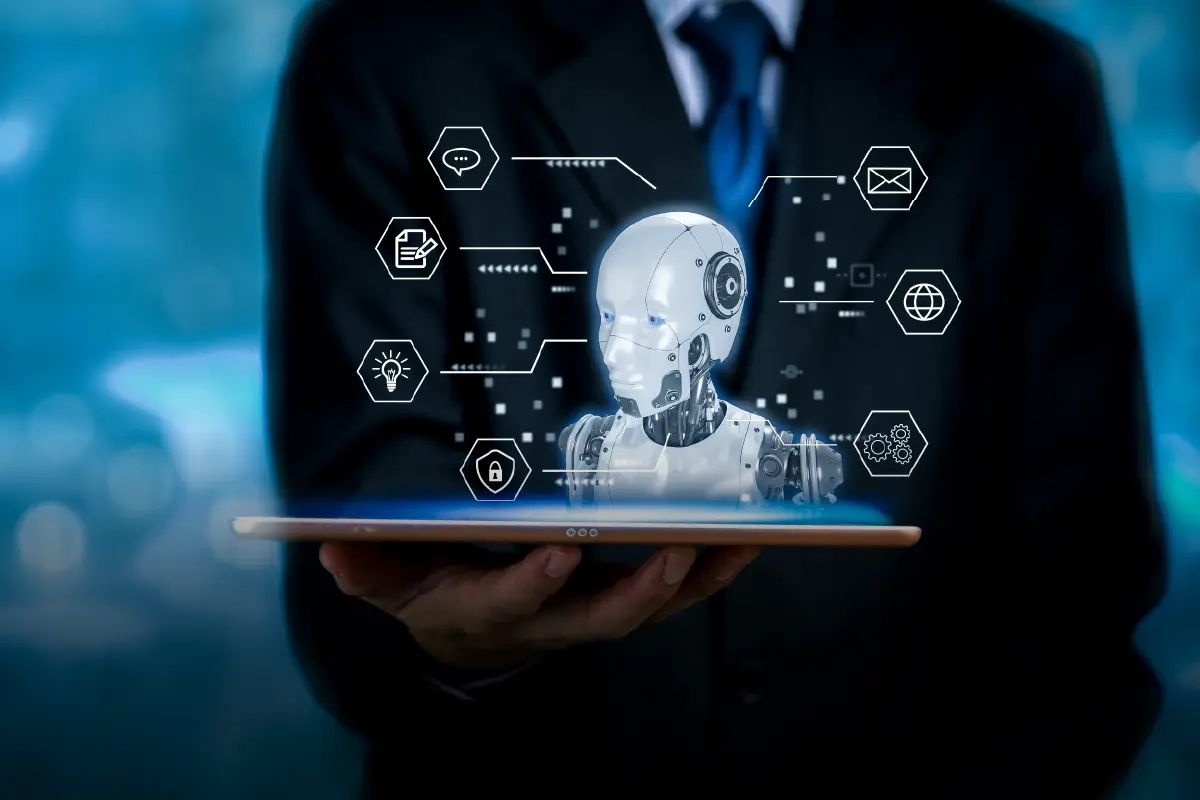
Enterprise AI agents are AI systems that do more than just answer questions. They can get a handle on a goal, decide what needs to happen next, and juggle a sequence of tasks with very little human input. Traditional AI waits for instructions, right there. Enterprise AI agents push toward an outcome.
That is the shift businesses are really watching, and yeah it matters. Earlier AI tools could write emails, condense reports, or respond to a question. But the ‘real’ work still required someone hopping between systems, double-checking details, and moving each step along. Enterprise AI agents’ kind of change that pace. A manager no longer has to shepherd every single step. The AI can collect information, revise records, trigger approvals, and finish the routine chores until it gets to a moment where human judgment is the one that truly counts.
And there’s another ripple effect, it is also reshaping how people use business software. Work is drifting away from clicking through dashboards, and scrolling through endless menus. Employees mostly say what needs doing, like onboard a customer, or refresh a CRM, then the enterprise AI agents quietly handle the same repetitive bit in the background. In a sense, people stay in control but they end up spending far less time ‘acting like the software.’
Why Japanese Enterprises Are Accelerating AI Agent Adoption
Overcoming the Labor Shortage Crisis
Japan’s AI story is not being driven by hype. It is being driven by necessity. Every vacant role creates more work for the people who remain, and many businesses simply cannot solve that problem through hiring alone. Enterprise AI agents offer a different path. Instead of replacing employees, they take over repetitive knowledge work such as processing requests, preparing documents, routing approvals, and updating business systems. Teams get more time for work that actually needs experience, judgment, and customer interaction.
Revitalizing SME Productivity
This shift matters, like a lot more for small and mid-sized businesses. Most SMEs can’t just keep adding headcount every time things get more complex, it’s just not affordable. With enterprise AI agents’ smaller crews can juggle bigger workloads without creating all that extra administrative burden, or paperwork. The result is not fewer people. It is fewer routine tasks competing for their attention.
Government and Megacorp Backing
Momentum is also coming from the top, kind of. The Digital Agency of Japan expects around 180,000 government employees across ministries and agencies to gain access to generative AI during FY2026, and it really suggests AI is sliding into everyday operations, not staying as a narrow test. Meanwhile, private investment is moving just as quickly, almost aggressively. On 27 February 2026, SoftBank Group said it will make a USD 30.0 billion follow-on investment in OpenAI via SVF2, which basically reinforces Japan’s long-term resolve to build the underlying infrastructure for what’s next in enterprise AI.
High-Impact Use Cases for Enterprise AI Agents in Japanese Businesses
Enterprise AI agents deliver the most value once they stop only assisting people and start completing tasks on their own, kind of by default. Across Japan businesses are now looking into where autonomous decision making can remove delays, cut down manual effort, and keep things consistent without compromising oversight. And, honestly that shift is already showing up at the enterprise level. For example, Hitachi announced it will deploy advanced AI across basically all business processes for roughly 290,000 employees and also train about 100,000 AI professionals. The message there is pretty straightforward. AI is turning into everyday operations, not just a standalone tool that a few small teams keep using, over and over again.
BFSI
Banks and financial institutions deal with thousands of repetitive decisions every day. Enterprise AI agents can verify customer information, review documents, detect unusual transaction patterns, and escalate only the cases that require human judgment. Some organizations are also experimenting with autonomous debt collection, where AI agents manage an entire customer conversation, complete payment transactions during live calls, and record every interaction without constant employee involvement. That allows financial teams to spend less time on routine processing and more time handling complex customer needs.
Advanced Customer Support and Multilingual Localization
Customer support in Japan demands far more than quick responses. Language, context, and cultural expectations really do matter, just as much. Enterprise AI agents are getting more and more voice-first, and they can adapt the back and forth using suitable Japanese honorifics, regional expressions and even customer history. Rather than only answering questions, they can actually resolve requests, update the internal systems, set up follow-ups and pass only the sensitive cases over to human representatives. That way, customers get a smoother service experience, while support teams don’t have to spend hours on repetitive paperwork and admin tasks.
Manufacturing, Logistics and Robotics
Manufacturing has always been one of Japan’s greatest strengths, making it a natural fit for enterprise AI agents. The next step is connecting digital intelligence with physical operations. AI agents can monitor inventory, coordinate suppliers, adjust production schedules, and communicate directly with robotic systems when conditions change. Rather than reacting after a disruption occurs, businesses can respond while operations are still running. The result is a supply chain that becomes more adaptive, faster to recover, and less dependent on constant human coordination.
Challenges and Solutions for Deploying AI Agents in Japan
Rolling out enterprise AI agents is not simply a technology project. It is a trust project. A lot of Japanese firms might choose to take on AI in a slower way, rather than gamble with reliability, like if it’s going to wobble in production. Sure it can feel a bit cautious, but in practice it tends to build steadier, longer-term use. This is also the reason JEITA’s 2026 materials, explicitly say that AI agents belong in the cyber security and social risk talk, not just the tech story. It basically shows governance is being treated like a key piece, almost same level as raw capability, not something that can be added later.
The Demand for Agentic AI Security
An enterprise AI agent can get into business systems, scoot data around, and finish tasks by itself. But without clear permissions and some oversight, even one small hiccup can spread pretty fast across multiple workflows. So security shouldn’t be an afterthought, it needs to be baked into the whole process from day one.
Cultural Resistance and Human-in-the-Loop Systems
Full autonomy is not the immediate destination for most Japanese businesses. A more practical path is the human-in-the-loop model. The AI handles repetitive work, while employees review and approve important decisions. Companies reduce manual effort without giving up accountability, and employees gain confidence in enterprise AI agents one workflow at a time instead of all at once.
The Future of Autonomous Business in Japan
The next stage of enterprise AI agents is not about building a smarter assistant. It is about building teams of AI agents that kind of work side by side. One agent might analyze customer data, another handles inventory, while a third coordinates suppliers or finance. Instead of running totally on their own, these specialized agents share useful information and keep business processes moving along with way less human coordination. Sometimes it feels like it’s all happening in the same rhythm, not in isolation.
Japan is already moving in that direction. On 20 January 2026, Mitsubishi Electric announced the manufacturing industry’s first multi-agent AI for expert-level decisions through adversarial debate. That kind of signal means the focus has moved from using AI on single tasks to coordinating multiple AI agents so they can work together, and tackle more complex business problems at the same time.
For Japanese businesses, the bigger question probably isn’t any more if AI will show up in daily operations, it’s more like how fast they can rethink and redesign their workflows around enterprise AI agents before competitors catch up. Those who treat AI as another software tool may improve efficiency. Those who build AI-native operations are more likely to redefine it.
Conclusion
Japan does not need AI because it is fashionable. It needs enterprise AI agents because the old way of scaling work is becoming harder every year. The real opportunity is not replacing people. It’s removing that repetitive work, that kind of thing which keeps people from doing their best work.
Companies that begin with practical workflows, and then build trust with human oversight, usually scale gradually too. That whole approach puts them in a stronger position than the ones just waiting for that perfect moment.
So the next step is kind of simple, like really. Do an audit on your everyday operations, find the biggest workflow bottlenecks, and then ask just one question: which of these tasks should still stay with people, and which parts can enterprise AI agents handle better?



 English