 日本語
日本語 





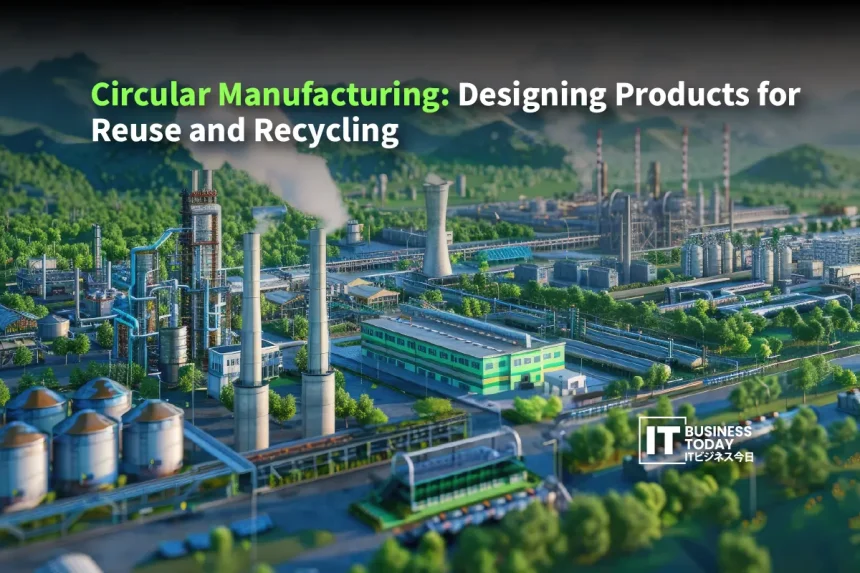
Manufacturing spent decades optimizing one thing. Volume. Make faster. Ship cheaper. Replace quicker. The model worked until it didn’t.
Now the cracks are everywhere. Material costs are unstable. Waste is becoming expensive. Supply chains break faster than forecasts update. Products designed to die early are no longer smart business. They are liabilities.
That shift is happening fast. Nearly 80% of business leaders now see circularity as important or very important to their organizations, up from just 36% three years ago. Circular manufacturing is no longer sitting inside ESG presentations. It is moving into procurement meetings, factory floors, and boardroom strategy.

Also Read: Vehicle-to-Everything (V2X) Ecosystems: How Japan Is Building Connected Mobility Infrastructure
This is exactly why ISO 59004:2024 matters. The standard pushes circular economy thinking beyond recycling and into full lifecycle design. Circular manufacturing is really about building products that can be repaired, reused, remanufactured, and recovered instead of discarded after one use cycle.
Core Principles Behind Circular Manufacturing
Most companies still treat the end of a product’s life like somebody else’s problem.
That mindset is exactly what circular manufacturing is trying to kill.
Traditional manufacturing asks one question.
‘How fast can we produce this?’
Circular manufacturing asks a far more uncomfortable one.
‘What happens to this product after the customer is done with it?’
That single shift changes everything.
A product designed for circular manufacturing starts with disassembly in mind. Adhesives, fused materials, and sealed units make recycling painful and expensive. Modular fasteners do the opposite. They allow components to be removed, repaired, replaced, or upgraded without destroying the entire product.
This matters more than most companies realize.
A glued battery may reduce assembly costs for six months. However, it can destroy reuse value for the next six years. Many manufacturers still optimize for factory efficiency while quietly creating massive downstream waste costs.
Material selection also becomes critical. Multi-material products create recycling nightmares because separating mixed materials takes time, labor, and money. Mono-material design simplifies recovery and improves material purity. That directly improves resale and reuse value.
This is where circular manufacturing stops looking like sustainability theory and starts looking like operational math.
Oracle says product design should now be assessed across:
- energy efficiency
- dematerialization
- serviceability
- recyclability
That framework matters because circular manufacturing is not just about waste reduction. It is about value retention.
Durability plays a huge role here too. For years, planned obsolescence quietly became normal business practice. Products were engineered around replacement cycles instead of longevity. Short-term revenue won. Long-term resilience lost.
Now the market is shifting again.
A durable product creates multiple revenue opportunities:
- repair services
- refurbishment
- secondary resale
- component harvesting
- subscription extensions
Suddenly, longer-lasting products stop being revenue killers. They become long-term assets.
That is the deeper logic behind circular manufacturing. The product is no longer the end of the transaction. It becomes the beginning of a longer economic lifecycle.
Reuse and Remanufacturing Become the Real Profit Engine
Many companies still confuse remanufacturing with repair.
Big mistake.
Repair fixes a broken product. Remanufacturing rebuilds the product back to industrial-grade performance standards. The difference is massive.
A repaired machine may survive another year. A remanufactured machine can re-enter the market almost like a new asset.
That distinction is why circular manufacturing is creating serious business interest inside automotive, heavy machinery, electronics, and industrial equipment sectors.
The economics are hard to ignore.
Raw materials keep getting expensive. Supply chain volatility keeps increasing. Meanwhile, customers still want lower prices.
Remanufacturing sits right in the middle of that pressure.
Companies recover components, preserve embedded manufacturing value, reduce material dependency, and open entirely new customer segments through refurbished or certified pre-owned programs.
This is where the market becomes far more strategic than people assume.
Certified refurbishment programs allow manufacturers to capture buyers who cannot afford premium new products but still trust the original brand. Instead of losing those customers to grey markets, companies build controlled secondary ecosystems around their own products.
That changes the revenue model completely.
Renault offers one of the strongest examples of this shift. The company says 99% of its electric vehicle batteries are repairable. It also reconditioned 3,000 electric or hybrid vehicle batteries at its Flins Battery Expertise and Repair Centre.
That is not experimental sustainability theatre. That is industrial-scale lifecycle management.
Battery systems are especially important because they contain high-value materials with long recovery potential. Throwing them away after a single use cycle makes less economic sense every year.
This is why circular manufacturing is becoming deeply connected to supply chain resilience.
Every reused component reduces exposure to:
- raw material shortages
- geopolitical sourcing risks
- commodity price shocks
- logistics disruptions
Many executives still frame circular manufacturing as a compliance issue. The smarter companies are treating it like an inventory strategy.
There is another cultural shift happening too.
Old manufacturing thinking focused heavily on units sold. Circular manufacturing focuses more on lifetime value extracted from every unit produced.
That changes design incentives. It changes servicing models. It changes customer retention. Most importantly, it changes how manufacturers think about waste itself.
Waste stops being waste.
It becomes trapped economic value waiting to be recovered.
Advanced Recycling Changes the Economics of Waste
Recycling sounds simple until manufacturers actually try scaling it.
Not all recycling creates equal outcomes.
Mechanical recycling works well when materials remain relatively clean and uncontaminated. It is cheaper, faster, and easier to scale for simpler material streams. However, material quality often degrades after repeated cycles.
Chemical recycling operates differently. It breaks materials down into their molecular building blocks and rebuilds them into higher-purity outputs. That process is more expensive, but it becomes critical when manufacturers need premium-grade recovered materials.
This distinction matters because circular manufacturing depends heavily on material quality.
Low-quality recovered materials limit reuse potential. High-purity recovery expands it.
That is exactly why advanced recycling technologies are attracting serious investment attention.
McKinsey says plastic recycling could become a $50 billion to $75 billion opportunities by 2035. It also says recycled resin premiums have reached up to 150% for some resins.
That changes the conversation completely.
Recovered materials are no longer always the ‘cheaper alternative.’ In some markets, they are becoming premium industrial inputs.
Digital infrastructure is also becoming essential here.
Digital Product Passports, QR tracking, RFID systems, and IoT sensors are helping manufacturers track:
- material composition
- repair history
- component origin
- recycling instructions
- lifecycle usage data
Without traceability, circular manufacturing breaks down fast.
Factories cannot recover materials efficiently if they do not know what products contain in the first place.
The future of circular manufacturing will depend as much on data visibility as factory efficiency.
Product-as-a-Service Changes the Incentives Entirely
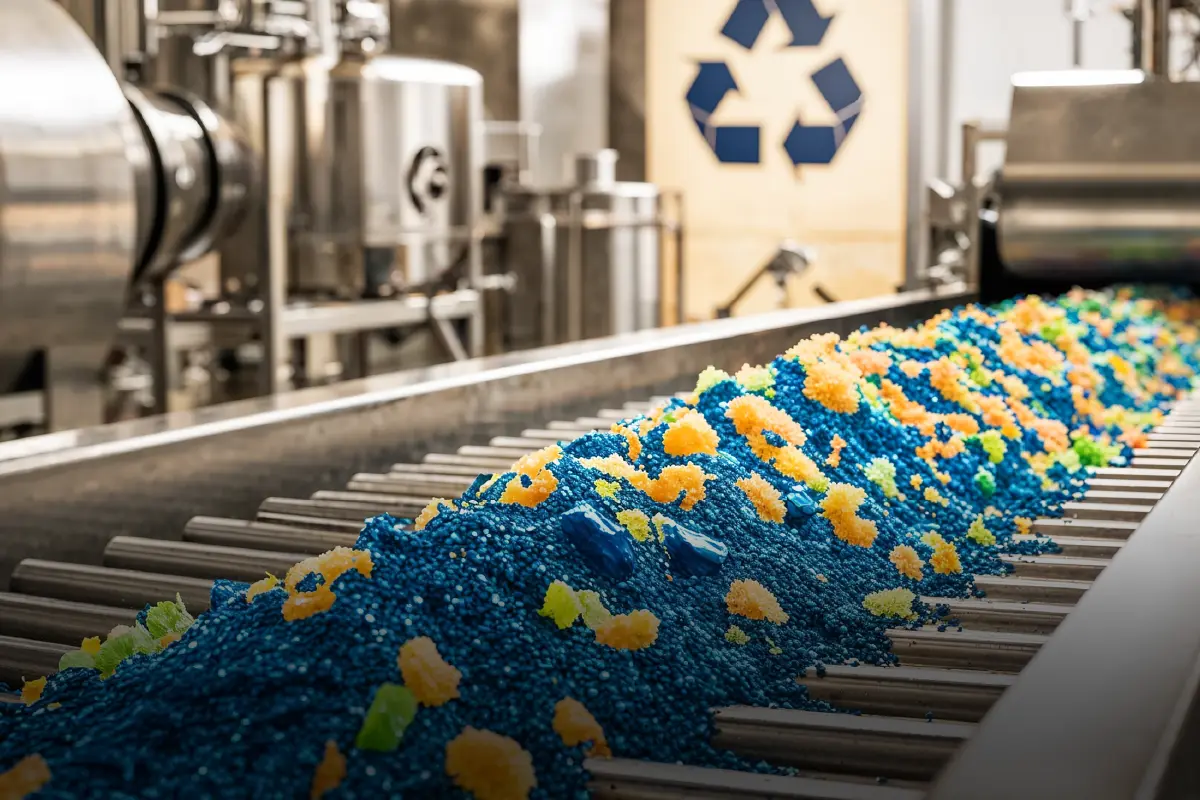
Traditional manufacturing rewards companies for selling more products.
Circular manufacturing rewards companies for extracting more value from fewer products.
That is a completely different mindset.
The Product-as-a-Service model exposes this shift clearly.
Instead of selling light bulbs, companies sell lighting outcomes. Instead of selling machines, they sell uptime. Instead of pushing ownership, they monetize performance.
That changes incentives immediately.
A manufacturer leasing equipment suddenly wants products to:
- last longer
- fail less
- stay repairable
- remain upgradeable
Bad design becomes expensive for the manufacturer instead of the customer.
That is why Product-as-a-Service naturally aligns with circular manufacturing principles.
Philips captured this philosophy well with its circularity approach:
‘Use less, use longer, use again.’
Simple line. Huge implication.
Because once manufacturers retain ownership responsibility, disposable design stops making economic sense.
Philips also expanded its use of bio-based materials and paper-based packaging. That signals another important shift happening across manufacturing. Circularity is moving upstream into material selection itself, not just downstream recycling programs.
The strongest circular manufacturing models are now combining:
- durable engineering
- lifecycle services
- refurbishment ecosystems
- material recovery
- recurring revenue structures
That combination creates stronger resilience during supply chain shocks because manufacturers rely less on constant virgin material extraction.
The companies winning this shift are not just building products anymore.
They are building long-term recovery systems around those products.
The Biggest Barriers Still Holding Companies Back
Circular manufacturing sounds smart in strategy decks. Execution is where companies struggle.
Reverse logistics remains one of the hardest operational challenges. Collecting used products, transporting them, inspecting them, sorting components, and redistributing recovered materials requires entirely new infrastructure.
Many supply chains were never designed for products coming back.
The cultural challenge is just as difficult.
Sales-driven organizations still reward shipment volume more than lifecycle retention. That creates internal resistance because circular manufacturing often prioritizes long-term value extraction over short-term sales spikes.
Policy pressure is also increasing.
Right-to-Repair movements are forcing manufacturers to rethink repair restrictions, spare parts access, and product transparency. Companies that resist too aggressively may protect short-term margins but damage long-term trust.
The market is slowly moving toward reparability whether manufacturers like it or not.
Conclusion
Circular manufacturing is not a side conversation anymore. It is becoming the next operating system for industrial growth.
The companies that redesign products for reuse, remanufacturing, reparability, and recovery will build stronger supply chains, lower material dependence, and longer customer relationships.
Everybody else will keep optimizing a linear model that gets more expensive, fragile, and outdated every year.



 English