 日本語
日本語 





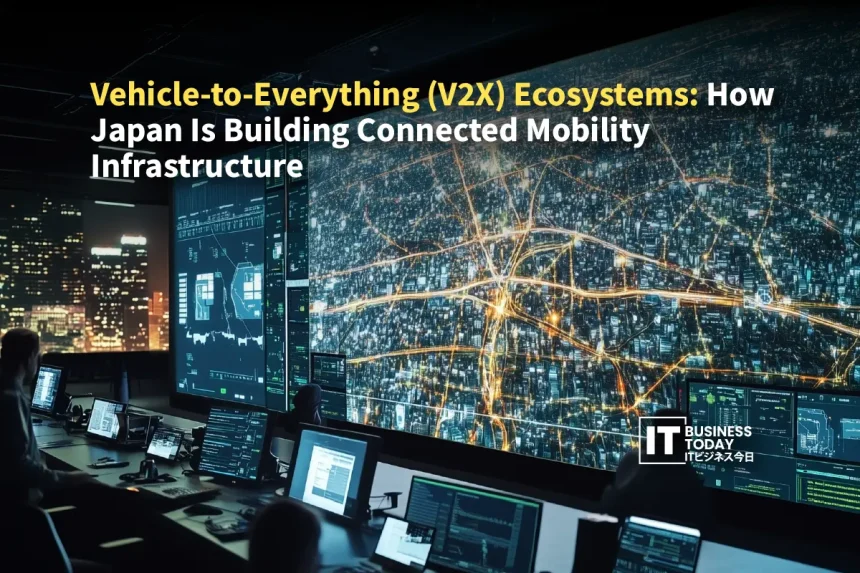
Traffic jams used to be seen as a road problem. Accidents were seen as driver problems. Poor emergency response was treated as a city-planning problem. Modern transportation is changing that thinking completely. Today, vehicles are slowly becoming part of a connected digital infrastructure where roads, traffic systems, cloud networks, telecom operators, and vehicles constantly exchange data in real time.
Japan is pushing this transition a bit faster than most countries. Dense cities, and an aging population, plus the constant disaster-management pressure, and also just limited urban space, are making Japan rethink how mobility should feel and function in the next decade. And that’s pretty much why Japan has turned into one of the most important testing grounds for connected mobility infrastructure as well as Vehicle-to-Everything ecosystems
Vehicle-to-Everything, or V2X, is a connected mobility setup where vehicles talk to roads, networks, pedestrians, and other vehicles in real time, so overall safety improves, traffic keeps moving, and transportation efficiency gets better.

Also Read: Digital Fatigue and AI Overload: The Hidden Cost of Intelligent Workplaces
This shift is no longer experimental. Japan is now treating connected mobility as part of national infrastructure itself.
Decoding the V2X Architecture
Most people hear the term V2X and assume it only refers to autonomous cars. That is only one part of the picture. V2X ecosystems are much broader because they connect multiple layers of transportation infrastructure into one communication system.
At its core, V2X communication systems work through four major categories.
V2V (Vehicle-to-Vehicle)
Vehicles exchange information such as:
- speed
- braking patterns
- lane positioning
- sudden obstacle alerts
As a result, cars can react to danger faster than human drivers alone. This becomes especially important in low-visibility conditions or crowded urban roads. It also supports platooning, where vehicles move in synchronized formations to improve traffic flow and fuel efficiency.
V2I (Vehicle-to-Infrastructure)
This layer connects vehicles with:
- traffic lights
- toll systems
- road sensors
- digital road signs
Instead of operating blindly, vehicles receive live infrastructure data. Smart intersections can therefore warn drivers about signal changes, congestion buildup, or emergency vehicles approaching nearby routes.
Toyota already uses this idea via ITS Connect, runs on Japan’s standardized 760 MHz ITS band. The setup trades V2V and V2I data that onboard vehicle sensors might not catch by themselves. And that small detail is important, because sensors on their own cannot look through buildings, or deal with sharp crossroads, plus those blind corners.
V2P (Vehicle-to-Pedestrian)
Urban mobility becomes dangerous when vehicles cannot properly detect vulnerable road users. V2P systems attempt to reduce that gap through smartphone integration and connected alerts.
For example, a connected mobility ecosystem can notify drivers when pedestrians or cyclists are approaching hidden intersections. In aging societies like Japan, that becomes far more than a convenience feature. It becomes a public-safety layer.
V2N (Vehicle-to-Network)
This is where connected mobility infrastructure becomes deeply tied to telecom networks.
Vehicles communicate with cloud systems to access:
- traffic forecasting
- route optimization
- OTA software updates
- AI-driven navigation systems
- predictive mobility analytics
Without strong network infrastructure, V2X ecosystems cannot scale properly. That is why 5G and future 6G systems are becoming central to connected vehicle technology.
Japan’s Collaborative Blueprint Between Automakers and Telecom Giants
One reason Japan’s V2X ecosystem stands out is because the country understood early that automotive companies could not build connected mobility infrastructure alone.
A car company understands vehicles. A telecom operator understands network latency, bandwidth, and real-time communications. Smart mobility requires both industries to work together.
Japan started laying this groundwork years ago through collaborations involving automakers, telecom providers, and technology companies testing early connected vehicle systems. Those experiments gradually evolved into today’s Cellular V2X ecosystem, also known as C-V2X.
Older Dedicated Short-Range Communications systems, or DSRC, relied heavily on localized communication methods. While effective in some use cases, DSRC struggled with scalability and broader network integration. C-V2X changed that equation because it connected mobility directly into cellular infrastructure itself.
That shift matters more than most people realize.
Once vehicles become part of telecom infrastructure, transportation stops being isolated hardware. It becomes a software-driven network environment.
Japan’s government is openly supporting this transition. Ministry of Economy, Trade and Industry stated in its Mobility DX strategy that Japan is targeting a 30% Japanese share of global Software-Defined Vehicle sales by 2030 and 2035. At the same time, the country’s 2024 V2X acceleration plan was built through public-private cooperation and includes subsidies for three participating entities.
That is not a pilot-stage mindset anymore. That is industrial policy.
Meanwhile, NTT DOCOMO said in March 2025 that 5G Evolution and future 6G systems will enable V2X for autonomous driving by linking vehicles with surrounding infrastructure, networks, and systems through higher-capacity wireless communication.
This is where the real story sits.
Japan is not simply building smarter cars.
It is building networked transportation infrastructure where mobility, cloud computing, telecom systems, and AI increasingly operate together.
Real-World Smart City Integrations Already Happening in Japan
Many countries talk about smart mobility. Japan is trying to operationalize it.
That difference matters.
Connected mobility infrastructure becomes meaningful only when it moves beyond presentations and enters real urban environments. Japan’s smart-city projects are becoming important because they test how V2X ecosystems behave under actual daily conditions.
Adaptive traffic systems are one major example. Traditional traffic lights operate through fixed timing cycles even when traffic conditions change dynamically. Connected mobility infrastructure changes this logic completely. Traffic signals can react to congestion levels, emergency situations, and traffic density in real time.
Emergency vehicle preemption systems are another major use case. Ambulances and fire-response vehicles lose critical time when intersections remain disconnected from surrounding traffic conditions. V2I communication systems can help prioritize emergency movement across urban routes while reducing response delays.
The strongest example of this infrastructure-first thinking is Woven City.
Toyota officially launched Woven City on September 25, 2025, with the first residents moving in and 20 inventors beginning co-creation inside the environment. Toyota describes the project as a real-world test course for the future of mobility.
That description is important because Woven City is not simply a real-estate project. It is an urban-scale connected mobility experiment where:
- vehicles
- sensors
- infrastructure
- pedestrians
- energy systems
- data platforms
are designed to interact continuously.
This is why Japan’s V2X ecosystem feels different from many global mobility projects. The country is embedding connected mobility directly into urban infrastructure planning rather than treating it as a standalone automotive feature.
Hurdles on the Horizon for Cybersecurity and Standardization
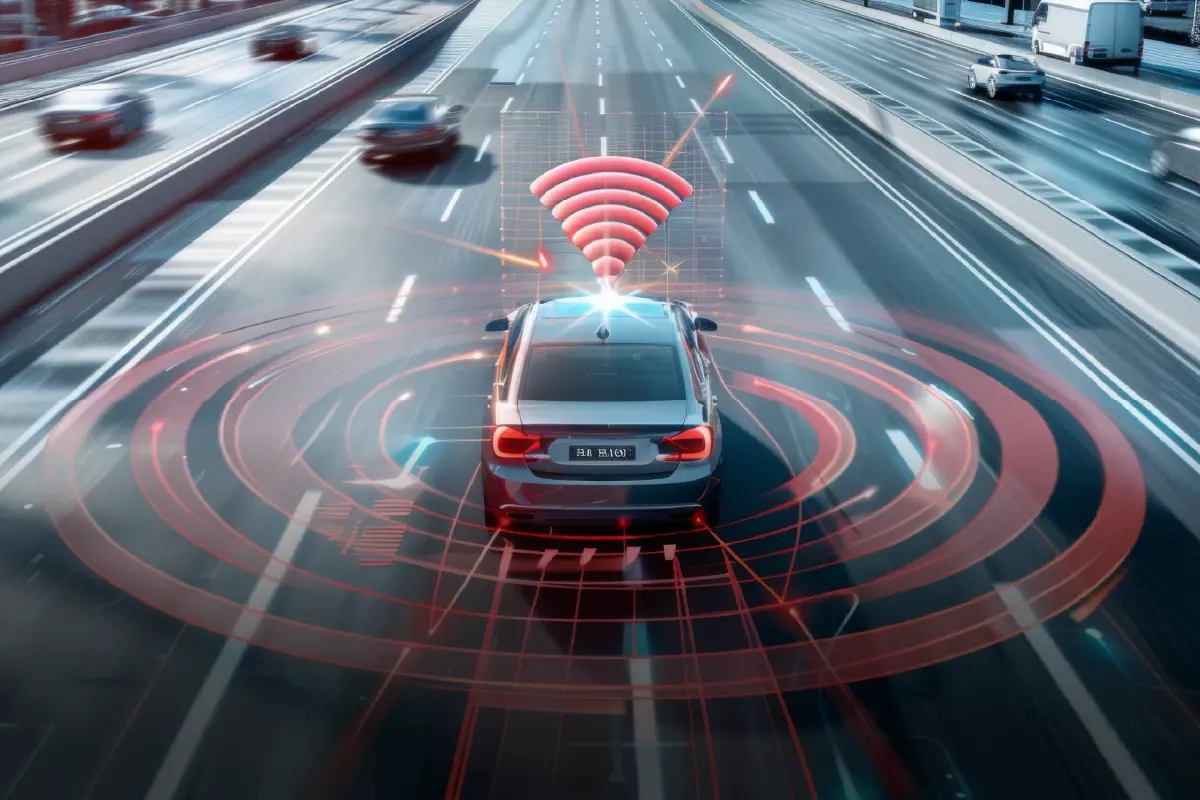
Connected mobility infrastructure also creates a dangerous reality that many discussions avoid.
The more connected vehicles become, the larger the attack surface becomes.
A cyberattack on a streaming platform brings inconvenience, like it’s just a nuisance. But when a cyberattack hits V2X ecosystems, the situation can get physical, with consequences that touch roads, traffic systems and, at times, human safety too.
When the communication channels between vehicles and infrastructure get compromised, it’s not only about data theft anymore. Traffic coordination can fail, signals or alerts can be tampered with, and wrong routing information can drive real world movement in the wrong direction.
That is why cybersecurity is becoming central to the future of connected vehicle technology.
At the same time, standardization remains another major challenge. Global V2X ecosystems cannot scale efficiently if every region operates on fragmented communication protocols. This is where standards like 3GPP become increasingly important because connected mobility infrastructure depends on interoperability across networks, vehicles, and software platforms.
The rise of Software-Defined Vehicles is accelerating this pressure further.
Nissan stated in its April 2026 Vision of Mobility that AI-Defined Vehicles will reshape the customer experience, while targeting AI Drive adoption across 90% of future models.
That statement reveals where the industry is heading.
Vehicles are no longer evolving like traditional machines. They are evolving more like connected computing platforms receiving updates, intelligence layers, and AI-driven capabilities throughout their lifecycle.
And once cars become software ecosystems, cybersecurity stops being optional.
The Talent Shift Reshaping the Automotive Industry
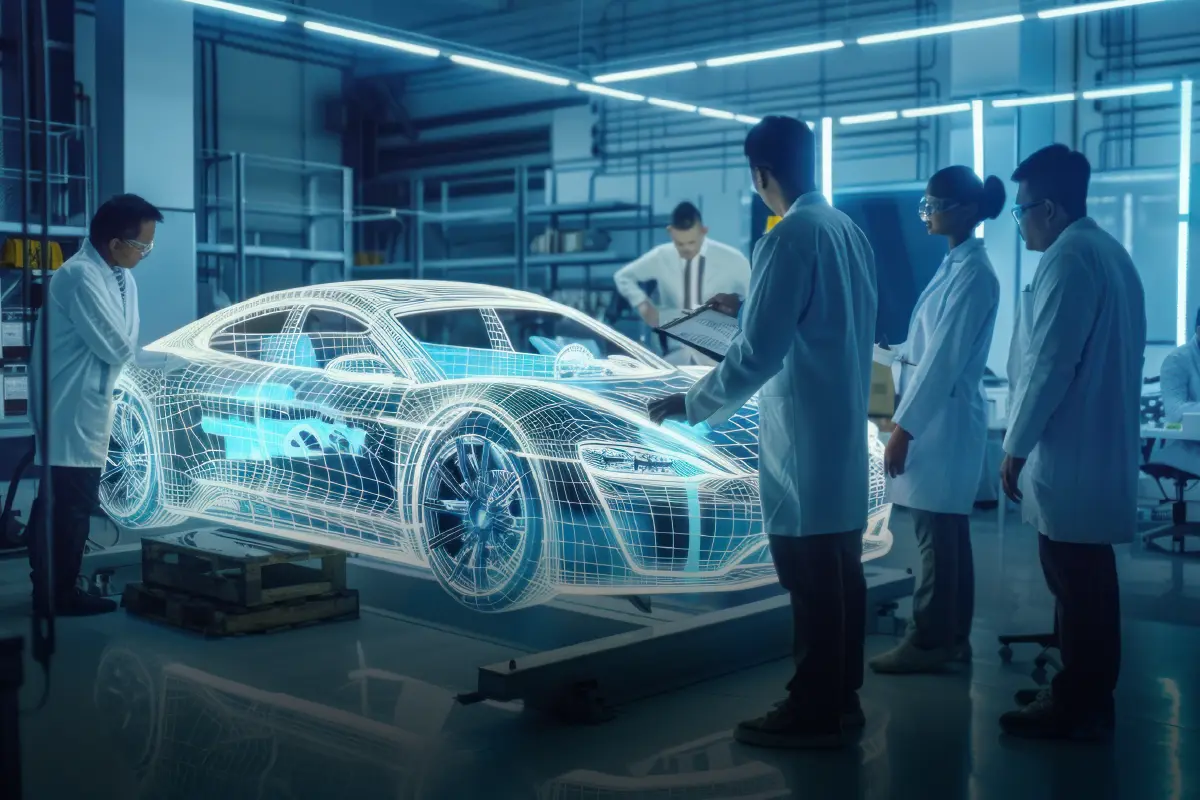
Connected mobility infrastructure is also changing who the automotive industry hires.
For decades, car manufacturing revolved heavily around mechanical engineering, production efficiency, and hardware optimization. Those capabilities still matter. However, V2X ecosystems are forcing OEMs to recruit a completely different category of talent.
Today, automakers increasingly need:
- telecom engineers
- cybersecurity specialists
- AI developers
- cloud architects
- edge-computing experts
- software engineers
because connected vehicles now depend on real-time communication systems and software reliability.
The industry itself is quietly shifting from manufacturing-centered thinking toward infrastructure-and-platform thinking.
That transition is not always visible from the outside. Still, it is fundamentally reshaping how mobility companies operate internally.
In many ways, the future automotive workforce may end up looking closer to a telecom or cloud-computing company than a traditional automaker.
Conclusion
Japan’s V2X ecosystem is not simply about smarter vehicles or futuristic transportation marketing.
The country is building a connected moving infrastructure, where vehicles, telecom systems, urban networks, and digital services sort of work as one big coordinated environment. that change affects how cities handle congestion, how they respond in emergencies, about pedestrian safety too, and even mobility access itself.
What matters most is that Japan is treating connected mobility like national infrastructure, not as some isolated automotive innovation. That distinction is what makes the country’s blueprint worth watching closely.
Because once transportation becomes software-connected infrastructure, mobility stops being just about cars.
It becomes part of how entire cities think, move, and function.



 English