 日本語
日本語 





For decades, the factory robot was built around a simple idea. Bolt one machine to the floor, give it one job, and keep everything around it predictable. That model worked because manufacturing itself was designed around repetition. But modern factories are dealing with shorter production cycles, tighter floor space, changing demand and more complex logistics. Predictability is becoming the exception.
That is where Multi-Agent Robotics changes the equation. IFR reported in January 2026 that the global market value of industrial robot installations reached an all-time high of US$16.7 billion. It also identified AI and autonomy as the leading robotics trend for 2026, with applications spanning failure prediction, path planning and resource allocation.
Multi-Agent Robotics Systems are networks of autonomous robots that perceive their environment, exchange information and coordinate actions to complete shared objectives.

Also Read: Japan’s AI Supercomputers: Powering the Next Generation of Enterprise AI and Scientific Innovation
The real shift is not about adding more robots. It is about making them work as a system.
How Multi-Agent Robotics Actually Collaborate
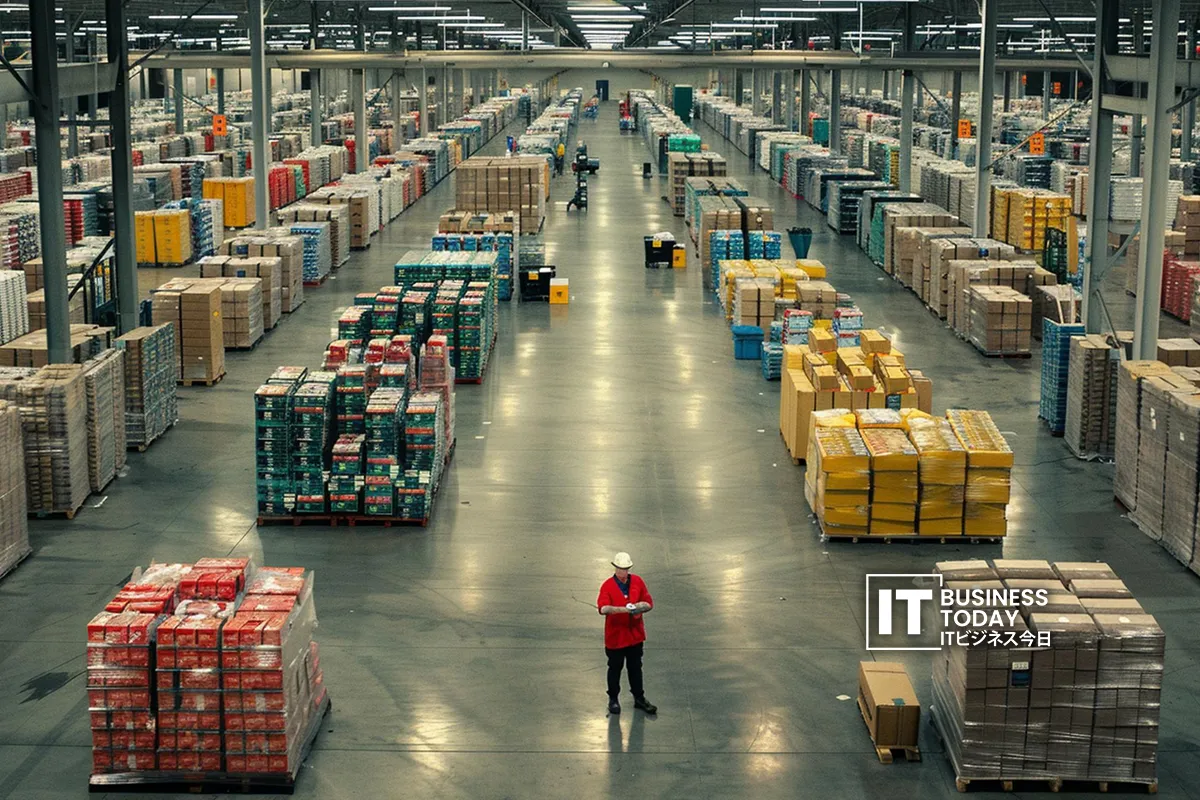
A swarm of robots cannot operate effectively if every decision has to travel to one central server and come back. Manufacturing environments change too quickly. A vehicle moves into an aisle, a pallet gets misplaced, a machine stops working or a robot suddenly needs to recharge. Waiting for a distant system to process every small change creates delay.
That is why edge intelligence matters. In a Multi-Agent Robotics environment, robots can process parts of their surroundings locally, make time-sensitive decisions and share relevant information with other agents. The result is a system that can react without constantly depending on a central command point.
Communication becomes the second piece of the puzzle. Mesh networks and industrial 5G can support continuous information exchange between machines, sensors and factory systems. However, the real value is not the network itself. It is what the network allows the robots to know and do.
Consider a blocked warehouse aisle. One robot detects the obstruction. Instead of treating that discovery as its own problem, it can update the shared operational picture so other robots can change their routes. The swarm effectively learns from one agent’s experience.
That direction is consistent with NIST’s July 2026 roadmap, which says AI and machine learning can improve efficiency, adaptability and autonomy across industrial value chains. The bigger point is clear. Smart manufacturing is moving from machines that execute instructions toward systems that can respond to changing conditions.
Key Transformations in Smart Manufacturing
Dynamic Assembly Lines
Traditional assembly lines are built around fixed sequences. Products move through predetermined stations, while machines perform highly specific tasks. The model is efficient when demand and product specifications remain stable. The problem begins when manufacturers need flexibility.
Multi-Agent Robotics can make production cells more adaptable. Instead of forcing every product through the same physical route, robots can move components, tools and materials to the location where they are needed. A stationary product can effectively become the center of a dynamic assembly environment.
This changes the role of the factory floor. Space no longer has to be designed entirely around permanent conveyor infrastructure. Robotic movement can become part of the production architecture itself. That creates room for manufacturers to adjust workflows without rebuilding the entire line every time production requirements change.
The advantage is not simply speed. It is flexibility. A production environment that can reassign robots and resources can respond more easily when product mixes change or when one part of the operation becomes constrained.
Swarm Logistics and Warehousing
Warehouses offer an even clearer use case for Multi-Agent Robotics because logistics rarely involves one type of movement.
One robot might carry a heavy load. Another might scan inventory. A third could move smaller items between workstations. Treating these robots as identical agents would waste their different capabilities. The smarter approach is to coordinate them according to what each one does best.
This is where heterogeneous fleets become important. A heavy-lifting robot does not need to perform a scanning task. A fast mobile robot does not need to carry every large pallet. Instead, the system can allocate work according to capability, location and current workload.
The result can be a more responsive logistics network. Robots can adjust routes, avoid unnecessary congestion and support one another as conditions change. A warehouse therefore becomes less like a collection of machines and more like a coordinated transportation system.
AWS demonstrated this direction at Hannover Messe 2026 with an AI-powered autonomous production line that brought together autonomous mobile robots, cobots and a humanoid robot in one workflow. The robots worked across manufacturing, inspection and delivery rather than operating as isolated pieces of equipment.
That example matters because it shows where industrial automation is heading. The interesting development is not that factories can deploy individual robots. They already can. The bigger opportunity is coordinating machines with different capabilities inside the same operational loop.
Predictive Maintenance and Quality Control
Quality control is another area where collaborative robotics can change the economics of inspection. A single robot may inspect one surface or approach a product from one angle. Multiple agents can approach the same task from different positions and collect different forms of visual or sensor data.
That creates a more complete picture of product quality. Computer vision can identify defects, while other agents can inspect areas that are difficult to access or compare results against shared production information.
The same logic applies to maintenance. Robots operating across a facility can detect unusual conditions and pass observations into a wider system. Instead of waiting for a machine to fail, the factory can respond to signals that something is changing.
This is where the value of Multi-Agent Robotics becomes more strategic. The system is not simply automating physical work. It is connecting movement, observation and decision-making.
The Brains Behind the Swarm with Reinforcement Learning
Coordination becomes difficult when robots have to make decisions in environments that never remain perfectly stable. A path that worked five minutes ago may no longer be the best route. Another robot may occupy the space. A battery may be running low. A production priority may suddenly change.
Reinforcement learning gives robotic systems a way to improve decisions through repeated interaction with an environment. Instead of relying only on fixed instructions, an agent can learn which actions produce better outcomes. In a factory, that can involve finding more efficient routes, balancing workloads or reducing unnecessary movement.
Genetic algorithms can also contribute to optimization, but they should not be confused with reinforcement learning. They use a different approach to search for better solutions. Both can support robotic optimization, but they solve the problem differently.
NVIDIA’s 2026 robotics work places physical AI around machines that can perceive, reason and act. Its simulation stack also supports training, testing and validating robot behavior in digital environments. That matters because learning does not have to begin on the physical factory floor.
The more interesting capability, however, is collective problem-solving. Suppose one robot has a low battery and cannot complete its assigned task. A rigid system may simply stop. A Multi-Agent Robotics system can treat that failure as a resource-allocation problem. Another suitable robot can take over while the remaining agents adjust their assignments.
This creates something close to operational resilience. The swarm does not depend entirely on every individual robot performing perfectly. It can compensate when one agent becomes unavailable.
That is the real ‘experience’ advantage. The system becomes better at handling situations because information from one agent can influence decisions made by others.
Industry Roadblocks and Implementation Challenges
The biggest mistake would be to assume that putting more intelligence into robots automatically creates a smarter factory.
Interoperability remains a major obstacle. A manufacturer may have robots, sensors, controllers and software from different vendors, each with its own architecture and data requirements. Getting these systems to exchange information reliably can be harder than buying the robots themselves.
NIST’s 2026 smart-manufacturing roadmap highlights the challenge of integrating heterogeneous sensing and control systems, along with complex industrial data and the need for trustworthy and reliable operation. That is a critical warning. The intelligence of the individual robot means little if the surrounding systems cannot understand or trust its decisions.
Cybersecurity also becomes more important as connectivity increases. A connected robotic fleet creates more points where data and operational commands move between machines and systems. Manufacturers therefore need strong controls around access, communication, monitoring and system integrity.
There is another practical problem that receives less attention. A factory cannot simply replace an existing automation architecture overnight. Integration has to happen around production schedules, legacy equipment, safety requirements and workforce skills.
The future of Multi-Agent Robotics will therefore depend as much on integration discipline as on AI capability.
The Future of Multi-Agent Robotics and Smart Factories
The next phase of Multi-Agent Robotics will increasingly depend on what happens before robots enter the physical factory.
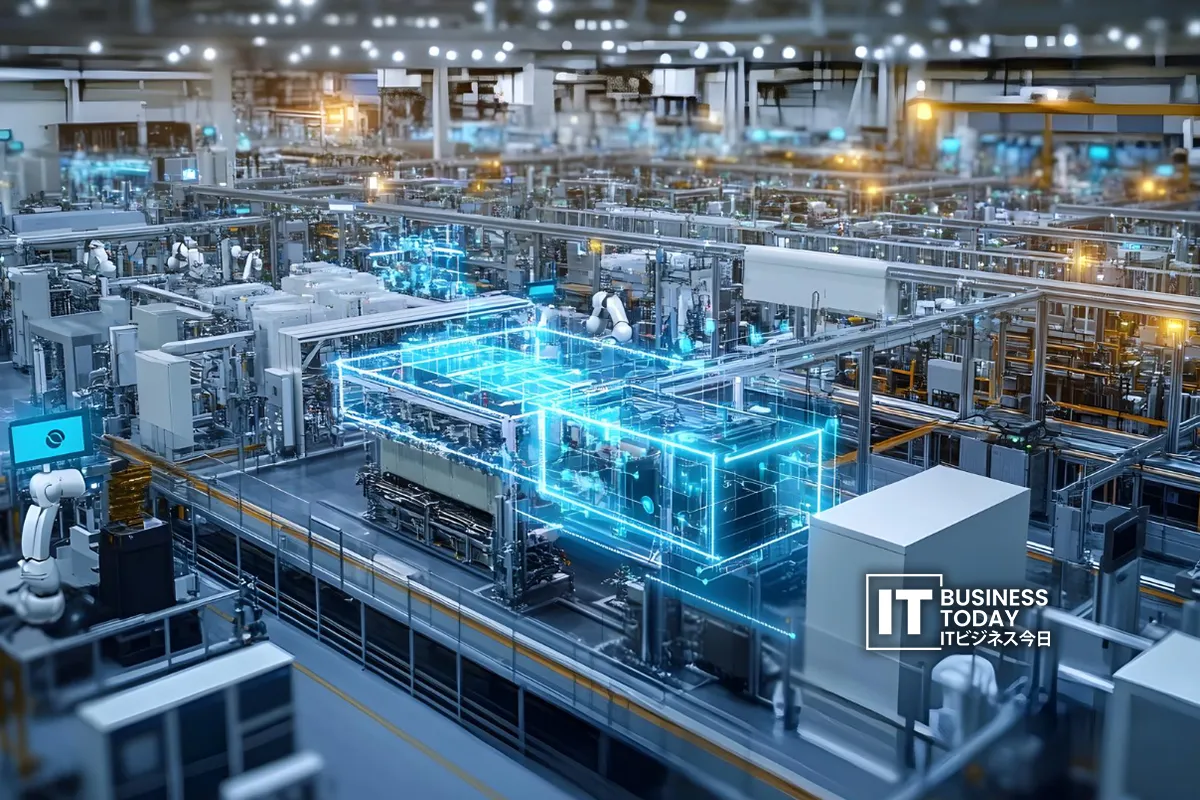
Digital twins allow manufacturers to model production environments, test robotic behaviour and examine possible changes before deploying them on the floor. Simulation can expose routing problems, coordination failures and inefficient decisions without disrupting live production.
That direction is gaining institutional backing. On May 14, 2026, METI and NEDO selected 9 R&D themes focused on making manufacturing and other data AI-ready and 2 R&D themes focused on robotics foundation models under the GENIAC program. The robotics foundation-model work can run within FY2026–FY2029.
The message for operations leaders is fairly simple. First, robotics is moving toward coordinated intelligence rather than isolated automation. Second, the value will come from how well different agents share information and adapt to disruption. Third, manufacturers that ignore interoperability, security and simulation will struggle to capture the upside.
Multi-Agent Robotics is not the future because factories need more machines. It matters because factories need systems that can think, coordinate and recover when reality refuses to follow the plan. That is the real test of smart manufacturing.



 English