 日本語
日本語 





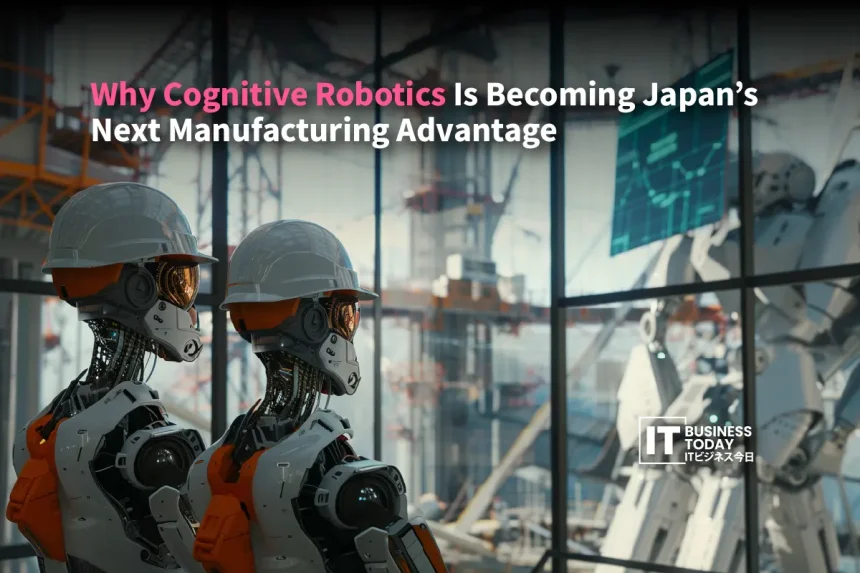
Factories were built for repetition. The next decade of manufacturing will be defined by exceptions. Parts arrive late, demand changes overnight, product mixes shrink, and experienced workers retire faster than replacements arrive. Traditional robots freeze when the script changes. Cognitive robotics does not. These systems can learn, adapt, interpret context, and make decisions inside environments that refuse to stay predictable.
Japan understands this problem better than anyone else. In the country’s 2025 Population Census it said a population of 123.05 million, dropping by 3.097 million since 2020, and the slowdown is even picking up speed. Still, despite all that, this whole situation could turn into Japan’s advantage. While the United States leads software models and China scales hardware, Japan sits on decades of manufacturing knowledge hidden inside factory floors, operator decisions, and production data. Cognitive robotics may finally turn that experience into intelligence.
The Shift from Traditional Automation to Physical AI
Traditional industrial robots were designed for certainty. They thrived in places where every shift, angle, and order of operations could be guessed, months before, kind of like clockwork. A robotic arm welding the same joint thousands of times a day is unbelievably efficient because everything around it just stays put. The second that certainty fades and the situation gets a bit less stable, the usefulness of the robot kind of falls apart too.

Also Read: Dark Factories 2.0: How AI Vision Systems Are Eliminating Manual Quality Inspection
Modern manufacturing no longer offers that luxury. Production lines swing between smaller batches, personalized products, and really moving demand rhythms. One missing component, a slight packaging variation, or that odd unexpected defect can stop the whole thing, because classic automation was kind of not designed to think. It was only built to repeat, over and over.
Cognitive robotics makes the situation feel different. Instead of marching through a rigid script of instructions, these systems blend perception with reasoning, then move to action. With vision models plus language-based understanding and zero-shot adjustment abilities, they can recognize objects they have not seen before, interpret what people ask in natural language, and reshape what they do without waiting around for engineers to rewrite code for every single exception.
Right now the worldwide race looks like it is already breaking into two groups. China keeps steering toward a hardware-first plan, leaning hard on scale and manufacturing capacity. The United States seems to be taking an AI-centric route, one that leans on foundation models, and software intelligence. Japan sits in a rare middle ground where precision engineering and industrial know-how already exist.
That opportunity is becoming official policy. METI’s revised AI Robotics Strategy released in June 2026 targets the introduction of approximately 10 million robots by 2040 across 18 implementation areas including food service, food manufacturing, and healthcare. The message is clear. Japan is no longer planning for automation. It is preparing for physical AI.
Japan’s Unique Edge Through Proprietary Operational Data
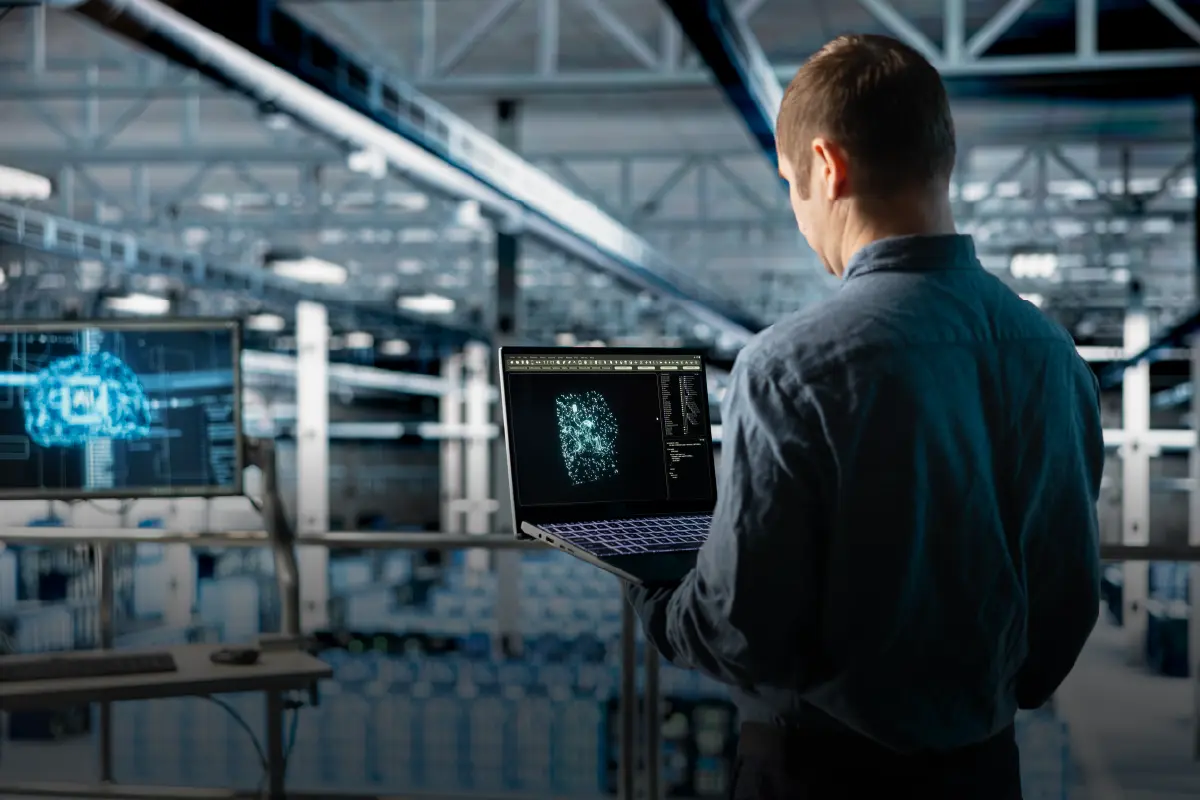
The conversation around AI still suffers from a software obsession. Bigger models, larger clusters, and more compute dominate headlines. Yet cognitive robotics follows a completely different rule. A robot cannot learn assembly work from internet text any more than a surgeon can learn from reading anatomy books alone. Physical intelligence demands physical experience.
This is where Japan quietly holds one of the strongest positions in the world.
Japanese factories have spent decades generating data that most companies never considered valuable beyond the production line. Every adjustment an experienced operator made, every vibration pattern that showed up before a machine started failing, every torque correction during assembly, and every quality inspection call created this kind of trail of industrial know-how. A lot of it stays stuck in machines, spreadsheets, maintenance logs, and the quiet instincts of veteran workers getting ready to retire.
The Japanese concept of suriawase makes this advantage even more powerful. Manufacturing in Japan has never been about optimizing individual components in isolation. It has always focused on careful coordination, fine-tuning, and interaction between systems, suppliers, machines, and people. Cognitive robotics needs exactly this kind of environment because intelligence emerges from relationships, not individual data points.
This explains why factory floors may become the next AI training grounds. Internet companies own digital behavior data. Japan owns physical behavior data.
The government has already recognized the opportunity. METI and NEDO launched FY2026 support for making manufacturing and other data AI-ready while funding robotics foundation model research under GENIAC using real data held by companies and organizations. The race for cognitive robotics may ultimately be decided not by who has the biggest model, but by who has the most authentic reality to train it on.
Closing the Foundation Model Gap Through Strategic Specialization
The obvious criticism arrives quickly. Japan is not leading the race for large language models. It does not control the largest AI clusters, dominate frontier model releases, or operate at the compute scale of the United States and China. Judging cognitive robotics through that lens, however, misses the point entirely.
The future robotics stack will not be won by one country building everything itself. It will be built through specialization.
The United States has established itself as the center of frontier AI models and software intelligence. China continues to push aggressively on manufacturing scale and vertically integrated hardware ecosystems. Japan’s opportunity sits somewhere far more defensible. It can become the world’s supplier of precision embodiment.
That starts with the parts nobody talks about enough. Smarter joints that can react to force and resistance in real time. Safety-certified perception systems that allow robots to work alongside people instead of behind cages. Precision actuators capable of translating software decisions into reliable physical movement thousands of times a day without failure.
The winners in cognitive robotics will not simply produce better brains. They will build better bodies.
Partnerships therefore become a strategic advantage rather than a weakness. Japanese OEMs do not need to recreate every foundation model from scratch if they can integrate world-class AI into world-class machines. The smartphone industry proved this model years ago. Robotics may follow the same path.
Japan itself is already moving in that direction. The Digital Agency released GENAI as open-source software in 2026 with deployment templates built around AWS, Microsoft Azure, and Google Cloud. The signal is difficult to ignore. The next manufacturing advantage may come from combining Japanese hardware discipline with global AI ecosystems rather than competing against them.
The New Value Chain Behind Robotics as a Service
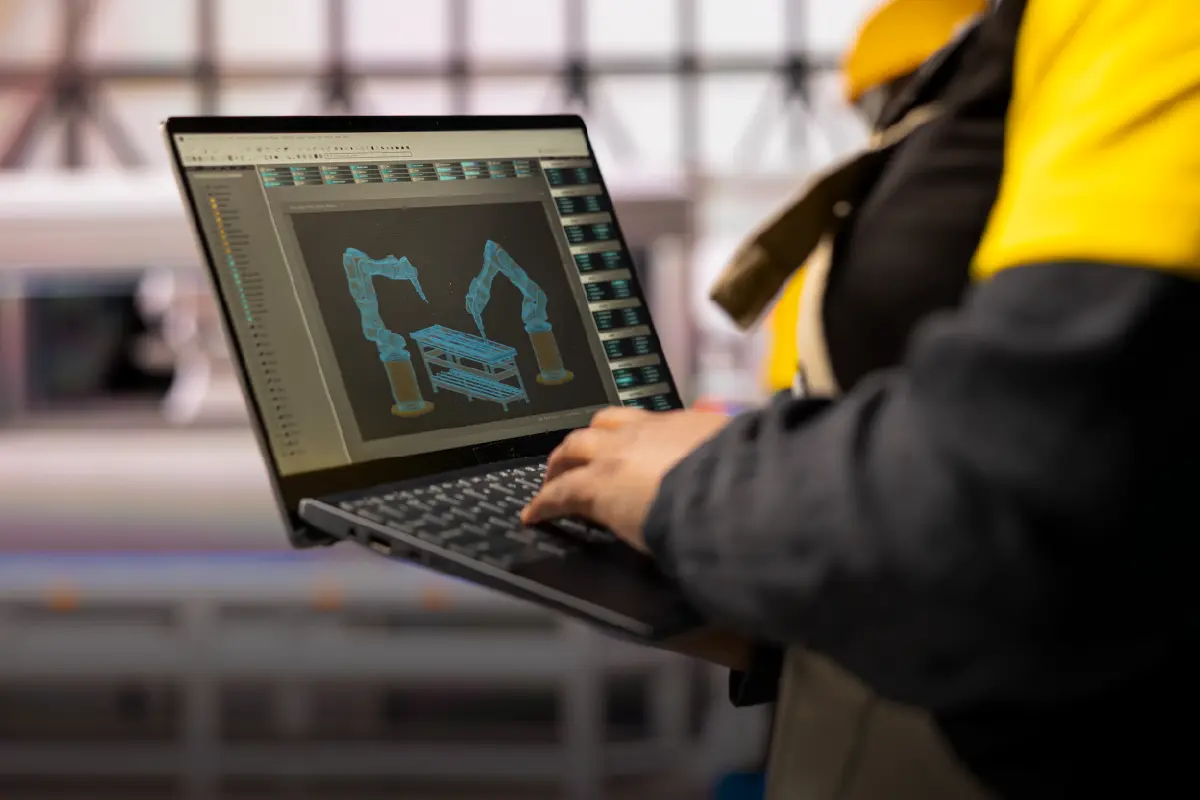
The old robotics business was surprisingly simple. Manufacturers sold machines, installed them on factory floors, and stepped away until maintenance was required or the next upgrade cycle arrived. Cognitive robotics breaks that model completely because intelligence is never a finished product.
A cognitive robot that performs the same task in exactly the same way every year is probably becoming obsolete.
The real value now comes from continuous learning. Software updates improve decision making. Predictive maintenance reduces downtime before failures occur. Fleet-wide data loops allow one robot’s experience to improve thousands of others operating across different facilities. Over time, the software layer may become more valuable than the machine itself.
This shift pushes the industry toward Robotics as a Service rather than robotics as equipment procurement. Manufacturers will increasingly buy outcomes instead of hardware. Uptime, throughput, defect reduction, and adaptability become the product.
That transition also creates a regulatory challenge. Cognitive robots learn from real environments, so they can’t always be certified with standards made for static machines doing repetitive work. Regulatory sandboxes and tighter cooperation between government agencies, manufacturers and technology providers will get more important, basically for controlled safe experimentation in real world settings.
Japan’s 2026 AI Basic Plan already moves in that direction too, and it even explicitly backs the leading rollout of physical AI across businesses and industries. Policy, technology, and manufacturing strategy are beginning to move in the same direction. That alignment is rare, and it is often where industrial shifts accelerate fastest.
The Race Will Be Won in the Space Between Hardware and Software
For years, the manufacturing debate has been framed as hardware versus software, factories versus algorithms, machines versus intelligence. Cognitive robotics is exposing how flawed that thinking was from the beginning. A brilliant model without a reliable body cannot build anything. Equally, world-class hardware without the ability to learn eventually becomes a commodity.
That is precisely why Japan deserves more attention than it currently receives. The country may not dominate headlines around frontier models or compute infrastructure, but cognitive robotics rewards integration more than scale alone. Precision engineering, operational discipline, and decades of industrial knowledge suddenly become strategic assets again.
Supply chain leaders, investors, and technology developers looking for the next major partnerships should pay close attention to Japanese OEMs. The next manufacturing advantage may already be sitting on their factory floors.



 English