 日本語
日本語 





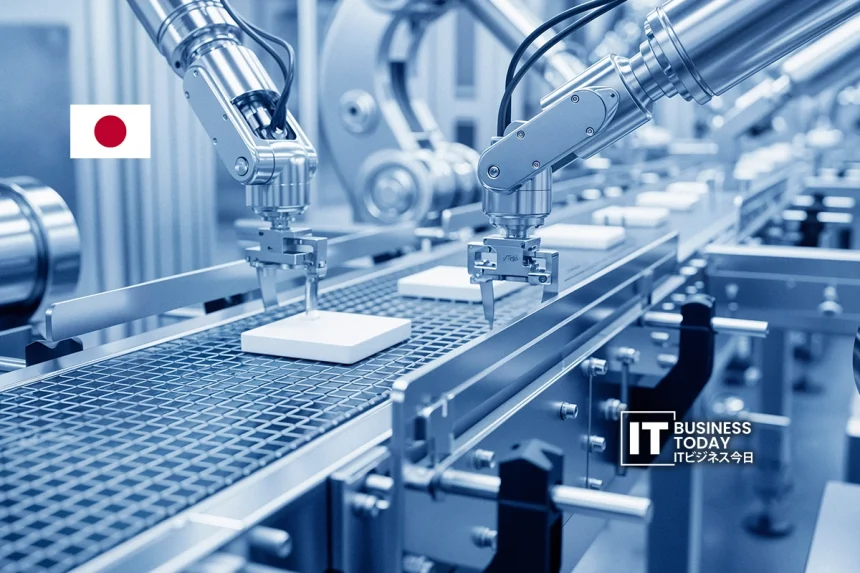
The Japanese manufacturing industry is currently experiencing a major shift towards the adoption of AI technologies to help overcome labor shortages and boost productivity and competitiveness on the international stage. One recent study shows how Japan uses AI not just as a tool for experimental projects but as an integral part of its strategy for the future development of the industry.
As manufacturing firms around the world start implementing AI technologies within their production processes, Japan takes advantage of its long-lasting traditions in the development of robotics and advanced machinery to be a leader of the new wave of the manufacturing industry.
AI Moves from Pilot Projects to Factory Floors
Japan has for many years been known for being one of the leaders in terms of automated industries around the world. With the advent of generative AI, machine learning, computer vision, and predictive analytics, there have come a lot more possibilities which are far more advanced than anything offered in terms of robotics before.

Also Read: Logizard Introduces Warehouse Analysis Solution
AI has been used in many manufacturing operations in order to schedule their operations, prevent failure of machinery, do inspections, cut down wastage, etc. In contrast to other forms of automation technology, AI systems are capable of making intelligent decisions by analyzing a large number of operational data.
This development becomes very relevant considering the need for increased productivity at Japanese manufacturing units owing to labor shortage due to various demographic problems.
Addressing Japan’s Labor Shortage Challenge
The main impetus for the use of artificial intelligence in Japan is its dwindling population.
It is hard for manufacturing companies to find skilled workers and train their existing workers who are getting closer to retirement. AI can be useful as an automation of mundane tasks, capture of organizational knowledge and assistance of people with intelligent decision-making software.
Generative AI can help engineers with writing technical documentation, maintenance and design process. Machine learning software can constantly monitor the assembly line and detect problems before they affect the production process.
Instead of being a substitute for workers, Japanese manufacturing companies see AI as an enhancing tool for their employees.
Strengthening Global Manufacturing Competitiveness
The incorporation of AI has become ever more important for Japan in order to keep its competitive advantage in the international market environment.
Japan has always been considered one of the manufacturing powerhouses due to its successful development of such industries as automotive, electronics, machinery, semiconductors, and industrial equipment.
There are countries all over the globe that are heavily investing in the creation of smart factories and AI-enabled production processes. In order to stay competitive, the producers of Japan should strive towards better efficiency, product quality, and faster production cycle.
Through the use of AI, companies can optimize their supply chains, cut down on downtime, make research and development faster, and cope with customer requirements more efficiently.
Creating Opportunities Across the Technology Sector
The rising use of AI in manufacturing has created opportunities that extend far beyond the walls of the factory.
Cloud computing, industrial software, semiconductors, cyber security, edge computing platforms, and networking technology have been gaining in demand. Companies that can help deploy industrial AI will find themselves experiencing high growth as more manufacturers launch their digital transformations.
Japanese companies that deal with sensors, Industrial Internet of Things, robots, machine vision, and AI infrastructures are especially poised to capitalize on the opportunities arising from the rise in AI usage. The combination of OT and IT is opening up markets for integrated solutions connecting physical manufacturing processes and digital intelligence.
Recent trends like the launch of Toshiba’s GridDB Startup Program, expanding AI cooperation with OpenAI by Hitachi, and NTT DOCOMO’s use of AI-based autonomous networks show that the wider Japanese technology industry is moving towards AI innovations.
AI and Smart Factories Become a National Priority
AI in manufacturing has now gained increasing significance within the Japanese government and industry.
The nation’s initiative for Society 5.0 involves making use of cyber-physical systems to make industries smarter and the infrastructure more efficient. The manufacturing industry becomes one of the biggest testbeds for such an objective where AI technology, robotics, digital twins, and real-time analysis come together to create intelligent production facilities.
AI in smart factories allows the collection of data from thousands of interlinked devices and helps in optimizing processes and predicting decisions. This not only increases efficiency but also promotes sustainability through lower levels of energy usage and wastage of resources.
In this era where ESG objectives have gained more importance, AI in manufacturing has enabled greater efficiencies along with lowering environmental impacts.
Implications for Businesses Operating in Japan
For companies operating in the context of Japan’s manufacturing environment, there are several opportunities and challenges associated with the AI revolution.
Those companies that will adopt AI early enough can reap benefits in terms of their competitiveness due to increased efficiency, quicker innovation cycles, and higher levels of customer response. Companies that will not adopt AI will lag behind those companies that use AI to optimize operations and lower costs.
Nevertheless, the adoption of AI will be accompanied by the need for investment in digital transformation, training staff, and cybersecurity. Also, there are certain issues related to data governance and integration that need to be solved.
Collaboration between the manufacturers, technology providers, startups, and research centers is going to be crucial in this regard.
The Future of Japan’s Industrial Economy
The increasing incorporation of AI within manufacturing goes beyond an improvement in technology; it signifies the emergence of a new era in the industrial development of Japan.
Through the increased usage of AI in manufacturing processes, logistics and product design, companies will now be capable of operating with more intelligence and efficiency. This trend may enhance Japan’s global reputation as an expert in advanced manufacturing, and also provide opportunities for technology providers and entrepreneurs.
In the coming decades, the role of AI in manufacturing may prove as important as automation and robotics did in previous eras. Japan, a country that has a strong reputation for industrial success, may find itself competing in the modern global economy according to its ability to integrate AI.



 English