 日本語
日本語 





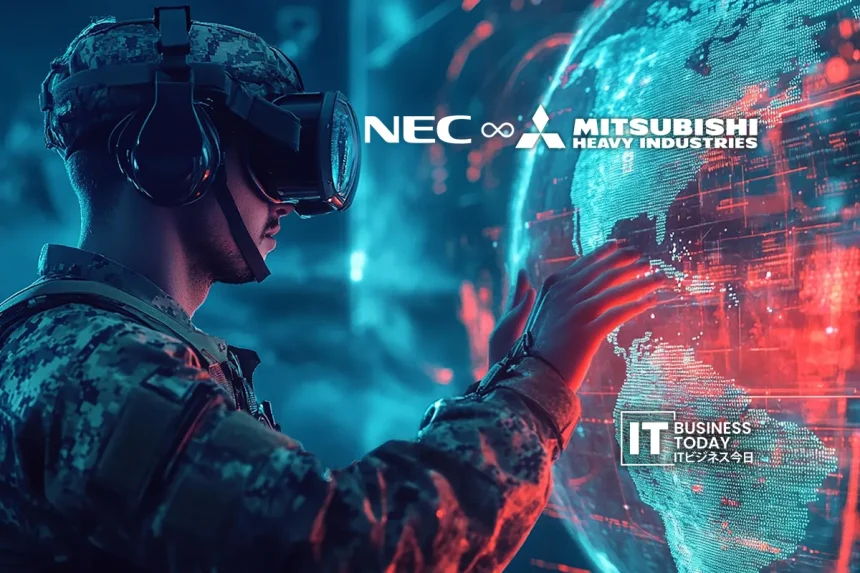
Japan’s defense technology industry is shifting toward a connected approach that includes artificial intelligence, drones and data infrastructure. Mitsubishi Heavy Industries and NEC are expanding their cooperation in the defense sector.
On September 2 Mitsubishi Heavy Industries and NEC signed a memorandum of understanding. This agreement creates a partnership that covers operational planning, command and control and unmanned assets. The companies said the collaboration will strengthen Japan’s domestic defense industry and give Japan control over important data and AI technologies.
This partnership shows a change in Japan’s defense strategy. As drones, autonomous systems, AI and cloud technology grow in importance defense strength is no longer decided by the performance of ships, aircraft or other physical platforms. The power to gather, process, protect and share information is becoming just as important.

AI and drones move to the center of defense technology.
Mitsubishi Heavy Industries has experience in defense equipment. NEC is an expert in command-and-control systems and information technology. By combining these skills the companies can create systems where AI and unmanned platforms work together as part of a defense network.
The companies plan to look at systems that put AI into the operation of drones and unmanned vessels. They may present proposals to Japan’s Ministry of Defense early as fiscal 2027.
This marks a shift, in how military technology is being made.
Of seeing drones as separate pieces of gear future systems can link unmanned platforms with command centers, sensors and AI software. That lets data collected by one platform be quickly analyzed and shared with a network.
Japans effort to gain control over data and AI
One of the important parts of the partnership is its focus on data and AI control.
Modern defense systems depend more on software, cloud services and big sets of information. Relying much on outside technologies can cause problems when private details are involved.
Mitsubishi Heavy Industries and NEC have specifically set up their partnership to build Japanese skills in data and AI.
For Japans technology industry this could lead to a need for AI models made in Japan safe cloud services, security systems and special computer tools.
The chance is not just, for the two companies. Small Japanese software makers, AI companies, chip makers and security businesses could possibly join a rising defense technology chain.
Cloud Technology Is Changing Defense Systems
The integration of defense equipment with cloud operations is another important element of the partnership.
Cloud infrastructure can allow information from multiple systems to be collected and processed through shared platforms. In a defense environment, however, that infrastructure needs to meet much higher requirements for security, reliability and resilience.
This creates a technology challenge for Japanese companies.
Defense-oriented cloud systems may require secure communications, encryption, access controls, distributed computing and systems capable of continuing to operate even when conventional network infrastructure is disrupted.
Japanese IT companies with experience in mission-critical systems could therefore find new opportunities as defense organizations modernize their digital infrastructure.
The Growth of Japan’s Drone Industry
Drones are likely to become one of the most visible areas of growth.
Japan’s Defense Ministry has been increasing its focus on unmanned systems and AI as part of preparations for what it describes as changing methods of warfare. The ministry’s recent defense plans also emphasize the use of drones and AI-enabled capabilities.
For Japan’s domestic drone industry, greater government and corporate interest could create a larger market.
Companies developing flight-control systems, sensors, navigation technologies, communications equipment and autonomous software could benefit. The market could also extend to counter-drone systems, logistics drones and surveillance platforms.
This creates a potential bridge between Japan’s commercial drone ecosystem and its defense technology sector.
AI Could Strengthen Command and Control
Command-and-control systems are another area where AI could have a major impact.
Defense organizations generate large volumes of information from sensors, aircraft, ships, drones and other systems. Human operators can face difficulty processing all of this information quickly.
AI can potentially assist by organizing data, identifying patterns and highlighting information that requires human attention.
The objective is not necessarily to remove human decision-making. Instead, AI can help commanders and operators understand rapidly changing situations and make decisions more efficiently.
This will require highly reliable AI systems, particularly when errors could have serious consequences.
Opportunities for Japanese Technology Businesses
I think the partnership between Mitsubishi Heavy Industries and NEC could bring economic effects to Japan.
As defense systems become more driven by software demand for technologies could grow, including:
– Artificial intelligence and machine learning
– Secure cloud platforms
– Edge computing
– Cybersecurity
– Sensors and imaging systems
– High-performance semiconductors
– Autonomous robotics
– Drone communications
– Data-management platforms
I think this could encourage collaboration between established defense companies and the startup ecosystem in Japan.
I think the government’s growing focus, on technological security could further support companies that create dual-use technologies, which serve both civilian and defense purposes.
A More Connected Japanese Defense Ecosystem
The partnership also demonstrates how Japan’s defense industry is evolving from a collection of hardware manufacturers toward a more interconnected technology ecosystem.
Aircraft, ships and drones increasingly need to communicate with software platforms, command systems and AI tools. That means companies traditionally viewed as IT providers can become important contributors to defense capabilities.
For Japan, developing those capabilities domestically could also strengthen resilience in critical technology supply chains.
Japan’s Defense Technology Market Enters a New Phase
The Mitsubishi Heavy Industries–NEC agreement is an important signal of where Japan’s defense technology industry is heading.
Drones, AI, cloud computing and secure data infrastructure are becoming increasingly central to national security, while established manufacturers and technology companies are being encouraged to work more closely together.
Also Read: Heartland Data Joins Nippon Nobel Group to Expand AI and Quality Engineering
For Japanese technology businesses, the development could open a growing market for AI, cybersecurity, robotics, semiconductors and mission-critical software.
The bigger transformation, however, is strategic. Japan’s future defense capabilities will increasingly depend not only on the machines it builds, but also on the intelligence and secure digital infrastructure connecting those machines.
The Mitsubishi Heavy Industries–NEC partnership suggests that Japan is now moving to build that technological foundation at home.
To Read More: https://www.mhi.com/


 English