 日本語
日本語 





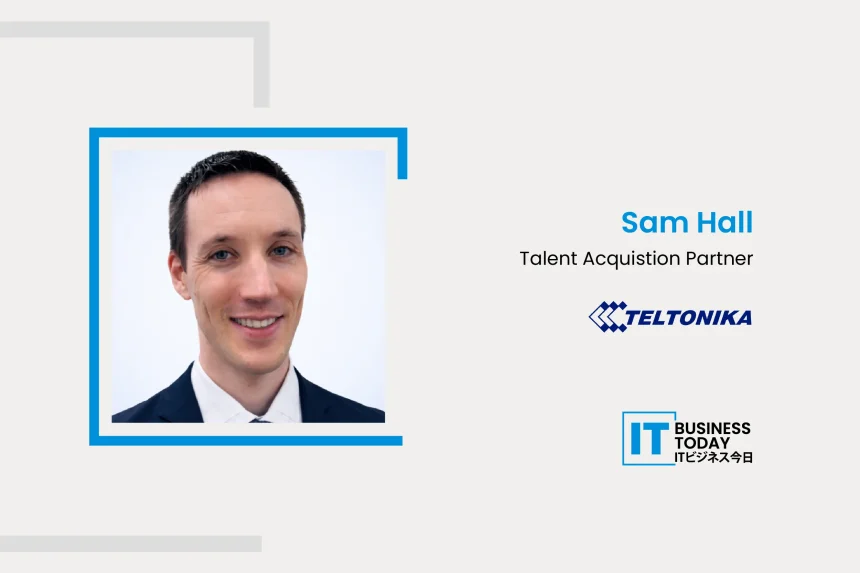
Sam, can you tell us about your professional background and your current role at Teltonika?
I am a New Zealand-born talent acquisition professional who has lived and worked in Japan for
more than a decade. I support talent acquisition, candidate sourcing, and workforce growth.
Sam, your journey in Japan began more than a decade ago with the JET Programme in Nagasaki and has since evolved into helping global technology companies build and scale teams across the country. Looking back, what experiences during those early years in Japan most shaped the way you think about people, trust, and business relationships today?

My early years in Nagasaki taught me that trust is built gradually through consistency, reliability,
and respect. I also learned the importance of listening carefully, understanding context, and
following through on commitments.
Over the years you’ve recruited across industries ranging from gaming and AI software to
supply chain technology, cloud security, and now industrial IoT. Across all those environments, what qualities have you consistently seen in commercial talent that succeeds in Japan regardless of the product or technology being sold?
Successful commercial professionals in Japan combine persistence, patience, and strong listening
skills. They understand the customer’s business needs in Japanese, build credibility over time, and
take ownership of their results. Cultural flexibility and the ability to work between Japanese and
global environments in English are also essential.
Your move to Teltonika came at a time when the company is actively expanding its footprint in Japan’s industrial connectivity and IoT market. What attracted you personally to the opportunity, and what convinced you that this was the right stage of the company’s journey to become part of it?
I was attracted to Teltonika because it operates in a practical and fast-growing area of
technology, including industrial IoT, networking, and remote management. I also wanted to join a
company where talent acquisition could directly support business growth. Its international
culture was a strong match for my background.
Teltonika is currently investing heavily in building its sales organization across roles such as Account Managers, Sales Managers, and BDRs. From your perspective, what separates candidates who simply have sales experience from those who can genuinely thrive in technical B2B environments such as IoT, networking, and industrial technology?
Strong technical B2B salespeople are curious about how products work and how they create
business value. They can communicate with stakeholders, manage longer sales cycles, and remain
resilient through repeated prospecting and follow-up. And they must be willing to learn.
Japan’s demographic shifts and labor shortages are accelerating conversations around automation, remote operations, and connected infrastructure. With nearly 30 percent of Japan’s population now aged 65 or older, how are you seeing these broader market realities influence demand for IoT solutions and the talent needed to support them?
Japan’s labour shortages are increasing demand for remote monitoring, and more efficient
operations. IoT can help companies reduce manual work, manage equipment remotely, and
improve productivity. And also Cybersecurity related demands are increasing.
Many global companies entering Japan discover that success depends less on translating
products and more on understanding context, relationships, and local decision-making processes. Based on your experience, what are the biggest blind spots international businesses still have when building teams and customer relationships in Japan?
A common mistake is assuming that translating a global strategy is enough. Companies must
understand local decision-making, risk awareness, relationship building, and customer
expectations. They also need local native Japanese employees who can build new business, if
they do not speak English we work around that with AI tools.
Industrial IoT is increasingly moving from an engineering conversation to a business
conversation involving manufacturing resilience, logistics efficiency, smart infrastructure, and operational visibility. Which industries or use cases excite you most when you think about the next phase of IoT adoption in Japan?
Manufacturing, logistics, transportation, warehouses, and infrastructure are especially exciting.
IoT can support predictive maintenance, fleet management, asset tracking, remote monitoring,
and operational visibility.
Having worked with both fast-growing companies and established global organizations during periods of expansion, what role does culture play alongside skills and experience when building teams in Japan, and what tends to be underestimated most often?
Culture is just as important as Japanese language skills and experience. Successful employees
need adaptability, accountability, initiative, and the ability to communicate across Japanese and
global teams.
Finally, when you look ahead over the next five years, where do you see the intersection of
talent, technology, and industrial transformation creating the biggest opportunities in Japan, both for companies and for professionals hoping to build careers in this space?
The biggest opportunities will come from technology that helps Japan address workforce
shortages and improve business operations. Companies will need professionals who understand
both technology and business. People who can explain complex solutions clearly and apply them
to real problems will be increasingly valuable across Japan for many years to come.


 English