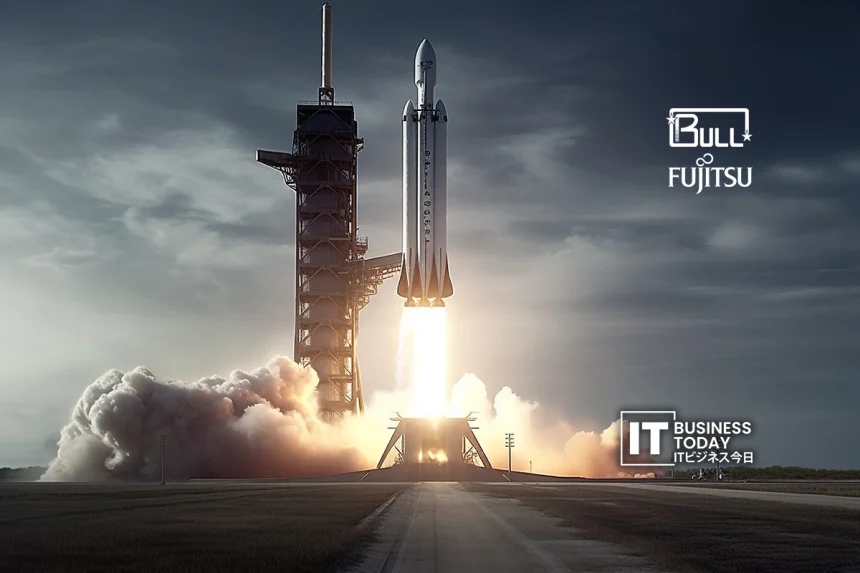
Fujitsu signed a Memorandum of Understanding agreement with BULL Co. Ltd. with the purpose of developing a highly precise Space Situational Awareness (SSA) system that would target the needs of Japan specifically. This initiative intends to monitor space debris and the movement of satellites in the Earth’s orbit and thus ensure space activities take place safely and sustainably.
This development was necessary considering the need for managing orbital congestion due to the rapid increase in the number of satellites being deployed in space. The deployment of satellites in orbit is becoming relatively inexpensive, which means that there are many satellites in space. Therefore, collision probability has increased, and SSA capability became critical.
Building a Comprehensive Space Traffic Management Framework
The collaboration is not merely about keeping an eye on things. Both companies intend to work together on creating Space Traffic Management (STM), a system that tracks satellites during their entire lifecycle, from launch to disposal.
こちらもお読みください: 兼松、FOSSAシステムズと代理店契約を締結
The ultimate objective is to create an industry standard by default for space traffic management with Japan leading this new field. With space getting more commercialized, it is the frameworks like these that will help in assuring safety of operations and adherence to regulations.
Combining Hardware Innovation with Data Intelligence
The partnership utilizes the complementary capabilities of each company. BULL Co. Ltd. is the maker of “HORN, ” a post-mission disposal that helps prevent satellites and rockets from being turned into space debris. The system also records orbital data that can be used for further research and analysis.
Meanwhile, Fujitsu’s strength lies in its experience of large-scale data processing and high-precision orbital analysis that spans several decades. The company intends to create a platform for analyzing satellite trajectories and forecasting potential collisions by using HORN data.
Jointly, the companies plan to introduce a complete data gathering, analysis, and operational support service – essentially providing a fully integrated SSA solution to the private sector.
Implications for Japan’s Tech and Space Industry
The collaboration is indicative of a larger change in Japan’s tech scene. Space is turning out to become an important growth industry. While Japan has been primarily recognized for its industries in electronics and manufacturing, it is truly becoming a country in the space sector by harnessing the best of hardware and advanced analytics.
Creating Space Situational Awareness (SSA) services will also open doors to a variety of fields such as AI-equipped data analytics, cloud-based platforms, and live tracking systems. Since the data from space is getting more and more sophisticated, there will be a growing need for high-performance computing and machine learning which in turn will help Japan’s overall technology environment.
ビジネスへの影響と新たな機会
The positive impact of improved SSA capabilities for corporations – particularly those in the field of satellite communications, earth observation, and aerospace industries – will be significant. They will be able to take advantage of additional instruments that will help them mitigate risk factors, manage their satellites effectively, and fulfill the legal requirements.
Apart from the above, the development will open up new opportunities for doing business. One could imagine that an SSA solution offered by the private company might turn out to be a paid platform where satellite owners will be able to receive information and analytics on a timely basis.
Moreover, the exchange of data and platforms with Japanese start-ups and small businesses can bring about many innovative solutions and lower the barriers to entry.
Addressing a Critical Global Challenge
One of the biggest challenges in the global space industry right now is the accumulation of space debris. As more and more satellites are orbiting earth, and many more are being planned, there is a serious risk that a sequence of collisions could happen – this situation is known as the “Kessler Syndrome” and it would jeopardize all space activities.
The cooperation between Fujitsu and BULL is producing a new precise tracking system that would help to prevent collisions and in general to the maintenance of space environment.
A Strategic Step Toward Space Leadership
The collaboration between Fujitsu and BULL Co., Ltd., marks a major milestone for Japan’s vision of becoming a frontrunner in space technology. With the application of analytical capabilities combined with hardware solutions, the program puts Japan ahead of other countries in managing space traffic.
With the growth of the space industry worldwide, the need for surveillance and management of the orbits will be an essential component of competition. This program sends a message to Japan’s technology sector that innovation will no longer be limited to the ground but will be extended into outer space.