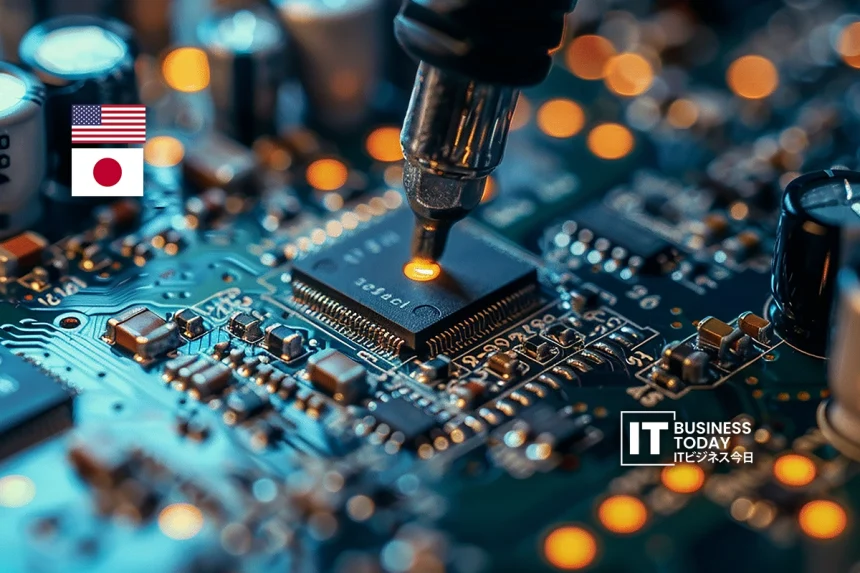
A consortium of 12 Japanese and U. S. semiconductor related companies has officially opened a new development base in Silicon Valley, a major milestone in the cross-border collaboration in chip innovation. This initiative, called “US-Joint, ” is a collaboration of the leading materials and equipment companies to together develop next-generation semiconductor technologies.
The center will mainly work on how to finalize and deliver the chips – including their assembly, packaging, and finally product integration. This process is getting more and more important since the advancements in chip performance are now dependent not only on the fabrication but also on the packaging.
Focus on Next-Generation Chip Packaging
Rather than focusing on the fab plants, which is the traditional chipmaking way, the consortium is going after advanced packaging that could really improve performance for innovative products such as AI and self-driving vehicles. Using the machines and know-how of their member companies, the Silicon Valley site will be the place to try out new ideas and get prototypes made very quickly.
こちらもお読みください: リガク、チップ製造分野でOnto Innovation社と提携
Among the participants are very important Japanese companies like Resonac, Toppan Holdings, and Towa, together with American firms like 3M. In material science, precision equipment, and process technologies, they have the full spectrum required for the development of next generation semiconductors.
Besides new packaging technologies, the consortium wants to solve another major issue of the semiconductor industry that the lack of environments for these technologies to be tested and validated is a bottleneck. Establishing the base in Silicon Valley, the group will be able to tap global tech companies directly and spot market demand quite immediately.
Strengthening Japan’s Semiconductor Strategy
Opening this base fits perfectly with Japan’s larger plan to bring back and make its semiconductor industry stronger. Japan was once the world leader in making semiconductor chips but now is concentrating more on top value segments such as materials, equipment, and advanced packaging.
Working together with U. S. partners, Japan is setting itself up as the hub of a more resistant and diversified global supply chain. This move goes well with Japan’s domestic efforts that include government-backed ventures such as Rapidus Corporation, which plans to manufacture state-of-the-art chips in Japan by the late 2020s.
With this dual approach building domestic manufacturing while working internationally on R&D in a highly globalized industry, reflects the Japanese method of being realistic in a way that is best for competitiveness.
世界のハイテク産業への影響
The importance of the collaboration between the US and Japan is not limited to their two countries only. With the demand for high-performing chips rising rapidly driven by AI, cloud computing, and driverless technology, advanced packaging is becoming a key factor in product differentiation.
There are physical and economic constraints in continuously scaling the sizes of the transistors which have traditionally been the main method of increasing performance. Hence, there have been arising packaging innovations capable of providing performance boosting such as chiplet architectures and 3D integration.
The partnership’s emphasis on these technologies is a move that will make it the leader of this change. Since it will facilitate quicker product development and a closer working relationship between suppliers and end-users, the location of the Silicon Valley could be a point of rapid commercialization of the new generation of semiconductor solutions.
ビジネスへの影響と機会
For companies operating within the technology ecosystem of Japan, the initiative represents a chance to broaden their experiences. Corporations involved in the production of semiconductor materials, machinery, and software can take advantage of heightened cooperation and exposure to international markets.
The venture will undoubtedly increase the need for professionals with expertise in areas like materials engineering, process optimization, and AI-based chip design. As a result, the country is likely to witness enhanced spending on R&D and talent fostering.
Besides that, small and medium-sized businesses might also be able to tap into the global supply chains by offering specialized components and services, as large consortium members will be turning to them for their needs.
A Strategic Move in the AI Era
The time at which the group started is very important as AI technologies little by little are becoming so complex that the demand for top-level, energy-saving computer chips will rise very fast. Advanced packaging is a very effective method to fulfill the requirements since it allows better integration of several chip parts.
The consortium is making itself available in Silicon Valley and has got very close to the biggest AI companies and centers of innovation in the world. Being so close makes it possible to have very fast exchanging of ideas and getting developments out quite quickly, which is very important in a market that changes very fast.
A New Model for Global Semiconductor Collaboration
The US-Joint initiative is setting an example of a new way of semiconductor innovation that involves working together across borders and different parts of the value chain. Instead of striving individually, companies are joining hands in terms of sharing their facilities and know-how to address the most advanced technical issues.
For Japan, this is a significant move towards establishing its position again in the global semiconductor market. Through high-end innovation and strategic collaborations, the country is setting a major role for itself in the tech evolution driven by AI.
Globally acceleration of chip development, programs such as this one are indispensable in determining the very next generation of semiconductors and consequently the sectors relying on them.