 日本語
日本語 





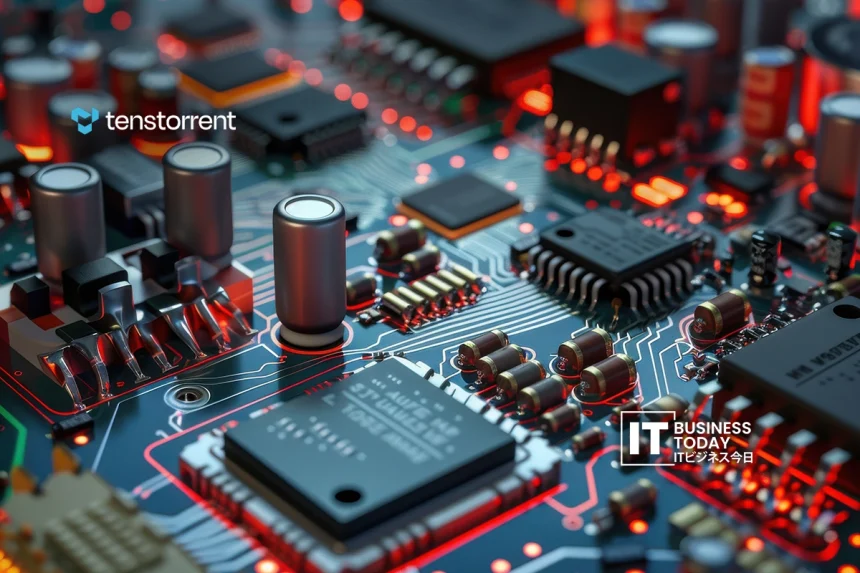
Canadian AI chipmaker Tenstorrent is making a big change in Japan’s role in the global semiconductor ecosystem by aiming at Japan as the main center for the design of new generation semiconductors. With the help of the Japan External Trade Organization, the chip maker has quickly grown its footprint since it set up its Japanese branch in 2023.
Under the leadership of well-known chip architect Jim Keller, Tenstorrent is targeting the creation of AI-specific chips and accelerators that are capable of driving the next generation of “physical AI” – the integration of artificial intelligence in real-world systems like robots and industrial automation.
This move is a clear sign of Japan’s rising position in the worldwide semiconductor competition, as the nation is determined to restore its capabilities in high-end chip design and manufacturing.

Also Read: QNX and NVIDIA expand into safety-critical edge systems
Open-Source Strategy Meets Japan’s Industrial Strength
One of the main pillars of Tenstorrent’s approach is to base its technologies on an open architecture using RISC-V. Tenstorrent, instead of the traditional chip makers who use proprietary systems, offers the possibility of co-design at the IP level, i. e. allows Japanese manufacturers to create custom chips specifically designed for their needs.
Such a method fits very well with the features of Japan having precision manufacturing, automotive engineering, and robotics as major industries. With open chip design combined with Japan’s meticulousness and quality, the company intends to produce highly specialized solutions for performance, efficiency, and reliability areas in which industries are always demanding.
This move will also make innovation easier for everyone and even new and small companies will be able to join the semiconductor development.
Collaboration with Rapidus and Industry Integration
Tenstorrent is working closely with Rapidus Corporation, an initiative backed by the government that aims to produce advanced semiconductors in the country. Through this collaboration, chip designing and manufacturing are linked together, which helps in strengthening Japan’s complete semiconductor capacity.
The company’s presence in Japan is based on three main aspects: providing AI systems for data centers, handing over chips and intellectual property to manufacturers, and jointly developing domestic AI semiconductors. Thanks to these activities, Japanese automotive and industrial companies are already starting to use Tenstorrent’s technologies.
Moreover, the company is considering extending its activities outside the two major cities, Tokyo and Osaka, and at the same time looking at areas such as Hokkaido that can become centers of semiconductor innovations.
Talent Development as a Strategic Priority
Developing human resources is a pillar of Tenstorrent’s strategy for Japan. The company is collaborating extensively with the government and other industry players to equip students with the skills required for the semiconductor sector. For instance, through hands-on programs, they aim to train about 200 design specialists.
This emphasis is a direct response to one of Japan’s major problems: the lack of skilled workers in advanced chip design. By giving workers a first-hand experience with state-of-the-art technology and connecting them with global experts, Tenstorrent is contributing to the establishment of a lasting and self-replenishing source of qualified staff for Japan’s semiconductor industry.
At the same time the focus on open learning and collaboration represents a wider move towards knowledge-sharing that is happening in the AI era, since rapid innovation demands continuous updating of skills.
Implications for Japan’s Tech Industry
By choosing to open up more office spaces, Tenstorrent is marking Japan’s tech industry a significant milestone. It is, after all, a country that has long been primarily known for the production of semiconductor materials and equipment. The country is now trying to come back to the design area – a very important part of the entire chain of value that is closely related to creativity and competition.
AI, alongside automotive, robotics, and smart infrastructure, will most probably be the most important engines of digital transformation in Japan. As AI is becoming inseparable from real-world systems, there will be an increasing need for processors that are designed for specific purposes and for edge computing solutions.
Besides this, it will help Japan to maintain and even improve its global position in the AI landscape, which not only means it will get AI benefits but it will also help direct where the AI field is heading.
Business Impact and Market Opportunities
Tenstorrent’s presence in Japan opens new doors for businesses working at different levels of the semiconductor and AI supply chain. For instance, producers are given the opportunity to obtain a chip that best fits their product. At the same time, those in the field of technology can use high-end processors to increase the performance of their equipment while saving energy.
The open RISC-V platform is yet another way to promote cooperation among teams, making it possible for companies to come up with fresh ideas even if they are confined by their own systems. This may very well result in the manifestation of new business strategies and collaborative ventures, especially in the fields of automobiles, industrial automation, and edge computing.
On the other hand, the proliferation of AI-based data centers and chip manufacturing initiatives is anticipated to stimulate the need for associated services, such as cloud infrastructure, software development, and system integration.
A Strategic Bet on Japan’s Future
Tenstorrent’s decision to invest in Japan highlights a bigger trend that is global tech companies are increasingly looking at Japan as a center for advanced innovation. Even with issues like population decline, Japan’s solid industrial base and top-notch engineering skills are still major resources.
Through the mixture of these advantages with the most modern designs of AI chips, Tenstorrent is contributing to putting Japan in the lead of the upcoming technological revolution.
Redefining Japan’s Role in the AI Era
The company’s growth strategy is a great example of how Japan can regain a leadership position in the semiconductor industry – not by simply competing based on manufacturing scale, but by targeting high-value innovation and collaboration.
With AI transforming industries across the globe, projects like this give a strong indication where Japan’s tech ecosystem is headed: it is about merging sophisticated design skills with practical applications.
Whether you are a business person or a policymaker, the takeaway is that Japan is not only hitching a ride on the AI revolution but, more importantly, is already laying the groundwork for its subsequent wave.



 English