 日本語
日本語 





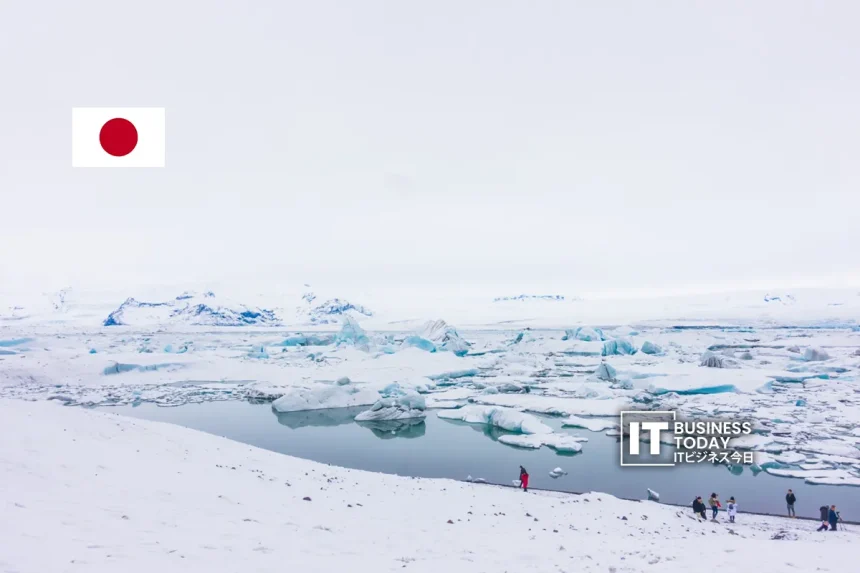
I was surprised to read that a new study led by researchers at Japan’s National Institute of Polar Research has found an unexpected link between warmer ocean water in the South Atlantic and more Antarctic snow deep inside the continent. This discovery can help us better understand how the Antarctic ice sheet changes and can improve the tools we use to forecast future sea level rise.
Researchers looked at 46 years of rain and snow records from Dome Fuji Station, which sits 3,810 meters high on the East Antarctic ice sheet. By mixing climate models with data gathered during Japan’s Antarctic fieldwork the team saw that snowfall at Dome Fuji grew from 1979 to 2024.
The study, which appeared in the Journal of Geophysical Research: Atmospheres says the rise in snow was not due to the steady snow called diamond dust. Instead it was caused by frequent heavy rainfall and snowstorms. The study gives a reminder that climate systems are linked over great distances. Knowing how they connect now relies more and more on data and powerful computers.

South Atlantic Warming Has an Unexpected Effect
Dome Fuji sits inside the continent a place where ocean moisture usually struggles to reach the tall Antarctic ice sheet. The researchers discovered that warmer sea‑surface temperatures in the South Atlantic between 40 and 50 degrees south can change the air flow. This South Atlantic warming seems to raise the number of high‑pressure blockages making the jet stream wiggle more and letting moist air travel into Antarctica.
These air‑flow changes can spark snowfall events at Dome Fuji. During the 46‑year study the number of ridges pointing a certain way went up. This made it easier for water vapor to reach Dronning Maud Land, the area where Dome Fuji sits. The finding matters because snow is a factor that decides if the Antarctic ice sheet gains or loses weight.
Why Antarctic Snow Matters to Japan
Changes in Antarctica affect more than the continent. The Antarctic ice sheet holds amounts of frozen water. If the rate of ice building and ice melting become very unbalanced global sea levels can change.
For Japan with its coastal cities, ports and industry knowing more about how the Antarctic ice sheet behaves is very important for the long term. Better climate forecasts can help governments and businesses plan where to build, strengthen coastlines and prepare for disasters. This new research can help those forecasts by giving estimates of how much snow gathers in one of the hardest places, on Earth to watch.
Data Technology Is Central to Climate Research
One of the most interesting aspects of the study is the way researchers built a more reliable long-term dataset. Direct measurements from Antarctica are extremely limited. The research team used a valuable one-year precipitation record collected during Japan’s 44th Antarctic Research Expedition between February 2003 and January 2004. Researchers compared those observations with human weather observations and measurements from a ceilometer capable of detecting cloud and snowfall conditions.
They then used the observations to correct ERA5 global reanalysis data and reconstruct precipitation changes over 46 years. This approach demonstrates how modern climate research increasingly depends on combining physical observations with large-scale computational datasets. For Japan’s technology sector, this creates opportunities in scientific computing, AI-assisted climate modeling, satellite observation, sensor technology and data infrastructure.
AI Could Improve Future Climate Forecasting
The next stage of research could involve even more advanced computational methods.
Climate scientists work with enormous datasets covering atmospheric pressure, ocean temperatures, wind patterns, precipitation and ice-sheet conditions. Machine learning can potentially help researchers identify relationships that are difficult to detect using conventional analysis.
AI could also assist in forecasting extreme precipitation events, identifying atmospheric rivers and improving simulations of future Antarctic snowfall. For Japanese technology companies, this represents a potential market at the intersection of AI and climate science. Cloud computing providers, high-performance computing companies and AI developers can support researchers processing increasingly complex climate datasets.
Opportunities for Japan’s Earth-Observation Industry
The findings also highlight how important environmental observation technologies are. Satellite systems can give data about how ice sheets move, what the surface looks like and what the air patterns are, in places where it is very hard to observe from the ground. Japan already has skills in satellite technology, sensing and scientific instruments. If Japan keeps investing in these fields it could help both climate research and worldwide environmental monitoring. Companies that make sensors, satellite parts, data analysis tools and maps could benefit from growing demand for climate data.
Better Climate Data Could Support Businesses
Climate research is becoming more useful for business decisions. Companies that build infrastructure must check long‑term risks. Insurance firms need models to understand natural hazards. Energy firms must plan for changing weather and agriculture and logistics firms rely on advanced climate forecasts. Better Antarctic models might seem far, from these business uses. Improved global climate models can finally give more reliable risk assessments. For businesses this could mean better long‑term planning.
Japan’s Research Strength Could Create Technology Spillovers
The study also highlights the value of Japan’s running investment in polar science.
Antarctic research requires logistics, communications systems, scientific instruments and data-processing capabilities. Technologies developed for environments can sometimes find applications elsewhere. Remote monitoring, equipment, resilient communications and low-maintenance sensors could have uses in Japan’s own difficult environments, including mountains, remote islands and disaster-affected regions.
The knowledge gained from Antarctic research can therefore contribute indirectly to Japan’s wider technology ecosystem.
A New Piece of the Climate Puzzle
Also Read: Hitachi, Tokyo Gas Demonstrate Digital Biomethane Tracking
The discovery that South Atlantic warming may influence snowfall thousands of kilometers away demonstrates how complicated the global climate system remains. For scientists the study provides a piece of the puzzle surrounding Antarctic precipitation and ice-sheet mass balance. For Japan’s technology industry it highlights the growing importance of tools of collecting, processing and interpreting environmental data at enormous scale.
The research team plans to investigate the snowfall processes linking South Atlantic sea-surface temperatures with atmospheric blocking and moisture transport. As that work progresses, technologies such as AI, high-performance computing, satellite observation and advanced sensors will become increasingly important.
For Japan the broader opportunity is clear: climate science is becoming a technology challenge much as a scientific one. Companies that can turn environmental datasets into accurate forecasts and actionable intelligence could play an important role, in helping businesses and governments prepare for a changing planet.



 English