 日本語
日本語 





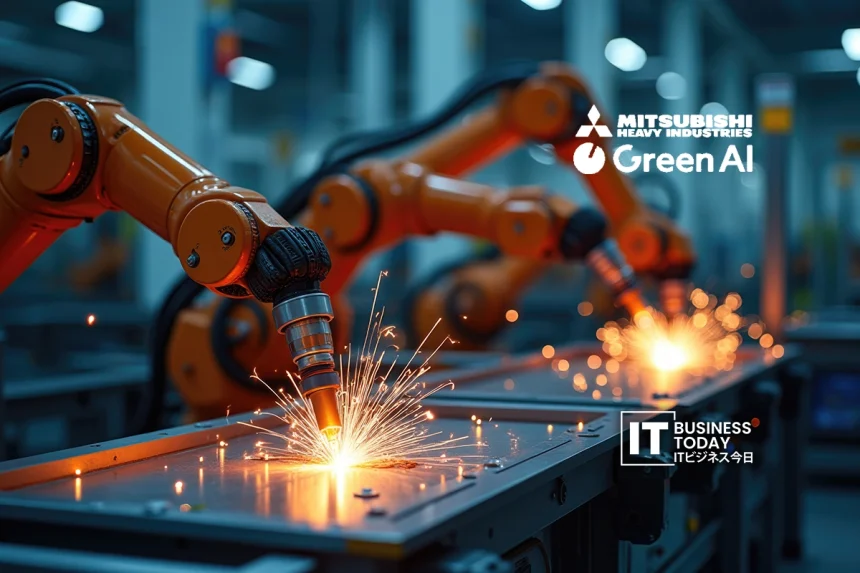
The industrial sector in Japan is moving a step closer towards sustainability through a partnership between Mitsubishi Heavy Industries (MHI) and Green AI Co., Ltd. The two organizations have partnered in a bid to enhance energy efficiency and hasten the reduction of carbon footprint in industrial settings through the use of the Green AI decarbonization platform powered by artificial intelligence and MHI’s industrial engineering expertise.
This move comes at a time when there is increasing pressure on manufacturers globally to attain carbon neutrality, adhere to more stringent environmental regulations, and deal with increasing energy costs. As such, rather than concentrating only on carbon offsetting, the two organizations are looking at practical ways of saving money through energy savings.
AI Meets Industrial Engineering
According to the agreement, MHI will integrate the Green AI energy efficiency and CO₂ emissions reduction platform into its decarbonization offerings targeted at the industrial sector. This platform analyzes energy consumption and emissions figures and creates customized carbon reduction roadmaps while ensuring economic feasibility.

One of the distinctive features of the solution is that it uses the proprietary database comprising of about 5,700 ways of saving energy and decarbonizing. Recommendations generated by this platform in combination with the experience of MHI in working with industrial technologies will help manufacturers to introduce feasible energy efficiency improvements.
Contrary to general approaches in sustainable manufacturing, this partnership will offer companies specific implementation options that combine carbon reduction with economic considerations.
Supporting Japan’s Manufacturing Sector
The program is focused especially on working with SMEs, which serve as the lifeblood of Japan’s manufacturing supply chain but do not have enough technical know-how to implement decarbonization plans in their business operations.
MHI has already developed a cooperation agreement with Shoko Chukin Bank that will help these companies implement GX programs. With the help of Green AI platform, such collaboration will become even more effective since businesses will be able to find ways of reducing emissions at affordable costs and create a plan for its implementation.
It will help smaller manufacturers get from sustainability plans to implementation without having much internal knowledge in the area.
Driving Japan’s Green Transformation
The declaration is in sync with Japan’s broader efforts to become carbon neutral and still remain competitive within the global industry scene. Manufacturing is one of the energy-intensive industries in Japan and any efforts to increase efficiency would be critical in helping to achieve national environmental goals.
By approaching energy conservation not only as an environmental commitment but rather as a competitive edge in the business environment, the joint effort aims to save money by decreasing energy consumption and optimizing production.
The approach shows that there is an increasing tendency in the Japanese industrial environment towards the use of digital technologies not just as an environmentally friendly tool but also as a means of improving business performance.
Impact on Japan’s Technology Industry
Such a collaboration is also indicative of the increasing importance of AI in the process of digital transformation in industries.
Artificial intelligence technologies are going beyond predictive maintenance and quality inspection to areas including energy optimization, emissions reduction, production scheduling, and sustainability reporting. Companies specializing in the development of AI technologies in industries, IoT sensors, cloud computing, and digital twin will likely benefit from the growing need for integrated decarbonization solutions.
The collaboration illustrates the fact that AI is increasingly becoming an integral part of industrial software products. With the increase in the number of industrial companies that will be looking at digitizing their processes, the need for platforms able to integrate environmental performance with operation data will likely become significant.
In the context of Japan’s technology landscape, this presents opportunities for software, cloud computing, automation companies, and systems integrators.
Benefits for Businesses Across Industries
Energy optimization through AI will offer many advantages for manufacturers that go beyond carbon emission reduction.
The reduction of energy use will decrease manufacturing costs while increasing the efficiency of machine usage. Insights about energy use will help manufacturers to make investments which will be most profitable in terms of their finances and impact on the environment.
Automobile manufacturers, steel manufacturers, chemical manufacturers, food processors, and electronics manufacturers are among those who can benefit from AI advice and enhance their plants without reducing their production capabilities.
The feature of the platform to consider not only reduction in emissions but economic feasibility is especially important for today’s businesses which need to demonstrate their sustainability achievements to their clients and investors.
Looking Ahead
The collaboration between MHI and Green AI highlights the way Japan incorporates artificial intelligence into its industrial decarbonization process. Through the integration of AI technology with actual engineering, the companies seek to ensure that energy efficiency becomes feasible, applicable, and economically reasonable for all types of manufacturers.
Considering that the Japanese industry is continuing to invest in digitalization and green technologies, such partnerships are likely to become even more relevant and widespread in order to enable companies to reduce their emissions while boosting their competitiveness. In addition to contributing to carbon neutrality objectives, the initiative emphasizes the leadership of Japan in the application of AI technology.



 English