 日本語
日本語 





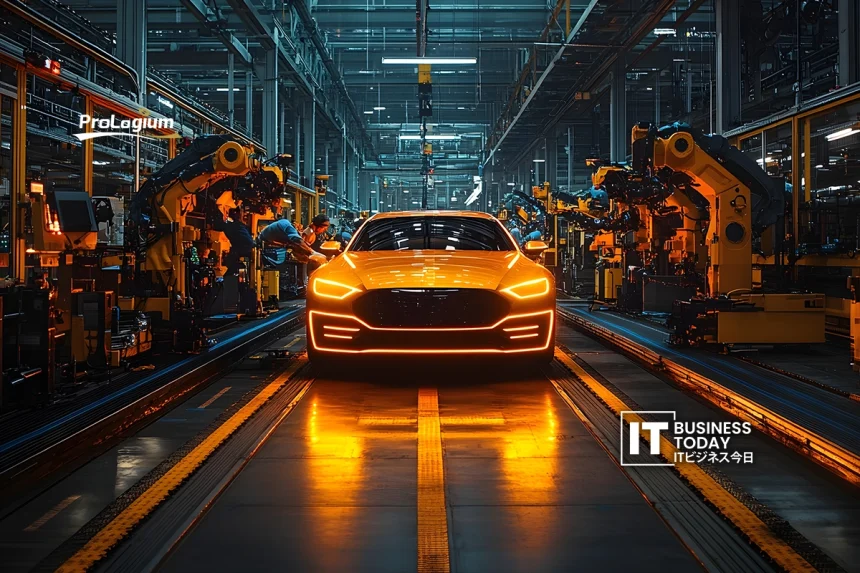
Mercedes-Benz and ProLogium are moving forward with solid-state battery testing. The two companies have signed a testing agreement to evaluate ProLogium’s latest Gen4 Superfluidized Inorganic Next-Generation Lithium Ceramic Battery cells. This collaboration gives Mercedes-Benz access to the technology as the automaker looks into solid-state batteries for future electric vehicles.
This agreement is part of a partnership that began in 2016. Since then the two have worked together on battery development. They have tested lithium ceramic formats, including pouch cells next-generation prismatic cells and ProLogium’s Bi-Polar technology. Mercedes-Benz has also invested in ProLogium. Has a representative serving on its board.
Testing Gen4 Under Real Automotive Conditions
Under the agreement ProLogium’s Gen4 cells will go through electrical testing, thermal testing and safety testing. These tests will take place at Mercedes-Benz facilities. At outside testing centers that specialize in battery evaluation.

The goal is to see if the battery technology can work well in real-world conditions. Laboratory results do not always reflect what happens in vehicles. So it’s important to test how the batteries perform over charge cycles across different temperatures under safety stress and when manufactured in large quantities.
ProLogium describes Gen4 as a design that meets key goals: high energy density, strong safety features, fast power delivery, easy manufacturing at scale and competitive costs. The battery uses a -flammable inorganic electrolyte. It includes ceramic separator technology and a special active safety system developed by the company. ProLogium also points to fast charging capabilities, high power output and reliable performance, in temperatures.
Moving Beyond Conventional Lithium-Ion Batteries
Solid-state batteries attract attention because switching from the electrolyte used in regular lithium-ion cells to a solid electrolyte may make the battery safer and hold more energy.
Higher energy density is very important for vehicles because more energy can be stored without adding much weight, which can give longer driving ranges or make battery packs lighter.
Mercedes-Benz has already been testing another solid-state approach with Factorial Energy. In February 2025 Mercedes-Benz began road testing an EQS-based vehicle that uses a lithium-metal solid-state battery developed with Factorial. Mercedes-Benz said that the test vehicle could reach up to 25% driving range while keeping the same battery weight and size as a regular EQS battery.
The ProLogium collaboration is another path in Mercedes-Benzs strategy to develop solid-state batteries.
ProLogium Targets Manufacturing
A main issue for solid-state batteries is how many can be made. A technology may show cell-level performance but still face problems with production yield the materials used the equipment needed, the cost and consistency.
ProLogium is building its Gen4 technology with these manufacturing issues in mind. ProLogium says its Taiwan Taoke Gigafactory has finished GWh-scale manufacturing validation and the planned Dunkirk facility in France is set to reach a capacity of up to 44 GWh. The first phase of the Dunkirk facility will produce 4 GWh per year and production is expected to grow until 2030.
ProLogium has also been building a research and development presence through its Paris-Saclay center. The mix of R&D and planned manufacturing capacity could give ProLogium a route to supply cars to customers near major European vehicle-production hubs.
ProLogium is also working on a proposed Nasdaq listing through a planned business combination, with Translational Development Acquisition Corp., which depends on approvals and other conditions.
Implications for Japans Automotive Technology Sector
The development matters for Japans battery industries because manufacturers and suppliers are also putting money into next‑generation battery technologies.
Japanese automakers and battery companies know a lot about lithium‑ion batteries, materials science, how to build equipment and automotive electronics. Moving toward batteries could open new chances across this already strong industrial network.
Making solid‑state batteries needs materials, ceramic processing, cell building, quality checks and heat control. These skills match what Japanese chemical firms, precision machine makers and semiconductor suppliers already do.
The technology can also change the electric‑vehicle supply chain. Batteries with energy density would change the design of battery packs the weight of the car its heat systems, power electronics and maybe the charging stations.
For automakers deals like the Mercedes‑Benz‑ProLogium agreement show that solid‑state batteries are moving from lab experiments toward real car tests.. A test deal does not prove that a particular battery will hit the mass market.
The Commercialization Challenge
The next step for ProLogium and Mercedes‑Benz is to show whether Gen4 can meet car needs cheaply.
Also Read: Automotive Manufacturing Shifts Toward Software and Flexibility
The technology has to balance energy with safety, durability, how fast it charges how many units can be made and the price. These points decide if solid‑state batteries can leave demo programs and compete with good lithium‑ion systems.
For Mercedes‑Benz the deal adds tests for next‑gen batteries. For ProLogium working with a global car maker gives a good setting to try its Gen4 battery under tough car conditions.
This partnership shows a change in the EV world: the race is not just about better battery cells but about proving that those cells can be made reliably fit, into cars and be made at a price that works for business.



 English