 日本語
日本語 





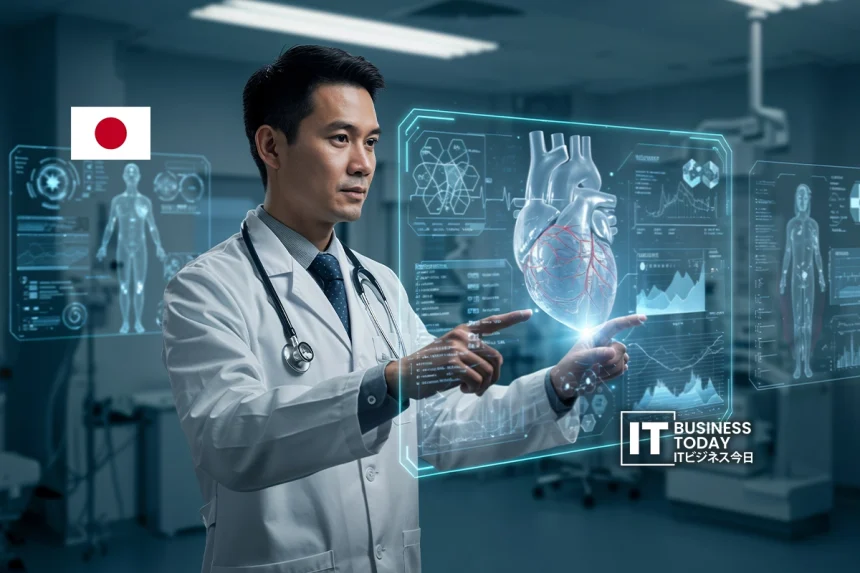
Japan has for many years been known as a technological giant among the most advanced nations globally, but its healthcare system is still trailing other nations in the process of adopting DX. Although the government has put forward a plan to completely transform the nation’s healthcare information digitally by 2030, it is thought that the major obstacle the nation faces is not a lack of technological innovations but a challenge in bringing those innovations to an efficient and trusted healthcare system.
According to Ogata Yūko, founder of Melody International and a healthcare technology expert, transforming the Japanese healthcare system digitally is not only about implementation of electronic medical records and cloud services. It is about implementing technology to make medical professionals’ job easier while maintaining their standards of medical care.
Japan Has the Technology—but Adoption Remains Slow
In Japan, the Ministry of Health, Labour and Welfare is actively advocating for the use of a national medical information infrastructure, e-prescriptions, and the digitization of medical records. Some progress has already been achieved; 77.7% of hospitals and 71.0% of clinics already have electronic medical records by 2025 as revealed by the government survey. Nevertheless, these percentages are still lower than those for Estonia, Denmark, the United States, Sweden, Singapore, and the United Kingdom, which show the availability of information among various healthcare institutions.

Also Read: Japan Plans Secure Defense Cloud for Classified Data, Strengthening Military Cybersecurity and Digital Infrastructure
It should be mentioned that the reason for this difference is not a lack of technological opportunities. The healthcare system in Japan is quite advanced and its development was based on strict clinical practices, detailed documentation, and measures aimed at minimizing the number of medical errors. Therefore, implementing new digital technologies is associated with additional bureaucratic routine for doctors and a loss of their precious time with the patient. Thus, according to the survey of Japan Medical Association conducted in 2025, more than half of the clinics found it impractical to adopt EHRs due to high implementation costs and increased workload.
This fact reflects an important truth about the digital transformation of healthcare.
Remote Healthcare Offers a Practical Model
Another good example of a breakthrough in healthcare provided in the article is that related to maternal care.
Melody International has invented a new type of portable fetal monitor iCTG which will allow the trained healthcare professionals to control the fetal heartbeat remotely via cloud-based connected devices. The data provided by these devices can be analyzed by the physicians who are not at the same location which will accelerate the diagnostic and therapeutic processes of treating expectant mothers in faraway places.
In other words, the technology does not replace healthcare professionals but helps them to expand their influence beyond hospitals and big city medical facilities.
The idea is relevant to another challenge facing Japanese healthcare sector—the regional inequalities due to a lack of physicians and the centralization of maternity services. In fact, the patients who live on faraway islands or in rural areas often have to travel great distances in order to visit a doctor. Thus, remote diagnostics help local nurses and midwifes examine the patient and the specialist make a medical analysis from the large hospitals.
Implications for Japan’s Technology Industry
This conversation can be seen as part of broader possibilities within the healthcare technology industry in Japan.
With the increasing trend among healthcare institutions to use digital tools, the need for cloud computing, security of medical data, artificial intelligence, IoT devices, telemedicine platforms, cybersecurity technologies, and healthcare software is expected to grow.
Technology firms focused on the development of AI-based diagnostic tools, wearable medical devices, digital health platforms, and remote patient monitoring systems will benefit from the upgrading of the infrastructure by healthcare institutions.
The article also indicates that the future competitive edge of Japan does not involve the creation of the largest healthcare platform but rather technologies that help solve clinical challenges and maintain the country’s good image in providing quality healthcare services.
Opportunities for Businesses
The digitalization of the healthcare industry in Japan brings numerous opportunities for businesses to exploit.
Firstly, manufacturers of medical devices can produce portable diagnostic devices appropriate for remote treatment. Secondly, cloud service providers and developers of software can construct secure systems which will help to transfer patient data between hospitals, clinics and pharmacies. Thirdly, telecommunications firms can increase the number of high-speed connections to provide telemedicine services, and AI companies can design software applications which will be useful for healthcare practitioners but will not replace their clinical skills.
In addition, even small and medium-sized healthcare organizations will be able to take advantage from such technologies which will relieve the workload of employees and improve their collaboration with each other.
It should be stressed that it is necessary for any business that plans to enter Japanese healthcare market to understand that technology acceptance will depend on its reliability, usability and compatibility.
A Global Opportunity for Japanese Innovation
Japan faces a number of difficulties in its healthcare system, which include a rapidly aging population, the lack of doctors, and regional differences in health care. Solutions that have been found for these problems may be turned into useful exports from Japan.
Technologies such as teleconferences, cloud storage of medical data, secure sharing of data, and AI assistance to medical personnel become increasingly useful abroad, especially in regions that suffer from a lack of specialists.
Instead of pursuing digital transformation in terms of big national projects, the article suggests relying on successful local innovations that doctors and their patients can trust.
Looking Ahead
A critical juncture in Japan’s health IT revolution is at hand. Although ongoing programs by the government will still foster widespread digitalization, the eventual success of such efforts lies in finding the right balance between technological innovation and practical healthcare delivery.
Through concentrating on technologies that augment rather than substitute human knowledge, Japan is positioned to establish its unique model of healthcare DX characterized by cutting-edge technology along with patient-oriented services. Such a strategy, in case of success, can give a boost not only to the Japanese health technology sector but to the global healthcare landscape too.


 English