 日本語
日本語 





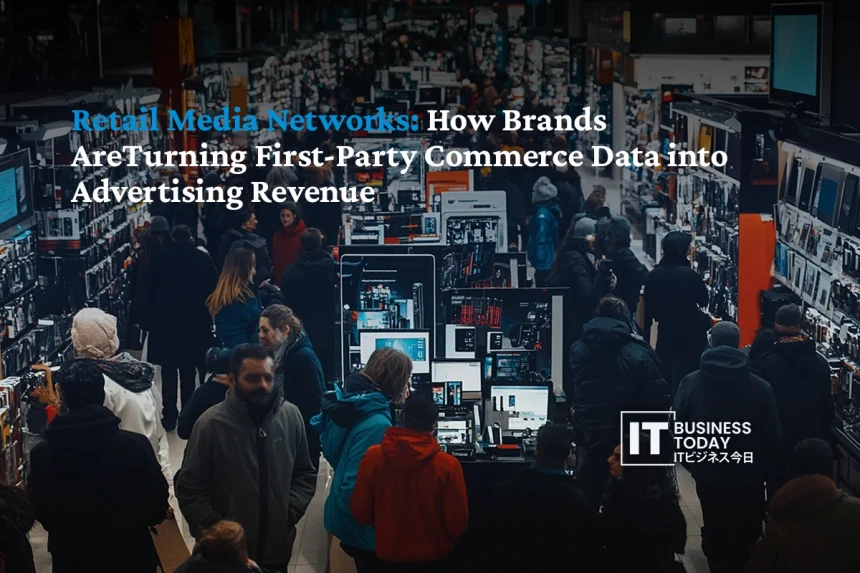
The most valuable asset sitting inside a retailer may no longer be the products on its shelves. It is the data created around those products, from what shoppers search for and view to what they eventually buy. As privacy rules tighten and traditional tracking becomes harder, that data has become a serious advertising asset.
Retail Media Networks are built around this shift. They allow retailers to turn first-party shopper information and commerce activity into targeted advertising while giving brands a closer link between media spend and sales. The market is moving quickly. IAB’s September 2026 outlook projects U.S. commerce media to grow 13.6% year over year in 2026, making it one of the fastest-growing digital advertising channels.
The bigger question now is not whether Retail Media Networks will grow. It is how brands can use them without losing control of measurement, budgets and customer insight.

The First-Party Data Goldmine and Why Retail Media Is Booming
Privacy has changed the value of customer data. Regulations such as GDPR and CCPA have raised the bar for how companies collect, process and use personal information. At the same time, the advertising industry has moved away from relying heavily on third-party signals.
Retailers sit in a different position. Their customers often log in, search for products, browse categories, add items to carts and complete purchases inside the same ecosystem. That creates a direct connection between shopping intent and commercial action.
This is why first-party shopper data matters so much to Retail Media Networks. It is not simply another audience segment. It comes from people already interacting with a retail business, which gives the data a strong commerce context.
However, the real advantage appears when that data connects advertising with an actual transaction.
Traditional digital advertising can tell a brand that someone saw an ad, clicked it or visited a site. The harder question has always been what happened after that. Retail media can shorten that distance because the retailer already sits close to the purchase.
Google’s 2026 Commerce Media Suite shows where this is heading. Brands can use retailer first-party data and access SKU-level reporting that shows the impact of campaigns on retail sales. The capability connects retailer data with Google Ads, Display & Video 360 and Search Ads 360, with YouTube also included.
That changes the conversation. The value of Retail Media Networks is not only better targeting. It is the possibility of connecting targeting, product interest and sales in one measurable journey.
How Brands Are Turning Commerce Data into Ad Revenue
 The revenue engine starts much earlier than the checkout page. It begins when a shopper searches for a product.
Sponsored Products and Search
Sponsored products put brands in front of shoppers when purchase intent is already visible. Instead of interrupting someone who may have no interest in a product, the retailer can place a paid product listing alongside relevant search results or product pages.
That makes search inventory especially valuable. A brand is not just buying an impression. It is paying for visibility at a moment when a shopper is actively considering what to buy.
The distinction matters because retail media operates close to the digital shelf. Product ranking, visibility and discovery can influence what shoppers notice before they make a decision.
Off-Site Targeting Becomes the Next Frontier
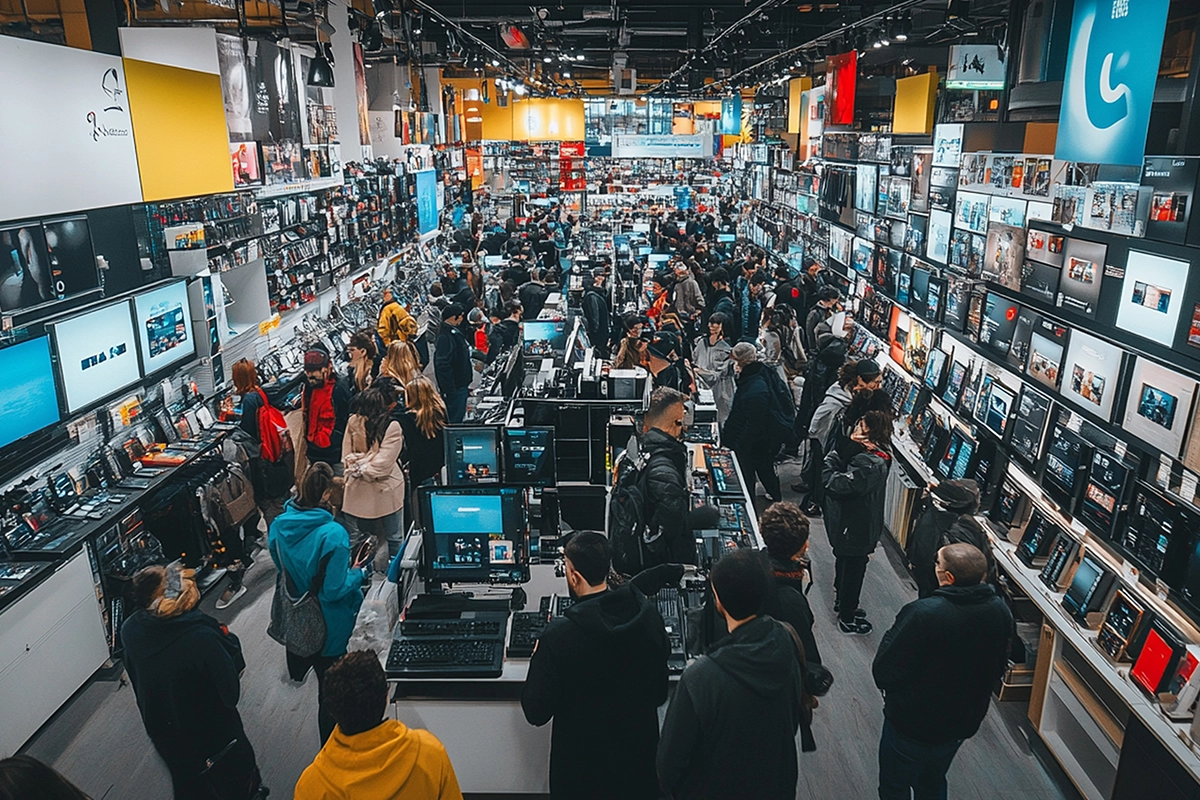 The retailer’s website is only one part of the opportunity.
Retailers can use their first-party commerce signals to build audiences and activate them beyond their own properties. That can include programmatic display, connected TV and other digital environments. Amazon, for example, says its advertising audiences can be built from shopping, streaming and entertainment insights. Its display offering can also use shopping insights to reach audiences beyond Amazon’s own store.
The important shift is that the retailer’s data becomes useful beyond the retailer’s digital shelf. A shopper who showed interest in a category can potentially be reached elsewhere, while the brand can still use the retailer’s commerce environment to understand what happened afterward.
Google is pushing this model further through its commerce advertising capabilities. Retailer first-party data can be used to reach high-intent shoppers across surfaces such as YouTube, Discover and Gmail, bringing retail signals into media environments that sit outside the retailer’s own property.
The Margin Multiplier
This is where the business model gets interesting.
A retailer traditionally made money when a shopper bought something. Retail media adds another layer by allowing the retailer to monetize access to the shopper and the advertising inventory around that commerce activity.
Amazon provides a clear example of the scale. Its advertising-services revenue reached $19.809 billion in Q2 2026, up 26% year over year. Amazon says this category includes advertising sold through sponsored ads, display and video advertising, among other activity.
That does not mean every dollar of Amazon’s advertising revenue represents pure retail media. It does show something more important. Commerce and advertising are increasingly becoming connected revenue streams rather than completely separate businesses.
For brands, that creates an opportunity. For retailers, it creates a new reason to invest heavily in data, media infrastructure and measurement.
Major Retail Media Networks to Watch
The Retail Media Networks market is no longer built around a single retailer. Different networks offer different combinations of audience data, shopping intent, media inventory and measurement.
Amazon Ads operates across a broad advertising ecosystem built around commerce, sponsored products, display, video and other media formats. Its strength comes from the amount of shopping activity that sits close to its advertising environment. That makes it particularly relevant when brands want to connect discovery with purchase.
Walmart Connect takes a different route. Its value comes heavily from the combination of digital commerce and physical retail. Walmart’s Q2 FY27 results showed Walmart Connect’s U.S. advertising business grew 43%, excluding VIZIO, while global advertising grew 38%.
That growth also reflects a larger shift in Retail Media Networks. The opportunity is no longer limited to ads appearing on a retailer’s website. Walmart has been expanding the use of its first-party audiences across off-site media while connecting advertising exposure with retail sales.
Instacart brings a more focused grocery and household-shopping environment, where product searches and purchase decisions can happen close together. Target’s Roundel offers another model, built around Target’s shopper ecosystem and brand relationships.
The important point is not to treat these networks as interchangeable. Their audiences, inventory, commerce environments and measurement capabilities differ. Brands therefore need to judge a network against the customer journey and category they are actually trying to influence.
Navigating Attribution, Incrementality and Fragmentation
Growth creates another problem. Once a brand starts using multiple Retail Media Networks, its measurement process can become harder to manage than its media buying.
Each network can have its own dashboard, attribution rules, audience definitions and reporting windows. One platform may report a conversion differently from another. Another may measure sales within its own ecosystem while giving limited visibility into what happened elsewhere.
That creates the walled garden problem.
A brand running campaigns across five or more Retail Media Networks can quickly end up with several versions of performance. The problem is not a lack of data. It is too much data that does not necessarily speak the same language.
This is where standardized reporting becomes more than a convenience. Without consistent definitions and comparable measurements, marketers can struggle to understand which channels are genuinely contributing to growth and which ones are simply claiming credit for customers who were already close to buying.
Then comes the harder question of incrementality.
Suppose a shopper sees a sponsored product ad and buys the product later. The platform may attribute that sale to the campaign. But would the shopper have bought the product anyway?
Attribution can tell marketers what happened after an interaction. Incrementality asks what happened because of that interaction.
Nielsen’s Predictive Sales Lift capability addresses this problem by using sales-lift results from hundreds of historical Nielsen ONE Ads campaigns to predict sales lift and incremental revenue. Nielsen introduced it in response to the challenge of measuring campaign outcomes across an increasingly fragmented media environment.
That distinction should shape how brands evaluate Retail Media Networks. A high attributed ROAS can look impressive while saying very little about genuine incremental demand.
The smarter approach is to connect network-level reporting with broader business measurement. Brands need to know not only where a sale was recorded, but whether the media investment changed the outcome.
Building a Future-Proof Retail Media Strategy
Retail Media Networks are becoming harder for FMCG and CPG brands to ignore, but treating every network as another performance channel misses the bigger shift. Retailers are turning commerce relationships into media businesses, while brands are being asked to manage more data, more platforms and more competing claims about performance.
Also Read: Yoichi Niwa Begins New Role as CVP at WPP Media
The answer is not simply to move more budget into retail media. It is to make that budget more accountable.
- Demand comparable reporting. Align definitions for spend, sales, attribution and incrementality before scaling across networks.
- Test beyond the obvious players. Smaller or category-focused networks may offer stronger relevance when the audience and shopping context fit the product.
- Connect trade and media budgets. Retail media should not sit in a separate silo when it directly influences the same shopper and shelf that trade marketing has always targeted.
The real test is simple. Audit where trade and digital money goes today, then ask how much of that spend can be connected to measurable commerce outcomes. The brands that answer that question clearly will have a much stronger foundation for the next phase of retail media.


 English