 日本語
日本語 





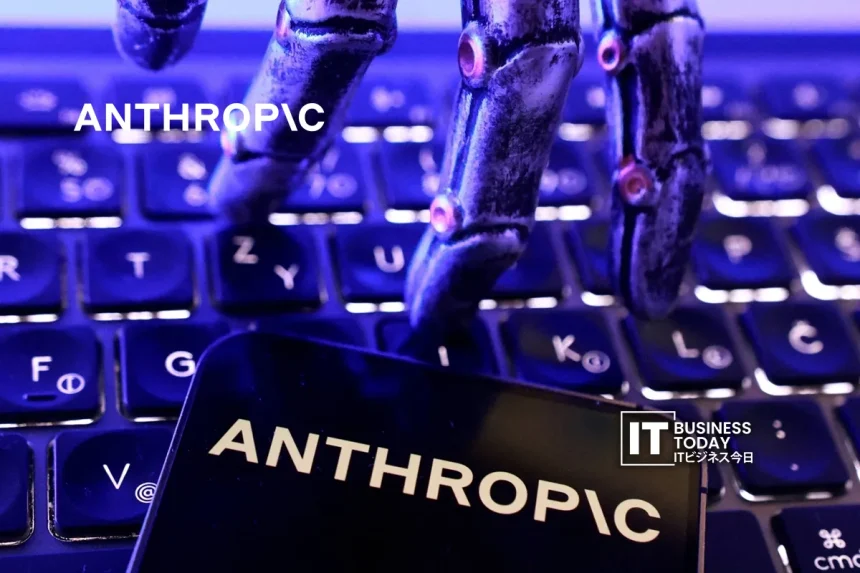
Artificial intelligence is moving beyond screens and software, and Anthropic’s latest development could accelerate that transition. The company is testing a new software standard that allows its Claude AI systems to interact with physical equipment, including robotic arms and scientific instruments. The move signals a broader shift toward physical AI, where intelligent software can understand and operate machines in the real world.
For Japan, this development is particularly relevant. The country has one of the world’s strongest robotics and manufacturing industries, but its next competitive challenge is giving machines the intelligence needed to work more flexibly. Anthropic’s approach could encourage Japanese manufacturers, robotics companies and technology suppliers to rethink how AI models connect with industrial hardware.
From AI Assistants to Physical Machines
Anthropic’s new Model Hardware Standard (MHS) is designed to give AI agents information about how physical devices work. The framework can allow Claude to interact with programmable equipment such as microscopes, robotic arms, laboratory instruments and other specialized machines.

The concept is important because today’s AI systems are largely software-based. They can write code, analyze documents or generate content, but physical machines require another layer of integration.
MHS attempts to bridge that gap.
Instead of developing a separate software interface for every machine, a standardized approach could allow AI agents to understand hardware capabilities and issue commands through a common framework. Anthropic is currently working with partners on safety evaluations before potentially making the technology open source.
Why Japan Is Well Positioned
Japan is in a place in this new market. The country has a history with industrial robotics, factory automation and precision manufacturing. Many companies in Japan have already used robots in car production, electronics, logistics and other industrial settings.
The real challenge now is not just building robots. It is about making those robots more adaptable.
Japan’s manufacturing sector is seen as a player in the growing physical-AI revolution. Companies want to mix their industrial strengths with new AI technologies.
If AI agents can talk to robots using systems Japanese manufacturers could use more flexible automation. They wouldn’t need to rewrite software for each machine.
This would be especially helpful, in factories that make batches or switch product lines often.
Manufacturing Could Become More Adaptive
style industrial robots work very well in stable repeatable tasks.. They can be costly and slow to reprogram when production needs change.
Manufacturing Could Become More Adaptive
Traditional industrial robots work well when doing the same tasks over and over in stable settings.. They can be costly and take a long time to reprogram when the needs of production change.
AI-controlled robotics could change this situation.
One day a manufacturing worker might simply explain a task in spoken language. An AI system could then turn that instruction into the steps the machines need to follow. The system might look at a product spot a defect and tell an arm to fix it.
This doesn’t mean Japanese factories will suddenly become fully self-operating. Industrial spaces have strict rules for safety and reliability.
Still AI could slowly begin handling more of the planning and coordination, around systems. Over time it may help make factories more flexible and responsive.
Opportunities for Japanese Technology Companies
Anthropic’s move could create opportunities throughout Japan’s technology ecosystem.
Robotics manufacturers could develop hardware designed to work with AI agents. Industrial software providers could build middleware connecting foundation models with factory-control systems. Systems integrators could help manufacturers introduce AI into existing production lines.
There is also an opportunity for semiconductor companies.
Physical AI requires computing power capable of processing sensor information and making decisions with low latency. Edge AI chips could become increasingly important because factories cannot always depend on cloud connectivity for time-sensitive operations.
Japanese companies specializing in sensors, machine vision and industrial controllers could also benefit as AI systems require richer information about their physical surroundings.
There is also an opportunity for semiconductor companies.
Physical AI needs computing power that can process sensor data and make decisions with very low delay. Edge AI chips could become more important because factories often cannot rely on cloud connectivity for operations that need responses.
Japanese companies that focus on sensors, machine vision and industrial controllers could also gain from the rise of AI. As AI systems become more advanced they need detailed information about their surroundings.
AI Could Help Address Japan’s Labor Challenges
Japan’s population situation makes automation especially important.
Manufacturers, logistics companies and other industries are dealing with labor shortages and a growing number of workers. Advanced AI-powered robots could help these businesses handle tasks that are hard to fill with people. This would allow workers to focus on supervision, maintenance and higher-level responsibilities.
Also Read: UUUM and SmartNews Use AI to Turn Videos into Articles
The economic benefit goes beyond just cutting down on staff.
AI-enabled machines could help smaller manufacturers run smoothly with limited employees. They could improve how consistent production is and lower the time machines are not working. Predictive maintenance systems could use AI together with sensors to spot problems with equipment before they stop production.
For businesses the value of AI is not just, about replacing workers. It’s about making operations smarter, safer and more efficient.
I think Anthropic’s Model Hardware Standard is an attempt to close that gap. I see that Japanese businesses could find opportunity across robotics, industrial AI, semiconductors, sensors, cybersecurity and factory software. I believe that companies that combine existing automation expertise with AI can gain an edge as global manufacturing grows smarter. I think the next phase of Japan’s robotics industry may not be measured by how many robots factories deploy. I think it could be measured by how smart those robotsre at following instructions adapting to new conditions and working with people. I see that as physical AI grows Japan’s long‑established robotics ecosystem could supply the foundation that turns advanced AI models, like Claude into real machines.


 English