 日本語
日本語 





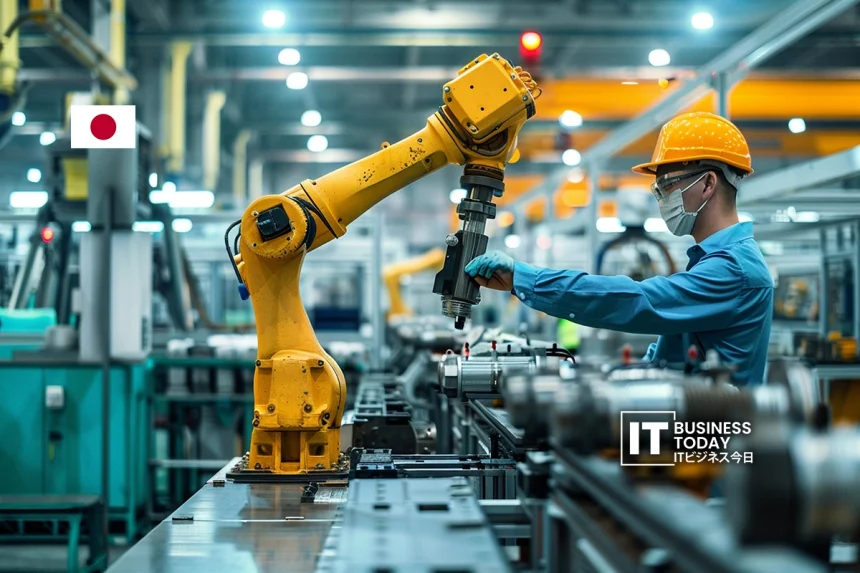
The nation of Japan continues to pursue its goal of becoming the world’s leading force in Physical AI, having presented a new strategy which revolves around robotics and manufacturing powered by artificial intelligence. According to the Fifth AI Strategy Headquarters meeting, where Japan introduced its second AI Basic Plan, the country will seek ways to enhance its researches and innovations as well as international collaborations and digitalization. This plan proves that the country is striving to utilize its strong points such as robotics and high precision manufacturing while making the breakthrough in the AI market.
During the Fifth AI Strategy Headquarters, Prime Minister Sanae Takaichi announced that the government will be actively supporting the research and development of AI robots along with mass production of them in order to become the world’s center for physical AI. In addition, Japan plans to organize an international AI conference in Japan and speed up the government’s AI transformation projects.
This is amid a global competition among nations striving for leadership in new-age AI technologies. In spite of the major part of the global AI race being centered around software and big language models, Japan’s bet lies in the integration of AI with robotics and engineering.

Also Read: Dark Factories 2.0: How AI Vision Systems Are Eliminating Manual Quality Inspection
Physical AI Emerges as Japan’s Next Growth Engine
The term Physical AI means the implementation of artificial intelligence in machines which can work with the physical world, including industrial robots, autonomous systems, intelligent machines of manufacturing industry, logistic robots, and service robots. In contrast to ordinary AI technologies which operate with digital data, Physical AI allows the machine to be aware of its environment, make decisions, and execute complex physical actions without significant human control.
Japan is traditionally known to be one of the leading robotic countries with many companies developing and manufacturing industrial robots, automation equipment, sensors, and precision machines for use in global manufacturing industries. The focus on Physical AI technologies would help Japan take advantage of its strengths as well as open new perspectives of development in industries like car manufacturing, medicine, logistic services, semiconductor manufacturing, agriculture, and infrastructures.
In addition, this initiative would be an effective solution for overcoming the shortage of labor force through intelligent automation.
Expanding Global AI Partnerships Beyond the United States and China
One key component of Japan’s new AI strategy involves the push towards more international collaborations.
Instead of depending so much on AI technologies from the United States and China, Japan will now enhance collaborations with like-minded nations such as France and the UK to develop AI technologies. In addition, Japan will also cooperate with emerging nations to establish AI collaboration frameworks with India, Malaysia, and Brazil.
Japan intends to position itself as a trusted AI partner of the rest of the world, especially those in the developing countries of the Global South. Amidst increasing concerns about data protection and digital sovereignty, Japan wants to market its own AI technologies as dependable options.
Through this international strategy, Japan not only enhances its diplomatic standing but also opens up new business possibilities.
AI Infrastructure Investments Will Support Long-Term Growth
The efforts of the government in building Physical AI technology have been fueled by substantial investments made in digital infrastructure.
In particular, one of the most important aspects relates to increasing capacity of local data centers dedicated to the use of AI technology. With AI technology becoming bigger, more powerful and complex, companies require access to the high-performance computing infrastructure.
As for major private sector efforts, Mitsubishi Estate is expected to make about ¥1.5 trillion worth of investment into building 10 data centers capable of providing 2,500 megawatts by 2036. In addition, Mitsubishi Estate expands its international investments in the field of data centers due to increasing need for AI computing capacity.
Such infrastructure efforts are aligned with Japan’s broader efforts to invest in semiconductors, advanced networking, cloud computing and sovereign AI technology.
A Catalyst for Japan’s Technology Industry
The renewed interest shown by the government in Physical AI would create numerous opportunities in the technology sector of Japan.
Companies involved in the manufacturing of industrial robots, AI software, semiconductors, sensors, cloud computing, and edge computing technology would see increased investments as firms opt to automate their production processes with intelligent machines. Companies specialized in creating digital twins, machine vision, predictive maintenance, industrial IoT, and autonomous robots would also be beneficiaries of the rising demands of AI-powered manufacturing solutions.
This is a critical policy move in view of the fact that Japanese robotics industry has been a front runner in the past but currently faces stiff competition from other automation technologies fueled by Artificial Intelligence.
Apart from the manufacturing sector, other industries such as health care, logistics, construction, agriculture, retail, and energy are bound to gain immensely from AI automation.
Positioning Japan for the Next Industrial Revolution
The most recent strategy on AI developed by the Japanese government reflects the change in perception of artificial intelligence from the technological tool based on the software alone to the potential force for transformation of physical industries through intelligent machines. With the combination of the advanced manufacturing capabilities of the country and innovative technologies such as AI, robotics, and digital infrastructure, Japan is creating the foundation for competitive advantage of its industries in the long run.
From the perspective of businesses active in Japan, the development of the strategy is a chance to embrace innovations in order to improve their business processes and develop new technologies that are based on AI. From the point of view of the technology sector in the country, the development of the strategy is another step towards achievement of its goal to become the world leader in Physical AI.
In the context of competition of countries in defining the future of artificial intelligence technologies, Japan shows a unique strategy in which the industrial tradition of the country can be used.



 English