 日本語
日本語 





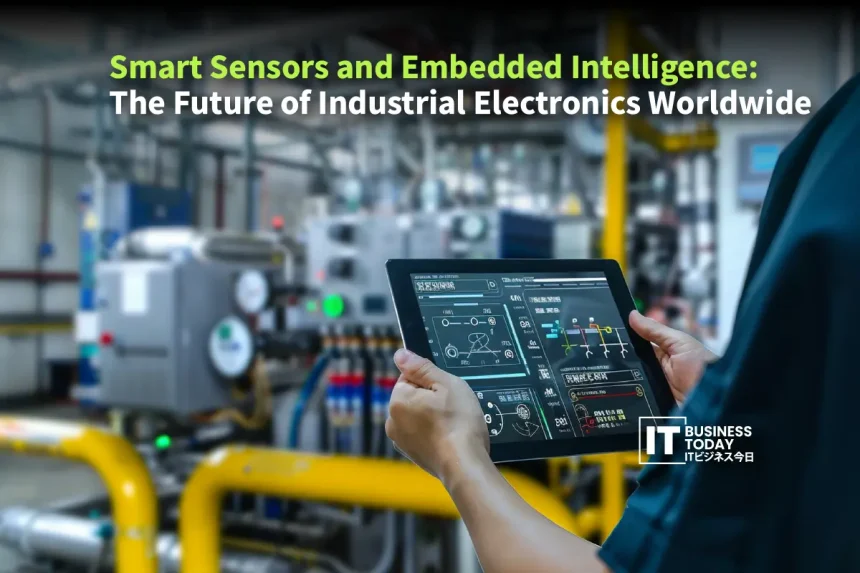
For years, industrial sensors have played a simple role. They measured temperature, pressure, vibration, flow, or position and then passed that information to a controller somewhere else in the system. The sensor observed. The controller decided. The machine acted.
That model is now changing.
The future of smart sensors in industrial electronics is no longer really about simply collecting more data. It’s more about enabling autonomous decision making right there at the sensor node, kind of in place, without waiting. And yeah, because of advances in embedded intelligence, Edge AI, TinyML, and low power processing, the sensors are starting to do analysis on conditions, recognize anomalies and trigger responses before the information even reaches some centralized platform.

This shift is happening while industrial organizations are pushing investments into smarter operations, pretty aggressively. In fact, 80% of manufacturing executives planned to put 20% or more of their improvement budgets toward smart manufacturing initiatives. That kind of spend is basically a sign of wider industry awareness, that data alone is no longer sufficient. Intelligence at the edge is turning into the next competitive advantage, not just a nice-to-have.
So as smart sensors turn into intelligent edge devices they are reshaping industrial electronics and automation systems, also predictive maintenance strategies, and honestly even the foundations of Industry 5.0 itself.
Also Read: Japan’s Compound Semiconductor Push: The Next Battleground Beyond Silicon
From Passive Transducers to Intelligent Edge Endpoints

Traditional industrial sensors were designed for measurement, not interpretation. Their job was straightforward. Detect a physical condition and transmit raw information to a programmable logic controller, supervisory system, or cloud platform for analysis. While effective, this architecture created a dependency on centralized processing. Every decision required data to travel through multiple layers before action could occur.
As manufacturing environments became more complex, this model began showing its limitations. Modern production lines generate massive volumes of data every second. Sending every vibration pattern, temperature fluctuation, and pressure variation to a central processor creates latency, bandwidth demands, and unnecessary computational overhead.
This challenge has driven the rise of embedded intelligence.
Today, microcontrollers that are embedded right into sensors can do localized signal conditioning, like cleaning, filtering, and lining up incoming data before it gets handled by anything else. And more importantly, they are able to run machine learning models right on site, through what is commonly called on-device inference. So rather than streaming raw data all the time, the sensor basically reads what it observes, then turns that into meaningful outcomes, and only that gets sent onward.
This evolution fundamentally changes the role of industrial sensing.
Industry analysts increasingly argue that sensor suppliers must move beyond delivering raw measurement devices and instead provide certifiable perception and action stacks. That perspective captures the direction of the market. Smart sensors are no longer passive observers. They are becoming intelligent participants within industrial systems.
A vibration sensor monitoring a motor, for example, can now identify abnormal patterns at the edge, classify the severity of a fault, and trigger maintenance alerts before a centralized system even recognizes a problem. The sensor is no longer just collecting information. It is contributing to decision-making.
That transition marks one of the most significant shifts in the history of industrial electronics.
Key Architectural Pillars of Embedded Intelligence
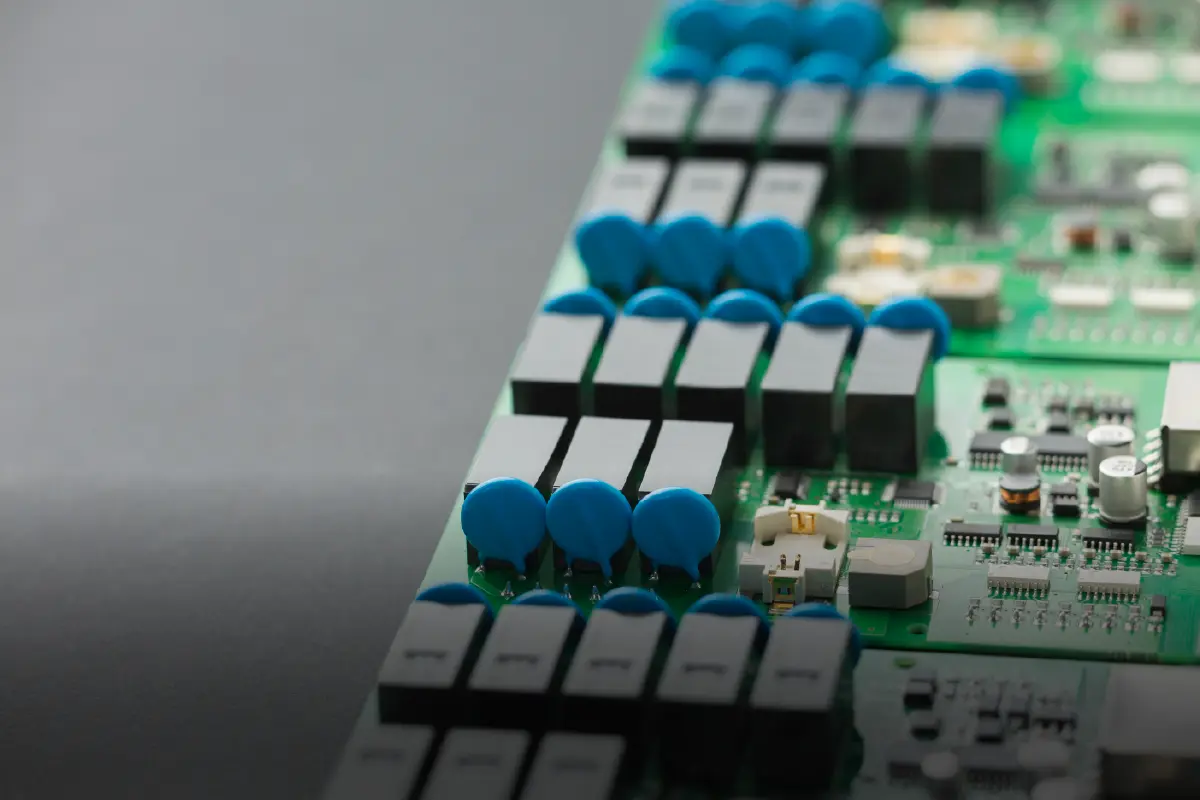
The rise of embedded intelligence is supported by several technological developments working together. Smart sensors might seem simple from the outside, but well, their real abilities are tied to a careful mix of physical components software layers and communication frameworks, kind of all at once.
One key pillar is the rise of ultra-low-power microcontrollers, plus specialized processing engines. To run artificial intelligence right at the edge you need computational muscle, though factories and industrial settings also expect high energy efficiency. In many cases, the sensors run all day, and they get placed in spots where power is scarce, so you can’t just ‘go heavy’ on consumption.
That’s also where today’s embedded processing designs matter a lot. Lately there have been improvements that brought ultralow-power programmable engines, they can run signal processing and AI algorithms directly inside the sensor itself. With this kind of setup, edge devices can do things like anomaly detection, while still keeping power use in check. So in practice smart sensors can stay online for longer stretches, and still hand over useful, intelligent insights.
The second pillar is sensor fusion.
One sensor can show only a slice of a machine’s overall state. Vibration data might hint at mechanical stress, and temperature readings bring the thermal background into view, while pressure measurements show whether everything stays operationally steady. Looking at these in isolation, the visibility feels kind of thin, not fully revealing what is going on. Put together though, the overall picture becomes way more complete.
Sensor fusion blends several data streams into one predictive framework. Instead of basically treating each measurement like its own story, onboard intelligence scrutinizes how the variables relate to each other. That means smart sensors can catch faint signals patterns that would normally remain unseen. Beyond that, it boosts accuracy, and cuts down false alerts, which is extremely helpful in predictive maintenance, especially when you don’t want needless intervention.
The third pillar is communication, or sort of that direction.
Even the most capable sensor still has to live inside a larger industrial ecosystem. Protocols like IO-Link and Time-Sensitive Networking help make sure critical information actually moves reliably between edge devices, controllers, and the enterprise layer. These approaches enable deterministic communication, quick-time responsiveness, and interoperability across environments that are increasingly connected, all the time.
So, low-power processing plus sensor fusion and these newer communication standards end up forming the basis for modern intelligent edge systems.
Disruptive Industrial Applications Driving Global ROI
The value of embedded intelligence becomes most visible when examining real-world industrial applications. While the technology itself is impressive, its true importance lies in measurable operational outcomes.
Predictive maintenance kind of feels like one of the most convincing examples, overall.
In a more traditional setup, maintenance programs usually stick to fixed timetables or they wait until something breaks and then they respond. That leads to inefficiencies in a pretty straightforward way. Sometimes components get swapped way too early, so you waste effort and parts. Other times they get swapped too late and then you end up with downtime, plus the whole process of expensive repairs.
Smart sensors basically shift the whole scenario. They keep watching vibration, temperature, pressure, and other operational clues, and then intelligent edge devices can spot early evidence of wear and degradation. Since the heavy thinking happens near the machine instead of sending everything away, potential failures are noticed faster, and often with higher precision. Big industrial systems like compressors, pumps, motors, and robotic arms really benefit from that kind of capability.
Quality control is also going through something similar.
Manufacturing defects are frequently found after products have already traveled through several production phases. At that stage, any corrective measure gets costly, and it also disrupts operations. Localized computer vision sensors, with embedded intelligence inside them, can examine products in real time, flag defects right away, and launch corrective actions before the defects start spreading down the production line.
The impact extends beyond theory. In one industrial implementation, AI-powered scheduling, predictive maintenance, and autonomous quality control generated more than $30 million in annual savings while delivering productivity gains of up to 50% and cycle-time reductions between 20% and 30%. Results like these explain why industrial organizations continue expanding investments in intelligent automation.
Energy management presents another important opportunity.
Smart grids and industrial energy systems increasingly rely on distributed sensing networks to balance loads, improve efficiency, and reduce waste. Localized load sensing allows intelligent devices to detect consumption patterns, identify inefficiencies, and support faster optimization decisions. Instead of waiting for centralized analysis, edge devices can contribute to immediate adjustments that improve overall system performance.
Across these applications, a common pattern emerges. Smart sensors are not simply generating information. They are actively helping industrial systems become faster, more adaptive, and more efficient.
Critical Barriers to Worldwide Industrial Adoption
Despite the momentum surrounding embedded intelligence, large-scale adoption remains far from universal.
One of the most revealing indicators is that only 5% of industrial companies have deployed AI in manufacturing at scale. That figure highlights an important reality. Interest is widespread, but implementation remains difficult.
The first challenge involves the balance between processing capability and power consumption.
Running machine learning models requires computational resources. However, industrial sensors must often operate under strict energy constraints. Increasing processing performance can increase power requirements, creating an ongoing engineering tradeoff. Developers must continually optimize models to deliver meaningful intelligence without compromising operational efficiency.
Legacy infrastructure creates another obstacle.
Many factories still operate equipment that was never designed for intelligent edge architectures. Integrating modern smart sensors into decades-old environments often requires additional gateways, protocol conversion, software modifications, and extensive testing. While the long-term benefits may justify the effort, the transition is rarely simple.
Cybersecurity introduces a third concern.
As intelligence moves closer to the edge, the number of connected endpoints expands significantly. Every connected sensor becomes a potential attack surface. Protecting decentralized industrial networks requires robust authentication, secure communication, continuous monitoring, and ongoing software updates.
The conversation around smart sensors often focuses on opportunity. Yet sustainable adoption depends just as much on addressing these practical challenges. Organizations that underestimate them frequently discover that technological capability alone does not guarantee successful implementation.
The Strategic Path Forward
The future of industrial electronics won’t be defined by who collects the most data. It will be defined by who can act on that data fastest, closest to where it is generated, and with the least amount of operational friction and honestly, less “looping” around the system.
That’s why smart sensors are turning into this strategic technology. They move intelligence from centralized systems to the edge, they reduce decision latency, and they set up the groundwork for more autonomous industrial operations. At the same time, real adoption barriers are still there. Power constraints, messy legacy integration issues, and cybersecurity risks will keep influencing deployment decisions for years to come.
The organizations that end up with the biggest advantage won’t be the ones chasing every single new technology trend. It will be the ones that deliberately embed intelligence into their industrial electronics infrastructure, and then build connected systems that learn, adapt, and respond in real time. That is also where Industry 5.0 starts sliding from “vision” into something more operationally real.



 English