 日本語
日本語 





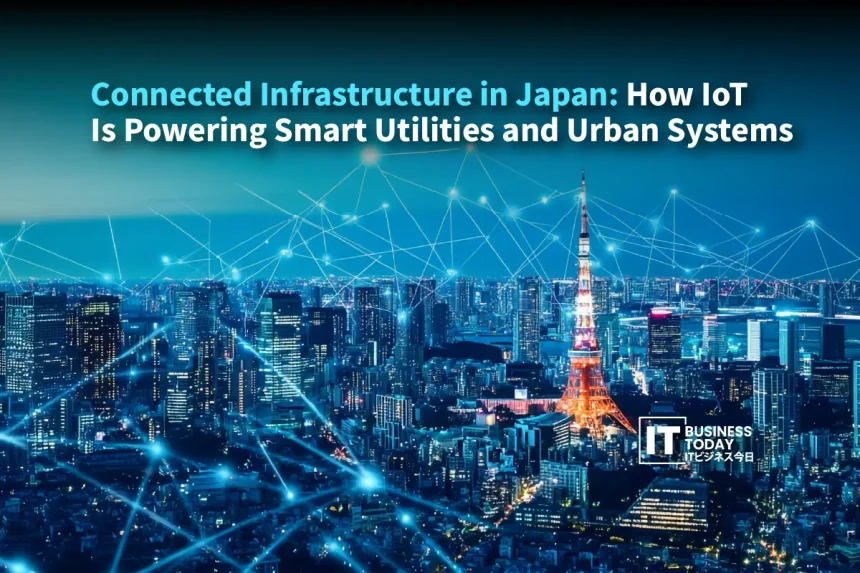
Japan is not building smart cities because it wants to look futuristic. That’s the wrong lens.
It’s building them because the current system won’t hold. Population is aging fast. Workforce is shrinking. Natural disasters are not rare events; they are part of the operating environment. So infrastructure cannot stay static. It has to adapt, respond, and in some cases, think ahead.
This is where Connected Infrastructure in Japan actually starts making sense. It is not about layering technology on top of cities. It is about rewiring how cities function underneath.

The Japanese Cabinet Office plays a central role here. Under the 5th Science and Technology Basic Plan, the direction is clear. The 2025 grand design pushes the Vision for a Digital Garden City Nation, with support through FY2026 to build digital human resources. That detail matters more than it sounds. Because once infrastructure becomes digital, people who can run it become just as critical as the systems themselves.
Also Read: The Rise of Platform Businesses: How Ecosystems Are Replacing Traditional Models
This article breaks down how Connected Infrastructure in Japan moves from that top-level vision into something real across utilities, mobility, and urban systems.
The Backbone of Efficiency
Start simple. If utilities fail, everything else becomes noise.
Energy, water, waste. These are not ‘sectors.’ These are survival systems. And Japan treats them that way.
Take energy first. In a place like Tokyo, demand is not stable. It spikes, drops, shifts across hours and districts. If you try to manage that manually, you lose. So IoT sensors are placed across the grid. They track usage, detect anomalies, and keep feeding data into systems that rebalance supply in real time.
This is not just about efficiency. It is about avoiding failure.
Now bring in policy, because this is not happening randomly. The Ministry of Economy, Trade and Industry anchors this through its 2025 Strategic Energy Plan and Mobility DX Strategy. What this really does is force energy systems and mobility systems to stop operating in silos. They are being pushed into a connected model where data flows across both.
So when someone asks, how does IoT improve utility management in Japan, the answer is not a feature list. It is a shift in how systems behave.
IoT reduces waste first. Leak detection in water systems becomes proactive instead of reactive. Then it improves speed. Faults are identified and isolated before they spread. And then there is the labor angle. With fewer people available to manage infrastructure, automation stops being optional.
Waste management shows this clearly. Smart bins track fill levels. Collection routes adjust dynamically. It sounds basic, but scale it across a city and suddenly logistics looks very different.
Now zoom into something more experimental. Toyota Motor Corporation is building Woven City as a live environment where all of this is tested together. It launched in September 2025. Phase 1 was already completed in January 2025. General visitors are expected from FY2026.
Inside that setup, utilities are not isolated systems. Energy, water, and mobility are constantly interacting. Which means decisions are no longer local. They are system-wide.
That’s the real shift. In Connected Infrastructure in Japan, utilities are not passive anymore. They react, adjust, and in some cases, anticipate.
Mobility and Disaster Resilience
Once utilities start behaving like systems, the next layer is movement and survival.
And this is where Japan stops looking like everyone else.
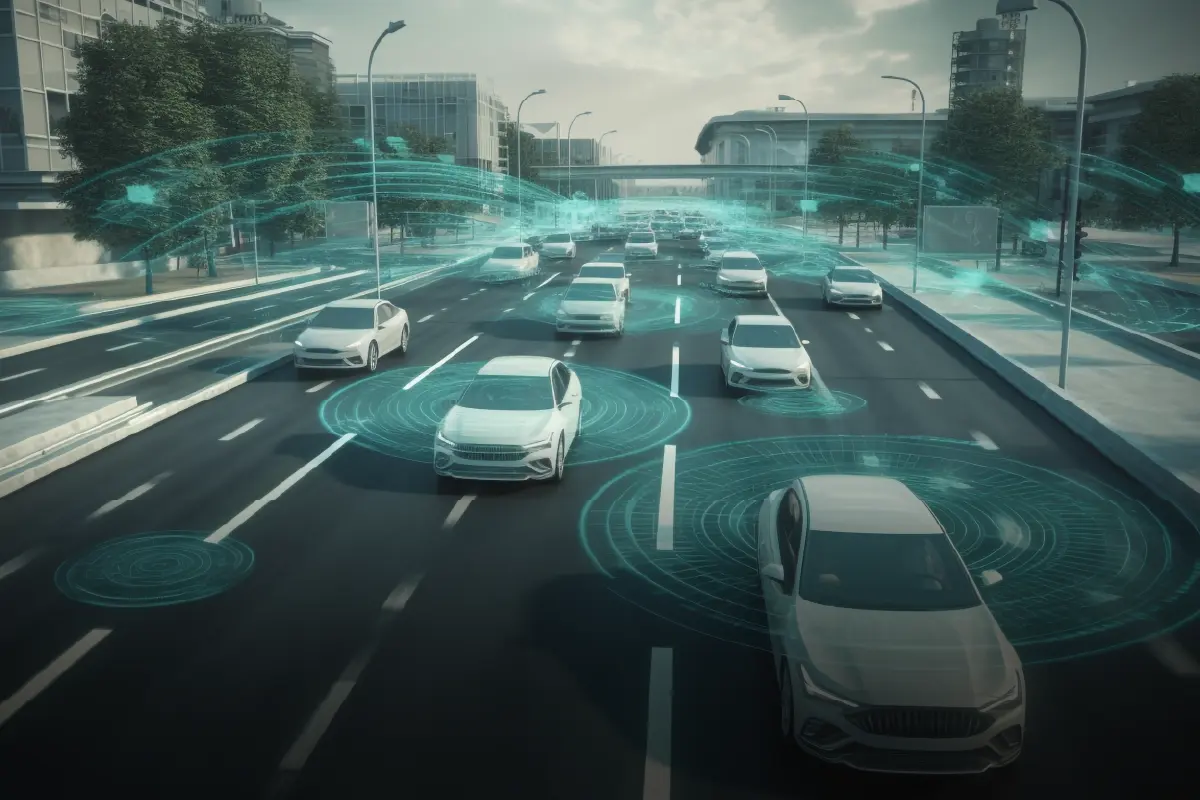
Mobility here is not just about transport. It is about coordination. Vehicles, signals, infrastructure, they all talk to each other. V2X is not some distant concept. It is part of how traffic is being managed.
So instead of reacting to congestion, systems try to avoid it before it forms. Autonomous shuttles fit into this, but they are not the main story. The main story is the network they operate in.
Now take a step back. Mobility is still a comfort problem. Disaster resilience is not.
Japan builds with failure in mind. Earthquakes, floods, typhoons. These are not edge cases. They are expected. So infrastructure has to respond instantly when something goes wrong.
IoT sensors sit at the center of this. Seismic sensors pick up ground movement in real time. Flood sensors monitor water levels. Automated systems trigger responses without waiting for human intervention.
This is where execution becomes visible. NEC Corporation has already shown what this looks like in practice. A January 19, 2026 release highlights a smart city command center that uses IoT and AI to monitor and manage urban systems.
This is not just a screen full of data. It is a control layer. Data comes in from different systems. The platform processes it. Decisions follow.
That changes the game. Instead of fragmented responses, cities operate with a level of coordination that was not possible earlier.
Most countries optimize for efficiency. Japan is optimizing for continuity. That difference shows up when systems are under stress.
From Woven City to Kashiwa no ha
Theory is easy to agree with. Execution is where things usually fall apart.
So look at what is actually being built.
Woven City is the obvious starting point. It sits at the base of Mount Fuji, but more importantly, it acts like a controlled environment. Everything is tested together. Mobility systems, energy grids, robotics, data platforms. Nothing is isolated.
People live there. Engineers observe. Systems evolve. Feedback loops are constant.
That changes how innovation happens. Instead of launching a solution and then fixing it later, the system is adjusted in real time.
Now compare that with Kashiwa no ha. This is not a lab. It is a functioning urban space. The focus here is integration. Energy systems, mobility options, environmental monitoring, all embedded into daily life.
The interesting part is not the technology itself. It is how little you notice it.
That’s where most smart city narratives go wrong. They focus on what is visible. Japan seems to be focused on what disappears into the background.
And that is probably the better metric. If people don’t have to think about infrastructure, it is doing its job.
So when you look at Connected Infrastructure in Japan, the takeaway is not that the country is ahead in tech. It is that it is ahead in stitching systems together without making them feel intrusive.
LPWA 5G and Digital Twins
All of this sounds good until you ask one simple question. What is actually powering it?
Start with LPWA. Low Power Wide Area networks. These make it possible to deploy thousands of sensors without worrying about energy consumption or cost blowing up. Without this, large-scale IoT just doesn’t make economic sense.
Then comes 5G. People usually reduce it to speed. That’s not the real advantage. The real shift is latency. Systems can communicate almost instantly. Which means decisions can happen in real time.
Now layer digital twins on top of this. This is where things get interesting. Instead of waiting for infrastructure to fail, cities can simulate different scenarios and see what breaks.
The Ministry of Land, Infrastructure, Transport and Tourism has pushed this forward through its PLATEAU initiative. Updated on March 31, 2026, it provides open-data digital twins with 3D city models for about 250 cities.
That scale changes the conversation. This is not experimentation anymore. This is infrastructure intelligence at a national level.
Digital twins allow cities to predict wear and tear. Plan maintenance. Test disaster responses before they are needed.
Put all of this together. LPWA collects the data. 5G moves it quickly. Digital twins make sense of it before something goes wrong.
That combination is what makes Connected Infrastructure in Japan actually work, not just sound good on paper.
The Human Centric Future

At some point, the technology stops being the point.
Japan is dealing with a structural problem. Fewer people. More pressure on systems. And no room for failure.
Connected Infrastructure in Japan addresses that by shifting the burden from people to systems. Tasks get automated. Decisions get faster. Response times shrink.
This is not about replacing people. It is about making sure the system does not collapse when people are limited.
That’s why this model matters beyond Japan. It shows what infrastructure looks like when it is designed for constraints, not ideal conditions.
Call it smart cities if you want. But this is something else. This is infrastructure that keeps working when things go wrong.
And that is what most countries still haven’t figured out.



 English