 日本語
日本語 





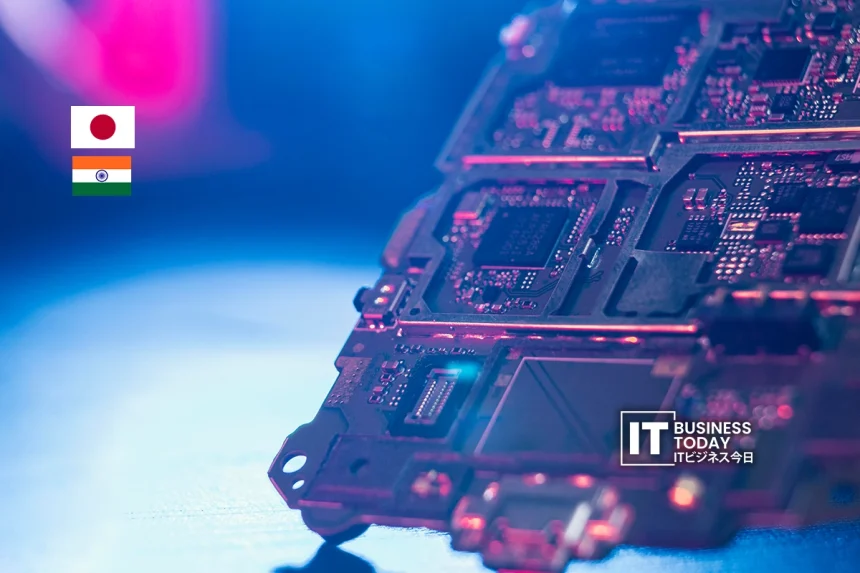
Bilateral capital collaboration strengthens semiconductor innovation and positions Japan as a key player in sustainable AI hardware development
A Strategic Alliance for Next-Gen AI Chips
India and Japan have taken the step to enhance their tech alliances, through a capital partnership that aims towards development of energy saving AI chips. This move is a reflection of their common dedication to semiconductor innovation, along with finding a solution for the increasing energy consumption by AI systems.
This collaboration merges investment, research and industrial expertise from both sides to quicken the development of chips specifically for AI tasks. With AI applications spreading in different sectors i. e. cloud computing, self-driving cars, etc. the demand for high-performing yet energy-conserving semiconductors has become a necessity.

Also Read: Japan’s Chipmaking Revival: How Government Policy and Global Demand Are Reshaping the Industry
Addressing the Energy Challenge in AI
The collaboration’s main objective is to find solutions to the increased energy usage due to AI infrastructure. Huge computational power is a must for contemporary AI models, which causes a significant amount of electricity consumption in data centers and processing units.
The IndiaJapan duo intends to lower the running expenses and environmental footprint by developing energy-saving chips. This is in line with the worldwide drive for sustainable AI as local administrations and businesses are gearing up for carbon neutrality.
It is through this project that Japan will be able to supplement its efforts in green technology and advanced manufacturing. Industry-wide dependence on AI and data processing means that energy-efficient semiconductors will be key in lowering carbon emissions.
Strengthening Semiconductor Supply Chains
The collaboration also reflects a strategic attempt to build up semiconductor supply chains that can withstand disruptions. India and Japan are aiming to lessen their dependence on the few global hubs of chip manufacturing by developing local and bilateral capacities.
Japan offers high-tech materials, know-how of precision manufacturing, and a well-established industrial infrastructure, whereas India contributes, among others, the areas of chip design, software development, and a rapidly expanding talent pool.
Being roughly at equal strength in the same areas, the partnership secures that both countries not only get their arms around the semiconductor value chain at different stages – from design to manufacturing and testing to deployment – but also build a more balanced and secure ecosystem.
Impact on Japan’s Tech Industry
For the technology sector in Japan, this cooperation is a great chance to bolster its status in the worldwide semiconductor competition. Recently the country, that is a world leader in materials and equipments, is doing through such collaborations able to enter even areas like AI chip design and energy-efficient architectures.
The project will not only trigger an entire range of innovations in the areas of edge computing, robotics and smart manufacturing but also strengthen Japanese companies’ compliance with increasingly strict energy efficiency standards.
And importantly, the partnership could attract new investment in the semiconductor industry in Japan and as a result lead to a great expansion of the AI infrastructure that local as well as foreign companies are working on.
Business Implications and Opportunities
One of the main advantages of cultivating energy-efficient AI chips is realized not just by Japan but also by businesses worldwide. For example, sectors such as automotive, healthcare, and industrial automation would experience increased efficiency and less power consumption.
When AI is implemented on a large scale, energy-saving devices can drastically change the overall expenditure; therein advanced technologies become more affordable. Especially for SMEs, nowadays the affordability of AI solutions is one of the factors limiting their growth.
Together, they may create not just new avenues for semiconductor chip designing but also, material supply and manufacturing. When the need for high-performance chips will be at its peak, those companies that can deliver most efficient energy solutions will be in front of the competition.
A Broader Shift Toward Sustainable AI
The IndiaJapan partnership is in line with the global trend of promoting sustainable AI development. Governments and businesses, as a result of intensified awareness of their environmental footprint, today look beyond mere computational power and emphasize on efficiency and optimization instead.
Japan sees this as resonating with its future vision of merging technology prowess and sustainability. Investing in energy-efficient semiconductors is not just a means for Japan to tackle the problems of today but also a step towards the future where it will benefit from the booming semiconductor market.
A New Chapter in Tech Collaboration
The investment partnership between India and Japan is a significant step in the direction of global cooperation on cutting-edge technology. By combining their skills, the two countries are not only creating a basis for semiconductor innovation but also considering the whole AI ecosystem in their cooperation.
As the demand for AI is reaching new heights globally, initiatives like this will inevitably influence the future of technology deeply. For the Japanese technology companies and business community, the signal is unmistakable – the upcoming era of innovation will be characterized not only by high performance but also by efficiency, environmental sustainability, and well-planned alliances.



 English