 日本語
日本語 




A new project will provide Japanese small and medium-sized enterprises (SMEs) with the know-how to work in ways that are socially and environmentally responsible, substantially changing the way compliance and corporate governance are performed in various industries.
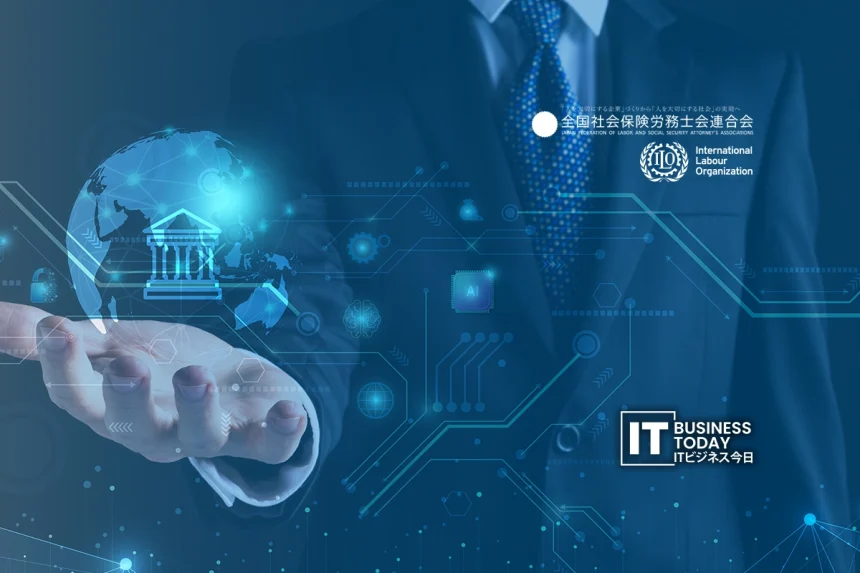
The International Labour Organization (ILO) has signed an agreement with Japan Federation of Labour and Social Security Attorney’s Associations (Sharoushi Federation) to boost the incorporation of human rights into business activities all over the country. The project puts a special focus on small and medium enterprises (SMEs) as they considerably lack human rights policy structures.
As a part of the cooperation, joint training sessions and exchange of experiences will be arranged. The main purpose of these initiatives is to provide companies with the right tools that will help them to identify, prevent, and mitigate human rights risks both in the company and supply chains. Thanks to the hybrid mode of training, it has become clear that the Sharoushi professionals are capable of leading businesses in the integration of responsible practices into the regular business process.

Also Read: Japan’s GENAI Initiative: Building a Government-Led AI Ecosystem
Practical Tools and Case Studies for SMEs
A large part of this project involves publishing case studies and practical guides that are aimed at assisting small and medium businesses (SMEs). These materials show how companies can implement human rights due diligence without a heavy dependence on resources or complex structures.
Workable and straightforward actions are at the core of this guidance like revising workplace policies, enhancing employees’ communication channels, and promoting inclusiveness among a highly diverse workforce such as foreign workers and LGBTQ community members. Presenting tangible usages rather than theoretical templates, the project makes it easier for companies that are just starting with human rights.
Besides that, webinars and workshops have been set up as a medium to open up and share conversations between businesses, industry groups, and Sharoushi experts. During such meetings, it is stated that initiating human rights practices is not about achieving perfection at once but rather making small changes that suit each company’s abilities.
The Role of Sharoushi in Driving Change
Professionals known as Sharoushi (labour and social security qualified specialists licensed in Japan) drive efforts to connect business and regulatory environment ensuring that companies’ human rights standards are aligned with global ones. Especially, the intervention of these labour and social security licensed specialists is very important for SMEs that often do not have the required expertise in compliance and governance internally.
Besides giving direct help, Sharoushi professionals raise the capacity of companies to execute human rights due diligence by knowing both the insider side of regulations at home and the side of international exposure. This way, they become the first line of implementation for domestic as well as global human rights standards.
At the same time, such cooperative ways of working that happen at various levels including that of recognized labour and social security specialists not only bring policy closer to practice but also help businesses viewing human rights as a part and parcel of their operations on a daily basis, not as something external or separate compliance requirements.
Impact on Japan’s Tech and Industrial Ecosystem
The project is a significant step for Japan’s tech and industrial sectors overall. As more companies turn to digital transformation and expand internationally, incorporating human rights compliance in risk management is becoming a must.
Technology firms, in particular, those that deal with AI, cloud computing, and supply chain platforms, are under pressure to maintain ethical standards in their value chains. Besides data privacy and algorithmic bias, labor conditions in supply chains have become matters of governance. Developing human rights frameworks in a systematic way is a method through which the ILO and Sharoushi Federation have raised the bar for tech companies. This may lead to an increased use of compliance-related technologies such as AI-based risk assessment solutions, supply chain tracking tools, and ESG analytics platforms.
Business Implications and Competitive Advantage
Any company operating in Japan will find that the human rights initiative is not only something that can open up new opportunities for them, but it is also something that is necessary for them in the end. Besides the fact that companies that do human rights practices will be able to build a stronger case for their good reputation and gain trust of their stakeholders, they will also be able to have better access to those markets of the world where they sell goods and services because of the fact that in such markets human rights in business are standards.
Expect that large companies will be the ones that demand their suppliers to follow such requirements as well and they will be therefore make spread across whole value chains. Small and medium enterprises, if they will come to the understanding that these are the things that from now on will be find everywhere, will be able to secure going on with the partnership with the big suppliers, as well as winning of the contracts with the big companies, easily.
With that being said, there are here some more advantages of taking human rights into account in the business strategy additionally to the ones mentioned. They include, for example, more motivated workforce, less chances of litigation and supply chains that are able to withstand much more than before. With the rise of focus of worldwide investors on ESG factors, a company that is good at realizing human rights as part of the environment, social, and governance aspects may find that offering capital to it is rather an easy thing for investors to do.
A Strategic Shift Toward Responsible Innovation
Joining forces with Japan’s Sharoushi Federation, the International Labour Organization partnership is part of a larger movement toward innovating responsibly. Japan is already making great strides in AI, digital infrastructure, and advanced manufacturing. One of the biggest challenges for the country will be aligning its growth with the highest ethical standards.
Japanese businesses that put human rights at the center cannot only fulfil their legal and societal obligations, but also enhance their global competitiveness. For the technology sector, this is a very important message: the basis of future economic performance will not be one’s level of technology but the ability to produce innovations in a responsible manner while ensuring sustainability.



 English