 日本語
日本語 





For decades, space exploration followed a familiar script. Governments built rockets. Astronauts flew missions. Scientists conducted experiments. Then everyone returned home and the infrastructure stayed limited to a handful of orbital laboratories. That model is quietly ending.
What we are entering now is not another chapter of exploration. It is the beginning of an infrastructure era. Space is slowly turning into a platform where companies can build services, manufacture products, and process data that feeds directly back into Earth’s economy.
The retirement of the International Space Station around 2030 is often framed as a looming gap. In reality, it is more of a handoff. Public programs are stepping aside so a network of commercial platforms can take over operations in low Earth orbit.

Also Read: Software-Defined Vehicles in Japan: The Future of In-Car Operating Systems and Automotive Platforms
The goal is straightforward. According to NASA, the objective is to maintain continuous human presence in Low Earth Orbit even after the ISS retires. That shift signals something deeper. Space is moving from capital-heavy ownership models to service-based access where companies buy orbital capabilities instead of building them.
The Post ISS Architecture and the Rise of Private Orbital Platforms
If the last thirty years belonged to government stations, the next decade will likely belong to commercial habitats. The idea sounds bold at first. But once you examine the architecture being built right now, it starts to look inevitable.
Axiom Space serves as the main organization that shows the complete transformation which is currently happening. Their approach is pragmatic rather than revolutionary. Axiom plans to attach commercial modules directly to the ISS first instead of building a station from scratch and waiting for customers to arrive. Over time those modules will detach and form an independent station.
That phased strategy matters. It allows the company to inherit operational experience from the ISS while gradually building its own commercial ecosystem in orbit.
At the same time, another model is emerging. The Orbital Reef concept, developed by Blue Origin and Sierra Space, positions itself less like a research lab and more like a mixed-use business park in orbit. The idea is simple. Instead of one mission per station, multiple industries share the same platform. Researchers run experiments. Companies test manufacturing. Governments conduct technology demonstrations.
Then there is the research-first approach. Voyager Space and Airbus support the Starlab project which conducts research in microgravity scientific studies. The platform establishes itself as a research facility which will appeal to pharmaceutical companies and materials scientists and technology developers who require extended access to their laboratory facilities.
Meanwhile smaller companies are moving even faster. Vast, for example, is working on Haven-1, a compact commercial station designed for rapid deployment. The philosophy here is agility. Instead of waiting for massive orbital complexes, companies can launch smaller modules that still provide meaningful commercial capability.
The financial backing behind these projects also tells a story. The U.S. budget proposal includes over 2.1 billion dollars across five years for commercial space station development under NASA programs. That funding signal changes the conversation. These stations are not speculative experiments. They are part of a deliberate strategy to transition low Earth orbit from government infrastructure to commercial operations.
And when multiple platforms appear in orbit rather than a single station, something interesting happens. The ecosystem begins to resemble a marketplace.
Economic Catalysts Beyond Satellite Internet
Many people still associate the space economy with rockets or satellite internet. Those sectors remain important. However, the real transformation is happening in areas that were once considered niche.
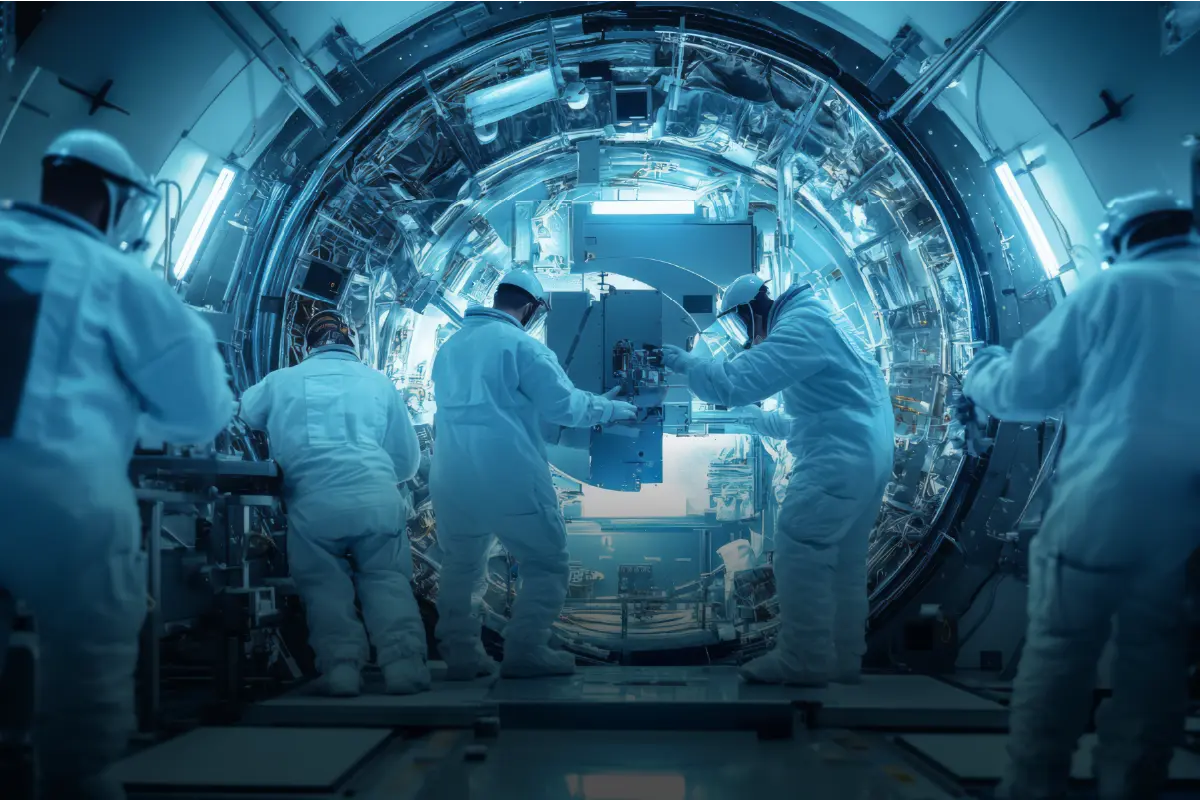
Take in-space manufacturing. On Earth, gravity constantly interferes with certain industrial processes. In microgravity those constraints disappear. Protein crystals used in drug development can grow more uniformly. Semiconductor materials can form structures that would be impossible in terrestrial factories.
That is why pharmaceutical companies are paying attention to orbital labs. A station is no longer just a place to run experiments. It can become part of the manufacturing chain itself.
Then there is the idea of Space as a Service. The logic mirrors the cloud computing revolution. Two decades ago companies had to build their own data centers. Today they simply rent computing power from cloud providers.
A similar model is emerging in orbit. Instead of launching dedicated satellites for every experiment or technology test, organizations can rent laboratory space on commercial stations. This drastically lowers the cost of entry.
Data infrastructure is also evolving. Traditional satellites function as communication relays which transmit data to Earth for processing. The development of onboard computing technology has begun to transform existing operational procedures.
Technology companies such as NVIDIA are pushing the idea of processing information directly in orbit. That means satellites and stations can analyze sensor data before it even reaches the ground. The result is faster decision making for industries like climate monitoring, defense, and telecommunications.
All of this activity feeds into a rapidly expanding market. According to the Satellite Industry Association, the global space economy generated about 415 billion dollars in revenue in 2024. That number alone reveals something important. The space economy is no longer theoretical. It already represents a major commercial sector.
Once commercial space infrastructure becomes more accessible, the number of companies entering the ecosystem will likely grow even faster.
Infrastructure Sovereignty and the New Space Geopolitics

Infrastructure rarely stays neutral for long. Railways reshaped global trade. Fiber networks transformed communication. Orbital platforms are beginning to carry similar geopolitical weight.
Governments are increasingly interested in hybrid space architectures. In simple terms, that means combining government satellites with privately operated stations and commercial spacecraft. The benefit is resilience. If one system fails, others can fill the gap.
This strategy also creates a form of deterrence. A network of commercial platforms distributed across orbit is harder to disrupt than a single national station.
Meanwhile another trend is quietly emerging. Countries without major launch capabilities are still finding ways to participate in space. Instead of building entire programs from scratch, they can purchase access to commercial platforms.
The UAE and Italy are developing partnership models which enable their researchers and astronauts to conduct their work on privately operated space stations. The approach enables more organizations to participate in space programs while it helps national space initiatives to expand their operations.
The current situation requires international organizations to work together through their established procedures. The United Nations Office for Outer Space Affairs functions as the main organization that supports these activities. The organization supports international space operations through its mission to develop national space laws which international standards.
The governance layer gained more significance with the increase of commercial activities in orbit. The development of space infrastructure requires shared legal frameworks together with diplomatic coordination, which if absent will lead to immediate operational breakdown.
Instead the goal is to build an orbital ecosystem where governments, companies, and international organizations operate within a common framework.
The Friction of Progress
Every new infrastructure wave comes with its own set of complications. Commercial space infrastructure is no exception.
One of the biggest concerns is traffic. Low Earth orbit used to host a few hundred satellites. Today it is becoming one of the busiest operational environments humanity has ever created.
According to the Satellite Industry Association, there were 11,539 active satellites in orbit as of 2024. Only four years earlier that number stood at 3,371. The growth curve is steep and it shows no sign of slowing down.
As more spacecraft enter orbit, the probability of collisions increases. A cascading chain of debris events could trigger what scientists call the Kessler Syndrome. In that scenario fragments from one collision cause additional impacts, gradually making certain orbital regions unusable.
Space traffic management therefore becomes a critical issue. Operators must coordinate launch schedules, satellite maneuvers, and orbital paths to prevent accidents.
Financing also presents challenges. Many space startups receive early funding from venture capital investors. However, building orbital hardware is expensive and revenue often takes years to materialize. The period between prototype development and sustainable business operations is sometimes called the valley of death.
The current regulatory frameworks face difficulties because they cannot maintain pace with emerging technological developments. The international community established export controls together with licensing regulations and international treaties during a period when only governmental entities conducted space activities. The establishment of private habitats and commercial research stations has created legal challenges that policymakers continue to address.
None of these problems are insurmountable. Yet they remind us that building an orbital economy requires more than engineering. It demands governance, coordination, and long-term planning.
Investing in the Orbital Commons
Infrastructure has always shaped economic revolutions. Rail networks powered industrial expansion. Fiber cables enabled the digital economy. Orbital platforms could play a similar role for the next phase of global growth.
Commercial space infrastructure is essentially the scaffolding of a new marketplace above Earth. Stations become laboratories. Satellites become data nodes. Manufacturing processes move into microgravity environments where physics behaves differently.
The emerging economy will reward different winners than the first companies which achieve orbital status. The actual competitive edge will go to businesses which develop strong operational systems that provide uninterrupted service across various sectors.
That opportunity is enormous. Analysts from the World Economic Forum project that the global space economy could approach 1.8 trillion dollars by 2035.
In other words, the race is no longer just about exploration. It is about building the infrastructure that allows humanity to stay, work, and create value in space.



 English