 English






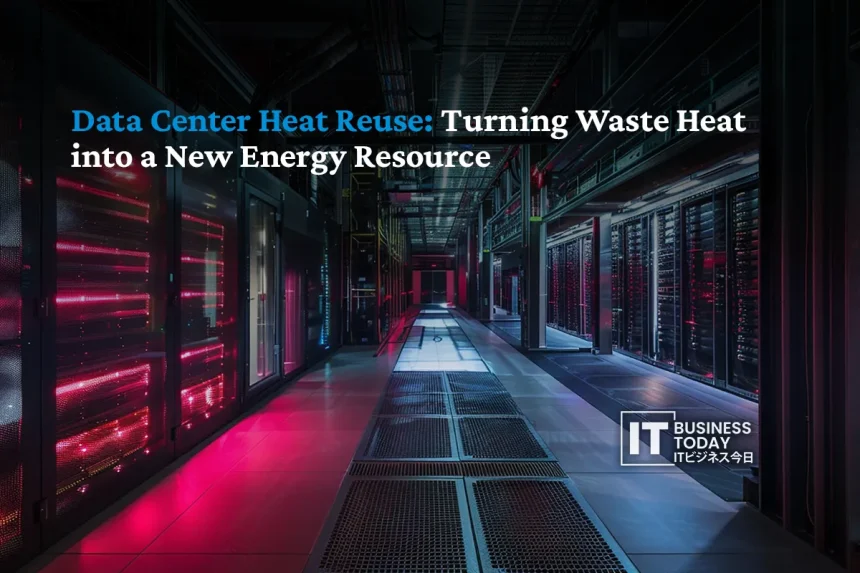
Data centers have an energy problem that extends beyond the electricity they consume. Every server generates heat while processing workloads, and most facilities still treat that heat as something they must remove as quickly as possible. However, this approach overlooks an opportunity that could change how digital infrastructure interacts with local energy systems. Data center heat reuse can turn excess thermal energy into a resource for heating homes, offices and industrial facilities.
The opportunity is significant. According to the International Energy Agency (IEA), data center waste heat could provide up to 1 exajoule of space heating by 2030 in locations within 5 km of district heating networks. This could meet the heating needs of approximately one in ten European homes. Achieving this requires more than better cooling. It calls for a shift towards circular energy systems, where data centers become suppliers of useful thermal energy rather than isolated consumers of electricity.
The Mechanics of Heat Recovery and How It Works
 The basic principle behind data center heat reuse is straightforward. Servers generate heat during computing operations, cooling systems capture that heat, and recovery infrastructure transfers it to another application. However, the efficiency of this process depends heavily on how a facility removes heat from its IT equipment.

Traditional air-cooled systems use fans and chilled air to regulate server temperatures. They can support heat recovery, but the resulting thermal energy often has a relatively low temperature. Consequently, operators may need additional equipment to make that heat suitable for external use.
Liquid cooling offers another approach. Direct-to-chip systems circulate coolant through cold plates attached to processors, while immersion cooling transfers heat directly into a specialized dielectric fluid. Since these systems capture heat closer to its source, they can provide more favourable conditions for recovery, particularly in high-density computing environments.
Nevertheless, liquid cooling is not a requirement for data center heat reuse. The International Telecommunication Union’s (ITU) technical specification covers recovery across air-cooled, water-cooled and liquid-cooled configurations. Google’s new Horndal data center in Sweden reinforces this point. The facility is being developed with air cooling and designed to support off-site heat recovery for nearby homes and businesses.
Once the system captures thermal energy, heat exchangers transfer it into a separate recovery loop. Heat pumps then raise its temperature when necessary, making it suitable for district heating networks or other applications. This additional step is important because the temperature required by the receiving system may exceed what the data center can supply directly.
Key Applications and Where the Heat Goes
Recovering thermal energy only makes commercial sense when someone can use it. Therefore, the success of data center heat reuse depends on identifying nearby consumers with consistent heating requirements. Several applications already offer practical opportunities.
District heating
District heating remains one of the most promising applications. Data centers can transfer recovered heat into municipal networks, which distribute hot water through insulated pipelines to residential buildings, offices and other facilities. Instead of releasing thermal energy into the atmosphere, operators can supply a useful resource to the surrounding community.
Microsoft’s Høje-Taastrup facility in Denmark demonstrates the potential of this approach. The company designed its waste heat recovery installation to provide heating equivalent to approximately 6,000 homes. This represents announced capacity rather than independently confirmed household delivery. Nevertheless, it shows how a large data center can become part of a local heating system.
Agriculture and greenhouses
Controlled-environment agriculture offers another opportunity. Greenhouses require consistent temperatures to support plant growth throughout the year. Recovered heat can help maintain suitable growing conditions, particularly during colder months. Moreover, locating agricultural facilities near data centers could reduce the need to transport thermal energy over long distances.
Industrial processes and domestic hot water
製造業 facilities often need hot water for cleaning, processing and preheating. Recovered thermal energy can support these requirements, provided its temperature matches the process. Similarly, residential and commercial buildings can use it for domestic hot water systems.
Electricity generation
Organic Rankine Cycle (ORC) systems offer another possible route. They use thermal energy to drive a secondary working fluid through a power generation cycle. However, their commercial value depends on the available heat temperature and conversion efficiency. Therefore, direct thermal applications often deserve priority when nearby demand exists.
The wider opportunity is clear. Data center heat reuse can support several sectors, but district heating currently offers one of the most straightforward ways to connect continuous data center operations with external energy demand.
The Business Case for Heat Reuse, Efficiency and Regulations
For data center operators, sustainability alone cannot justify major infrastructure investments. Heat recovery must also make financial and operational sense. This is where the business case for data center heat reuse becomes more interesting.
First, operators can explore commercial arrangements with district heating providers and local utilities. Instead of spending resources to reject all excess heat, they can supply recovered thermal energy to external consumers. Depending on the location and commercial agreement, this could create an additional revenue stream. It may also reduce the need for conventional heating sources elsewhere.
However, operators must evaluate efficiency through the right metrics. Power Usage Effectiveness (PUE) measures total facility energy consumption against the energy used by IT equipment. It helps assess infrastructure efficiency, but it does not show how much energy a facility successfully reuses outside its boundaries.
The Energy Reuse Factor (ERF) provides a complementary measure by assessing the proportion of data center energy reused beyond the facility. Therefore, operators should consider both metrics when evaluating the wider energy performance of a site. A facility can maintain a strong PUE while still releasing most of its thermal output without further use.
Regulatory developments are also pushing this discussion forward. Japan’s Ministry of Economy, Trade and Industry (METI) introduced data center energy efficiency guidelines in April 2026. These guidelines recommend that covered new facilities consider equipment selection, facility design and operational measures that enable effective utilization of generated waste heat.
This is an important policy signal. Although Japan has not introduced a universal requirement for every data center to reuse its heat, the guidelines bring thermal recovery into infrastructure planning. Consequently, operators have a stronger reason to consider heat reuse before construction rather than attempting expensive modifications after a facility becomes operational.
Roadblocks and Engineering Challenges
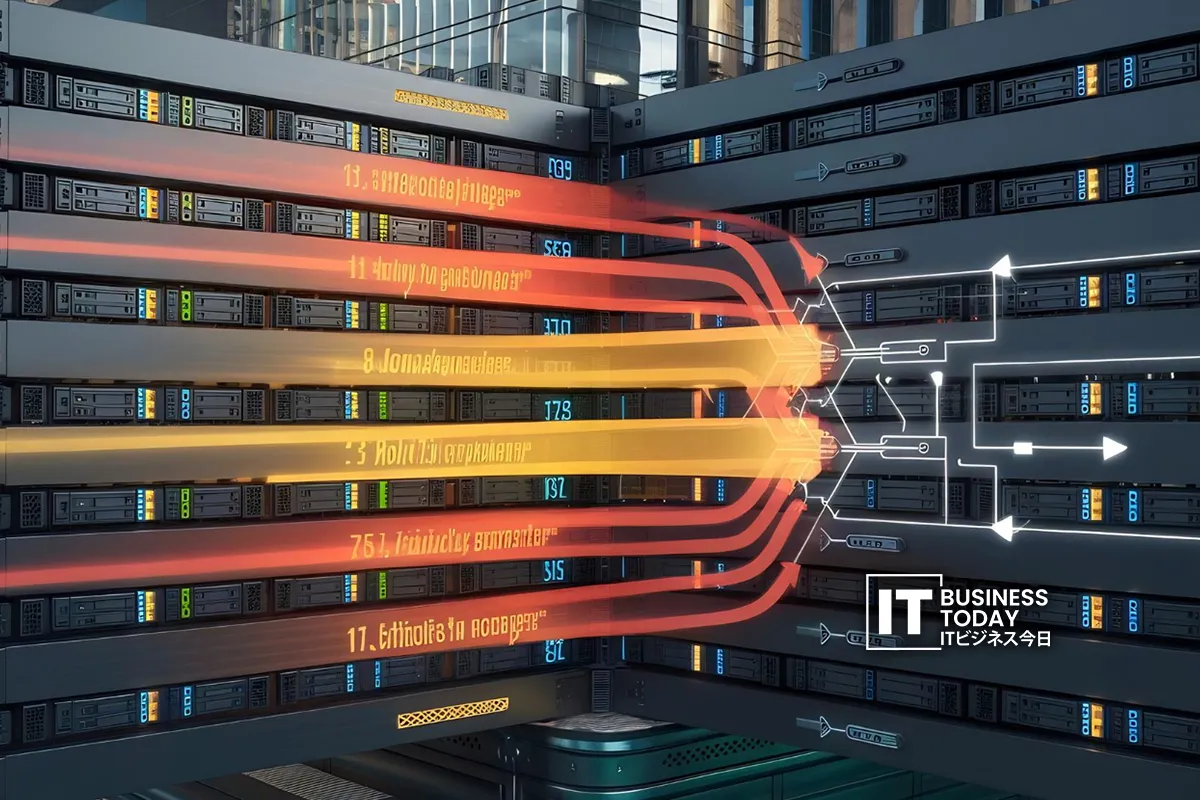 Despite the opportunity, data center heat reuse still faces practical challenges. Recovering thermal energy is one part of the process. Delivering it consistently, at the right temperature and at a commercially viable cost is another.
Seasonal demand differences
District heating networks generally experience higher demand during colder months. However, heating requirements can fall considerably during warmer periods, even though data centers continue generating heat throughout the year. Operators must therefore maintain alternative heat rejection systems when external demand declines. Thermal storage can help balance supply and demand, but it adds another layer of infrastructure and investment.
Infrastructure and retrofitting costs
Older data centers present a different challenge. Many facilities were designed primarily around conventional cooling systems, without dedicated heat recovery infrastructure. Retrofitting them may require additional heat exchangers, pipelines, pumps and control systems. Furthermore, operators must assess whether the expected financial returns justify the capital expenditure. In some cases, integrating recovery systems into a new facility may prove more practical than upgrading an older building.
Distance from heat consumers
Location can determine whether a project succeeds or fails. Heat loses energy during transportation, and longer pipeline connections increase infrastructure and operating costs. Therefore, data centers located close to residential communities, industrial facilities or district heating networks have a natural advantage.
Temperature compatibility
こちらもお読みください: CloudMosa、最新版の「Puffin Secure Browser」をリリースした
External consumers also have specific temperature requirements. If recovered heat does not meet those requirements, operators must use heat pumps or other equipment to upgrade it. This consumes additional electricity and affects the overall economics of the project. As a result, successful data center heat reuse requires coordination between the facility operator, energy providers and potential heat consumers from the early planning stages.
The Future of Circular Digital Infrastructure
The next phase of data center development will require operators to think beyond computing capacity, electricity supply and cooling performance. Thermal energy deserves a place in those decisions because it can serve another purpose after leaving the IT インフラ.
However, the transition will depend on location, infrastructure investment and the availability of reliable heat demand. Not every facility will have a viable customer nearby, and forcing recovery where the economics do not work would create new inefficiencies. The smarter approach is to make heat recovery readiness part of site selection and facility design wherever practical. As digital infrastructure expands, data center heat reuse should become a standard consideration in future hyperscale projects, rather than an optional sustainability feature.


 日本語