
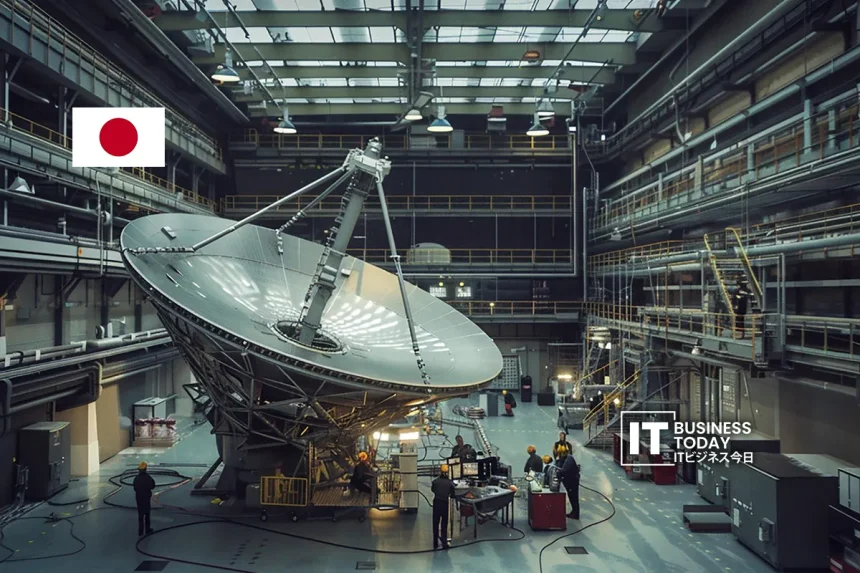
Japan is getting ready for a big space project. The country is going to send a spacecraft to the moons of Mars. This project is called the Martian Moons eXploration mission. The Japan Aerospace Exploration Agency is in charge of it. They want to learn more about the moons of Mars, which are called Phobos and Deimos. They also want to bring some rocks from Phobos to Earth.
This project is not about learning new things. It can also help Japans space technology industry. It can create jobs and opportunities in areas like robotics and making new materials. It can also help with communications and artificial intelligence. The Martian Moons eXploration mission can even help with making sensors and manufacturing things precisely.
The Japan Times wrote about this project recently. Japanese scientists are getting ready for the step in exploring the Martian system. The Japan Aerospace Exploration Agency says the Martian Moons eXploration mission will launch on October 20 2026. The spacecraft will take off from the Tanegashima Space Center, on Japans H3 rocket.
MMX Takes Japan Deeper Into Mars Exploration
The MMX spacecraft is going to travel for a year before it gets to the Mars system. Then it will look at both Phobos and Deimos and the main thing it will do is collect samples from Phobos.
The people at JAXA say that MMX is the mission in the world that is supposed to bring back stuff from the Mars area to Earth. The MMX spacecraft is expected to get than 10 grams of stuff from Phobos before it starts its trip back home. The capsule with the samples is supposed to get to Earth around 2031.
Scientists really want to know more about how the moons of Mars were made. There are two ideas about this. One is that Phobos and Deimos were made from stuff that was thrown up into space when something hit Mars and the other is that they were asteroids that got caught by Mars gravity. If we can study the stuff from Phobos directly we might be able to figure out which idea is right. The MMX mission is about the Mars moons and the scientists are hoping that the samples from Phobos will help them learn more, about the Mars moons.
The mission could also reveal information about Mars itself. Material ejected from Mars by ancient impacts may have accumulated on Phobos, potentially giving researchers access to Martian material without landing directly on the planet.
Robotics Will Be Central to the Mission
One of the important things about MMX is that it has a really cool robotic exploration capability.
The mission is going to use IDEFIX, which’s a rover that was made by Frances CNES and Germanys DLR working together. This rover is going to help us learn more about the surface of Phobos. It will also help the spacecraft land and collect samples.
It is not easy to operate a rover and a spacecraft around Mars. There are a lot of challenges that we do not usually face on Earth. For example it takes a time to communicate there is not a lot of sunlight there is radiation and we are not really sure what the surface is like. That means we need systems that can work on their own without people helping them all the time.
That is an opportunity for Japanese companies that are making robotics and autonomous systems. The technologies that they are developing for exploring planets can also be used in places like mines or for checking out infrastructure or for responding to disasters and other places where it is hard for people to go. Robotics and autonomous systems are really important, for all of these things.
Advanced Sampling Technology Could Become a Japanese Strength
Collecting material from Phobos is another major engineering challenge.
MMX will use sampling technologies designed to collect regolith from the surface and from below the surface. JAXA’s plans include a coring sampler and a pneumatic sampling mechanism, while the mission will also use other instruments to analyze the moon’s composition and environment.
The engineering knowledge gained from this work could benefit Japan’s wider space industry.
Precision mechanisms capable of collecting material in low-gravity environments require highly reliable components, sensors and control systems. Japanese manufacturers with expertise in robotics, electronics and precision engineering could apply similar technologies to future spacecraft and commercial space missions.
A Boost for Japan’s Space-Tech Supply Chain
The economic impact of MMX could extend beyond JAXA.
Big space projects need a lot of things from companies. These companies make spacecraft, electronics, software and special materials. They also provide communications. As Japan wants to do things in space these companies might get to work on new projects with the government and other businesses.
The project is also part of something that involves other countries. NASA, CNES from France DLR from Germany and the European Space Agency are all working on the MMX project. This means Japanese companies can work with companies from around the world who make space technology.
For technology companies working on these projects is a great way to learn how to make things that are very reliable and good quality. They have to make sure everything works perfectly and does not break easily. This experience is very valuable, for these companies.
AI and Autonomous Systems Could Gain Importance
AI is likely to become increasingly important as space missions move farther from Earth.
A spacecraft traveling around Mars cannot depend on constant instructions from operators on Earth. Autonomous navigation, image analysis, surface mapping and equipment monitoring can help spacecraft respond to changing conditions.
This could create another connection between Japan’s growing AI industry and its space sector. Companies developing computer vision, edge computing and autonomous decision-making systems could eventually find opportunities in planetary exploration.
The technology they made for MMX can also be used on Earth. Machines that can move around by themselves in places can be really helpful for robots that respond to disasters for checking industrial equipment and for managing things that are far away.
Space Exploration Can Make Japan Better At Technology
Japan is already very good at bringing back samples from space with the Hayabusa and Hayabusa2 programs. The MMX mission uses what they learned from those programs. It is also very different because it has to work on Mars and bring back material from Phobos.
こちらもお読みください: 三菱電機、日本の次世代戦闘機計画に向けた産業拡大に乗り出す
This is important for Japans technology companies. When they work on projects like this again and again they get better at doing things that are hard to learn.
MMX missions like this can also help create a group of engineers and scientists who’re good at robotics at making things that can fly in space at understanding materials and, at communicating with advanced technology.
As the global space economy expands, Japan’s ability to turn scientific missions into commercial capabilities will become increasingly important. MMX could provide another example of how government-led research can push Japanese engineering into technically demanding territory—and ultimately create technologies with value far beyond Mars.