
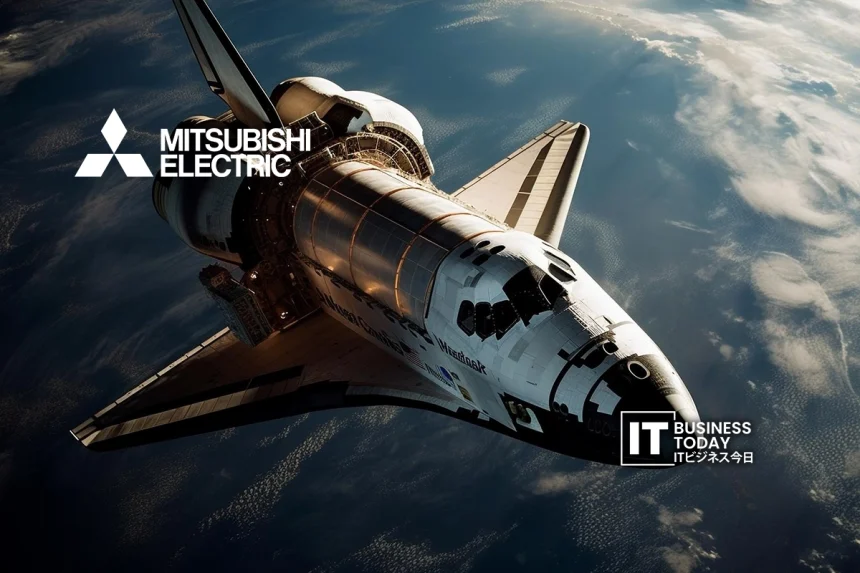
The defense manufacturing industry in Japan is set to enter a new era with Mitsubishi Electric planning to build three new production plants for electronic systems that will be utilized on the Global Combat Air Programme (GCAP), which is a sixth generation fighter aircraft that is being developed by Japan, the United Kingdom, and Italy. It represents the beginning of an era in which this multinational defense manufacturing program will shift from the research and design phase to industrial manufacturing.
This investment reflects the increasing efforts of Japan to improve its domestic defense industrial capacity while aiding in one of the world’s most challenging next-generation combat aircraft programs. Set to be introduced in the year 2035, the GCAP will serve as a replacement of the aging F-2 aircraft for the Japan Air Self-Defense Force. Some of the features to be found in the aircraft include artificial intelligence, network centric operations, stealth technology, and electronic warfare systems.
Expanding Industrial Capacity for Future Air Combat
As per sources, the new manufacturing facilities of Mitsubishi Electric will manufacture sophisticated electronics such as radars, communication system, mission computer, sensors, and other crucial avionics for the future aircraft.
こちらもお読みください: ElevationSpace社とAegis社がペイロード回収で提携
Unlike the earlier phases which mostly involved research, design, and prototypes development, the expansion marks the start of industrial readiness for mass manufacturing. The GCAP program is estimated by Mitsubishi Electric to contribute to their bottom line around fiscal years 2029-2030 due to the fast pace of prototyping and component manufacturing.
Mitsubishi Electric is also being compensated for the engineering effort and prototype development due to increased government funding for Japanese military manufacturing capacity.
A Strategic Project for Japan
Global Combat Air Programme was developed as a tripartite effort between Japan, UK, and Italy, with the aim of developing a next-generation fighter plane capable of dealing with the security issues in the future.
On behalf of Japan in this program, Mitsubishi Heavy Industries takes the part of primary industrial partner for the program, and BAE Systems and Leonardo serve on behalf of UK and Italy respectively. The work of Mitsubishi Electric focuses on providing the advanced electronic systems for the aircraft.
In addition, the program falls under the wider policy of defense reform in Japan, which focuses on increasing domestic production capacity and international defense cooperation.
日本のテクノロジー産業への影響
There will be many opportunities for Japan’s technology industry in the growth of the production line.
Today’s fighter jets depend much on sophisticated software, artificial intelligence, semiconductors, cybersecurity, communications technology, and sensor fusion technology. It means that the higher production will create opportunities for firms focused on embedded software, artificial intelligence for mission systems, advanced radar systems, digital signal processing, cloud-based engineering technology, and electronics manufacturing.
This project illustrates the growing interconnection of aerospace engineering and digital technology as well. The future combat aircraft will be the platform of data which should process huge volumes of information obtained from sensors, satellites, drones, and other military resources of allies.
It opens the opportunities for technology companies in Japan to work on algorithms of artificial intelligence, edge computing platforms, digital twins, and networking solutions.
ビジネスチャンス
The industrial development brings more than just advantages in the defense industry.
The producers of precision electronics, advanced materials, semiconductors, aerospace products, and industrial automation machinery might benefit from an increasing number of supply chains for manufacturing.
SMEs that specialize in niche manufacturing, machining, electronics assembly, and quality control can also become involved in the emerging defense ecosystem by means of subcontracting.
This initiative will likely lead to greater investment in R&D and better cooperation between universities, tech startups, defense manufacturers, and government organizations.
Moreover, Japan’s liberalization of the export rules in regard to its defense sector might help domestic technologies find application in other countries and create additional international business opportunities.
Strengthening Japan’s Defense Manufacturing Base
However, Japan’s defense industry had been largely engaged in fulfilling domestic demands. Geopolitical changes and evolving security threats have created a sense of motivation among policymakers to invest in indigenous defense technologies and collaborations.
Expansion of the Mitsubishi Electric’s business operations can be considered an example of such a strategic move. Building up the production capacity will help the company not only to supply its products to GCAP but also take part in other future defense electronics projects related to radar systems, missiles, automation, and communication technology.
The project will also play a role in enhancing the industrial resilience of the country through increasing domestic manufacturing capability.
今後の展望
Mitsubishi Electric’s strategy to set up new manufacturing plants is a significant milestone in Japan’s involvement in the Global Combat Air Programme. With the shift of focus from the development phase to the industrialization stage of the program, it serves as a reminder of Japan’s plans to be a major player in the development of aerospace and defense technologies in the coming generation.
Apart from contributing to the security needs of the nation, the investment is set to fuel innovation in areas like artificial intelligence, semiconductors, electronics, and aerospace engineering. In terms of technology sector in Japan, the programme has offered long-term potential benefits to the industry.