 日本語
日本語 





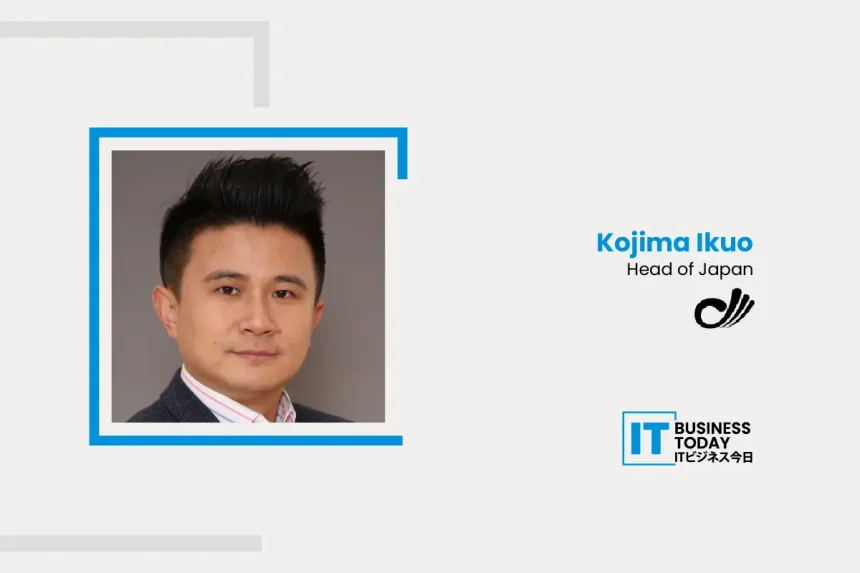
Kojima, can you tell us about your professional background and your current role at OYMotion Technologies Co., Ltd?
I have spent about 12 years in finance and investment, followed by around 10 years in digital technology incubation, acceleration, startup support, and cross-border investment and business development.
My career has moved across banking, digital transformation, emerging technologies, startup ecosystems, and now deep-tech commercialization. Across these stages, my core role has always been similar: connecting capital, technology, entrepreneurs, enterprises, and markets.

Today, I serve as Head of Japan at OYMotion Technologies Co., Ltd. OYMotion is a deep-tech company working across EMG, EEG, motion capture, tactile sensing, rehabilitation technologies, bionic hands, robotic dexterous hands, and human-machine interaction.
My responsibility in Japan is not only to develop sales. It is to build trust, partnerships, application scenarios, and a local ecosystem for OYMotion’s technologies. Japan is a demanding market, especially for robotics, rehabilitation, healthcare-related technologies, and industrial applications. Customers here care deeply about reliability, support, documentation, safety, and long-term commitment. For deep-tech companies, that makes Japan challenging, but also extremely valuable.
Looking back at your career, you have moved through banking, digital transformation, emerging technologies, startup incubation, and now deep-tech commercialization. Was there a particular moment or experience that changed how you think about innovation and convinced you that building ecosystems can be just as important as building products?
I have always believed that it is natural for a company to say its own product is good. But when others say your product is good, that is much more meaningful.
That recognition comes not only from commercial interest, but also from real capability, trust, and the strength of the ecosystem around the company. In Japan, I have seen many major companies do this very well. They value partners, long-term relationships, quality, and credibility. They understand that an ecosystem is not only about competition. It is also about mutual support and shared growth.
Over time, I became more convinced that when an ecosystem is damaged, the risk is not limited to one company. It becomes systemic. If the rules reward short-term extraction rather than long-term cultivation, the final result is that only a few powerful players may benefit, while most participants lose.
I sometimes think of it like nature. If more and more people only pick the fruit, but fewer people plant seeds or improve the soil, eventually everyone will face scarcity.
This is why I believe ecosystem building is as important as product building. A strong product may create initial attention, but a healthy ecosystem creates long-term adoption. Especially in deep tech, no company can succeed alone. You need customers, partners, researchers, regulators, investors, distributors, and users to grow together.
You have spent years working across China and Japan while supporting founders, investors, enterprises, and public institutions. From your perspective, what are some of the biggest differences in how innovation is built and scaled in these two markets, and what can each ecosystem learn from the other?
China and Japan are very different innovation ecosystems, and I think both are extremely valuable.
China has unmatched scale, speed, efficiency, and supply-chain capability. Over the past several decades, China has learned quickly, built fast, iterated fast, and scaled fast. In many sectors, especially manufacturing, hardware, robotics, and AI applications, this speed is a major advantage.
Japan has a different strength. Its ecosystem is deeper, more quality-driven, and more relationship-oriented. Japan also has many “hidden champions” in traditional industries, advanced manufacturing, components, materials, precision engineering, and specialized B2B markets. Its market may not always look as fast from the outside, but the depth of expertise is very strong.
The two ecosystems are at different development stages and face different challenges. China needs more accumulation, patience, and long-term trust-building. Japan needs more speed, openness, and willingness to test new technologies earlier.
I do not see this as a competition between the two. I see it as complementarity. China can bring speed, scale, iteration, and strong supply chains. Japan can bring quality, validation, trust, and deep industrial knowledge.
For deep-tech companies, the most valuable path is to combine both: use China’s ability to iterate and manufacture quickly, while using Japan’s demanding environment to validate quality, reliability, and real-world application.
Through your work with the Asia Innovation Summit, you have spoken about bridging global capital expectations with local startup realities. In your experience, what separates founders who successfully navigate both worlds from those who struggle despite having strong ideas?
The first difference is respect.
Successful founders respect different markets, different cultures, different business habits, and different decision-making processes. They do not assume that what worked in one market will automatically work in another.
The second difference is localization. Strong founders localize not only language, but also product positioning, partner structure, customer communication, support systems, and business models.
The third difference is their understanding of real demand. A good idea is still very far from success. What matters is whether the team can identify a real market need, match that need with its own capability, and execute continuously.
Of course, the rapid development of AI has changed many things. Today, a founder with a strong idea, courage, and hands-on execution ability can move faster than before. AI tools can help small teams build prototypes, test ideas, create content, analyze markets, and communicate across languages.
But even with AI, the fundamentals have not changed. Founders still need to understand people, markets, trust, and execution. Technology lowers the barrier, but it does not replace judgment
Cross-border expansion is often presented as a growth opportunity, but in reality it comes with cultural, operational, and relationship challenges. When startups look at entering Japan, what are the most common misconceptions they have, and what tends to surprise them once they begin operating in the market?
One common misconception is that Japan is simply slow or conservative, and therefore foreign startups can easily find opportunities here. The reality is more complex.
Japan is not a market that automatically pays for something just because it is new. In many traditional industries, customers care much more about trust, reliability, support, and the identity of the seller. They want to know who you are, whether you will stay, whether you can support them, and whether your product can be used safely over time.
What often surprises startups is that technologies considered old in other markets may still be carefully refined and actively used in Japan. From legacy business devices to specialized industrial tools, Japan often continues to improve products and services for a long time as long as there is real demand.
I experienced this personally when I joined a local entrepreneurship school in my ward in Tokyo. There were about 20 participants, ranging from people in their 20s to people in their 70s. Most of them came from traditional industries and were not directly connected to technology or innovation. They simply wanted to try building something of their own.
That experience reminded me that innovation is not only about advanced technology. It is also about people’s willingness to act.
Japan may not always move fast, but when people here commit to something, they often go very deep. For startups entering Japan, the key is not to rush. The key is to build trust, understand local needs, and be prepared for long-term work
A recurring theme throughout your work is connecting different worlds: capital, technology, industry, and culture. Reflecting on your mission at SPACE 9 to build interconnected innovation ecosystems across borders, where do you see the most valuable opportunities emerging today: from breakthrough technologies themselves, or from the ability to connect industries and communities that rarely interact?
Breakthrough technologies are important, but I believe the most valuable opportunities today come from connecting technology with real human dissatisfaction, unmet needs, and underserved communities.
Technology is a tool. Whether it is useful depends on who uses it, how it is used, and for what purpose.
Many people talk about cross-industry connection, but if it remains only a fashionable concept, it does not create much value. The real question is whether we truly understand people’s lives, work, learning, pain points, and limitations. Sometimes the most important opportunities are not in the most glamorous markets, but among people whose needs are often overlooked — caregivers, homemakers, older workers, small business owners, and people in traditional industries.
SPACE 9 started from a simple observation. I had experience in virtual online incubation spaces, and I also saw that many physical spaces were underutilized. So the original idea was to connect virtual and physical spaces. After we built a small initial model, it quickly moved toward community building and real projects.
Eventually, SPACE 9 brought together co-builders from around 15 different industries. Unlike traditional startup communities that focus heavily on traffic, scale, or public visibility, SPACE 9 focused more on mutual support within the community.
It was not easy at the beginning, and the effect was not immediate. But community building often requires a transition from quantity to quality. SPACE 9 was never about being large for the sake of being large. It was about being small, precise, and deep.
That experience continues to influence my work today. Whether in SPACE 9 or OYMotion, I believe the real opportunity is to connect people, technology, industry, and trust around meaningful problems
Japan’s ageing population and shrinking workforce are creating growing demand for robotics, rehabilitation technologies, and assistive systems. From your perspective, which of these areas presents the biggest opportunity over the next decade, and where do you think innovators are still underestimating the market need?
Rehabilitation technology, assistive systems, and robotics may appear to be different fields, but in my view they all serve the same purpose: helping people.
OYMotion is a good example. The company started from EMG technology 11 years ago. From that foundation, it developed EMG-based prosthetics, bionic hands for people with disabilities, robotic dexterous hands, finger exoskeletons, motion capture gloves, tactile sensing systems, and other related products.
These products may serve different markets, but they are connected by the same logic: starting from human bioelectric signals and neural signals, and extending toward technologies that augment, assist, and serve human beings.
Over the next decade, I believe the biggest opportunity is human-machine symbiosis.
Many innovators look outward for resources, funding, talent, and market opportunities. These are important. But I think we still do not study deeply enough what humans truly intend to do, how humans act, how humans feel fatigue, how humans recover, and how humans interact physically with the world.
Robotics is not only about replacing labor. Rehabilitation is not only about medical treatment. Assistive systems are not only about convenience. The deeper opportunity is to help people preserve dignity, independence, mobility, and capability.
In Japan, this need is becoming more urgent because of ageing, workforce shortage, and the pressure on caregivers and traditional industries. Innovators should look not only at robots, but also at the human beings around the robots
You recently joined OYMotion, a company working at the intersection of neuroscience, AI, rehabilitation technology, and robotics. What attracted you to this space personally, and why do you believe neural interfaces and human-machine interaction technologies are becoming increasingly important today?
First of all, I have known and worked with OYMotion for almost 10 years. Like the Japanese market itself, this relationship was built on long-term cooperation and trust.
More than two years ago, when I first began exploring the Japanese market, I was already bringing OYMotion’s robotic dexterous hand to Japan for market research and early business development. Over time, I saw the company survive difficult periods and gradually grow into one of the leading companies in its field globally.
Before officially joining OYMotion, I had not fully thought through the entire logic behind its technology portfolio. But as I spent more time with the products, the direction became clearer to me.
For most people, it may seem that we have many choices in life. But in reality, very few opportunities truly match our values, our abilities, and long-term social potential. For me, OYMotion is one of those rare opportunities. It is not only a business. It is a field worth cultivating for many years, perhaps even for generations.
I also became more interested in this field because I saw how AI is changing the boundary between experts and non-experts. I am not trained in neuroscience. I did not come from an engineering background. But when I used OYMotion’s EEG and EMG devices, collected my own data, and then used AI models to help analyze the results, I was deeply surprised.
I realized that I had an opportunity to study myself.
This is very powerful. We often talk about changing the world, but in many ways, we do not even fully understand ourselves. Neural interfaces and human-machine interaction technologies give us a new way to understand human intention, movement, fatigue, emotion, and capability.
That is why I believe this field will become increasingly important. As AI moves from screens into the physical world, machines will need to understand humans more naturally. Voice and keyboards are not enough. The next generation of interfaces will involve muscle signals, brain signals, motion, touch, and physical feedback
As someone helping bring advanced neural technologies into Japan, how do you balance technological ambition with practical realities such as PMDA regulations, clinical validation, industrial partnerships, and long commercialization cycles? What lessons can founders take from that balancing act?
I am not too worried about Japan’s technological acceptance in this field. Japan has strong foundations in neuroscience, rehabilitation, robotics, medical research, and industrial technology. There are many experts, institutions, and companies with deep knowledge and real interest.
Our current product series in Japan mainly focuses on research, education, innovation, robotics development, and industrial applications. At this stage, we are not directly entering PMDA-regulated clinical products. However, I have already conducted a significant amount of preliminary research and consultation regarding regulations, clinical validation, and commercialization pathways in Japan.
Japan’s regulatory environment is detailed, and the process can be complex. The amount of information that needs to be searched, understood, and digested is large. Commercialization cycles are also generally long.
But through actual conversations with Japanese companies, researchers, and industry partners, I feel that the demand is real. The willingness to collaborate exists. The question is how to build the right path.
This is where ecosystem building becomes critical. A company cannot rely only on its own ambition. It needs to borrow strength from the network: research partners, industry partners, distributors, experts, advisors, and early customers.
I do not believe balance is something founders can achieve perfectly from the beginning. In practice, founders need to make staged priorities. At one stage, the priority may be research validation. At another stage, it may be industrial use cases. Later, it may be regulation, clinical evidence, or larger-scale commercialization.
The lesson is simple: do not fight alone. If the ecosystem does not exist yet, build it while moving forward. Deep-tech commercialization is not only about technology. It is about patience, trust, and the ability to work with many different stakeholders over a long period of time
When you look ahead five to ten years, what developments in robotics, AI, neuroscience, or human-machine collaboration excite you the most? And what kind of founders or innovators do you believe will be best positioned to shape that future?
What excites me most is that AI is lowering the barrier for people to understand, build, and test things that once felt far away.
I come from an economics and finance background. I was never trained as a programmer or neuroscientist. But today, with the help of AI models, I can move much faster from an idea to a PoC, from a PoC to an MVP, and from an MVP to a real discussion with users and partners.
That is very exciting.
While much of the mainstream market is still focused on software AI applications, I feel fortunate to be working directly on the future of integrated hardware and software — robotics, neural interfaces, dexterous hands, motion capture, tactile sensing, and human-machine symbiosis.
This is not only intellectually interesting. It is something I can touch, test, demonstrate, and improve in the real world.
In Japan, there is a word I like very much: “yaruki,” the willingness and motivation to act. I have met many people in Japan over 60 years old, and even people in their 80s, who still have strong yaruki. They are experts in their fields, and they continue to think, experiment, support industry, and contribute to society. Some of them have already become my partners.
This has influenced me deeply. Yaruki is not limited by age.
But motivation alone is not enough. I also believe future innovators need human care. Japan’s Society 5.0 vision includes an important idea: not leaving anyone behind. I think this spirit is very important for the future of AI and robotics.
The founders and innovators who will shape the future are not only those with the strongest technology. They are people with both yaruki and human care. They have the motivation to act, and they also have the empathy to ask who the technology is really serving.
For me, the future of robotics, AI, neuroscience, and human-machine collaboration is not about replacing humans. It is about helping humans extend capability, preserve dignity, and build a more inclusive relationship with machines.
That is the future of human-machine symbiosis that I want to help build.


 English