 日本語
日本語 






Japan is not chasing AI the same way the US or China is chasing it. That’s probably the biggest thing people miss when they talk about the global AI race. The conversation everywhere else is about scale. Bigger data centers. Bigger GPUs. Bigger models. Japan is looking at a completely different problem. How do you make AI work inside a country where energy costs are rising, the workforce is shrinking, and industries cannot afford latency every single second?
That changes the entire conversation around computing.
For Japan, this is not just about building powerful chips anymore. It is about building efficient systems that can think locally, respond instantly, and consume less power while doing it. That is where energy-efficient edge devices are becoming important. Maybe even necessary.

Cloud AI works when you can constantly send data back and forth to centralized infrastructure. But factories do not always have the luxury to wait. Neither do hospitals. Neither do autonomous systems. Edge intelligence changes that model completely because the processing happens directly where the data is created.
Also Read: Continuous Authentication: The Shift Toward Behavior-Based Security in Enterprise Systems
And honestly, that shift is getting serious now.
Japan is quietly building a full ecosystem around low-power edge AI. Not just chips. The entire stack. Government policy, semiconductor manufacturing, AI accelerators, industrial hardware, embedded systems, all of it is starting to connect together in a way that feels much more deliberate than what most countries are doing right now.
Japan’s Government Is Treating Edge AI Like Industrial Survival
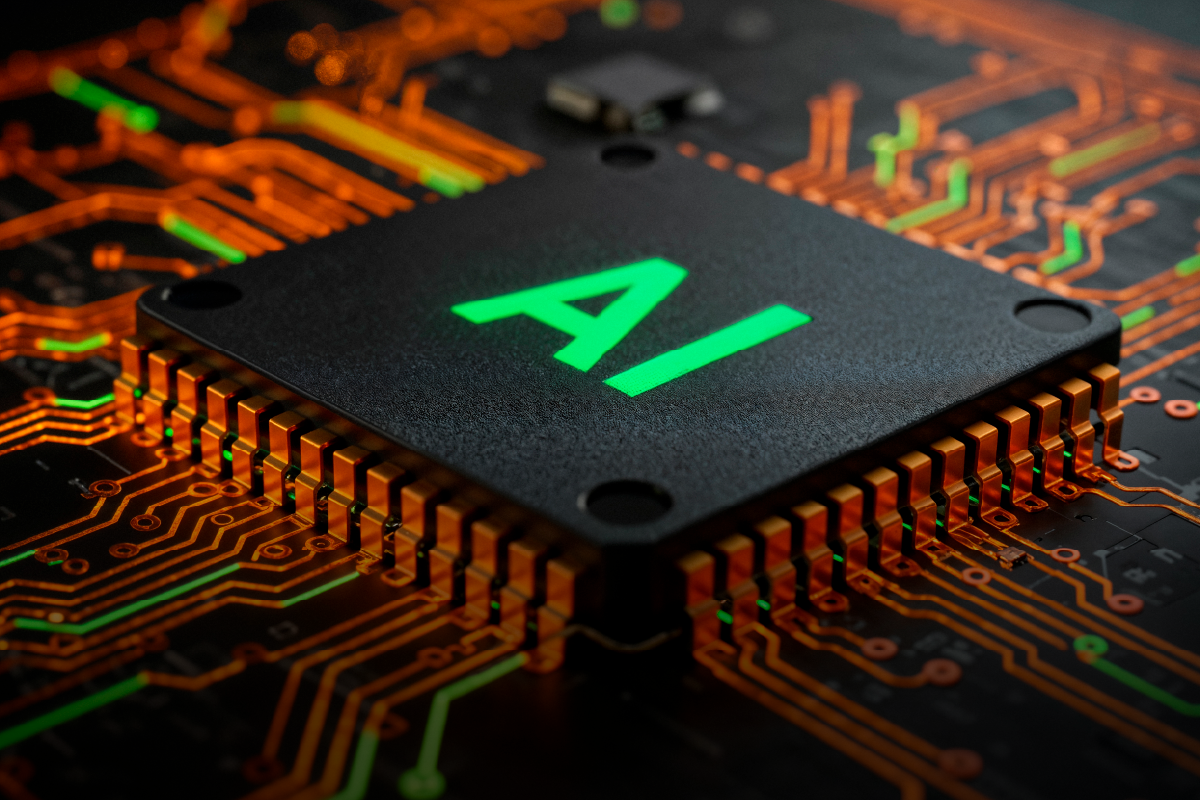
A lot of countries talk about AI strategy. Japan is putting actual industrial structure behind it.
One of the biggest drivers behind this shift is NEDO (New Energy and Industrial Technology Development Organization). Unlike many government-backed tech programs that stay stuck in research papers, NEDO is trying to push AI semiconductor development all the way toward commercial deployment.
That part matters because there is usually a huge gap between lab innovation and scalable manufacturing. Japan knows that already. So instead of funding disconnected experiments, the country is trying to create long-term infrastructure around energy-efficient AI hardware.
That became very visible after EdgeCortix confirmed cumulative NEDO-backed funding worth roughly ¥7 billion for advanced edge AI chiplet development and low-power inference projects.
That number is important. Not because of the money alone. It shows intent. Japan is clearly betting on low-power AI becoming a major industrial layer over the next decade.
At the same time, this entire push ties directly into the country’s larger economic concerns. Japan’s aging population problem is no longer something policymakers are talking about as a future issue. It is already affecting manufacturing, healthcare, logistics, and labor availability right now.
That is why the Society 5.0 initiative from the Cabinet Office of Japan keeps coming back to automation, connected systems, and intelligent infrastructure. The country is basically trying to redesign parts of its economy around AI-supported efficiency before workforce shortages get worse.
And honestly, that makes this entire edge computing story much bigger than semiconductors.
Japan’s AI Hardware Push Is Moving Away From Traditional GPUs

This is where things start getting more technical. But the shift itself is actually pretty simple to understand.
Traditional GPUs are powerful. Nobody is arguing that. But they also consume massive amounts of energy. That works inside giant cloud facilities where power and cooling infrastructure already exists. It becomes a problem when you try to deploy AI in smaller industrial environments.
Factories do not want overheating systems sitting beside production lines. Hospitals do not want giant power-hungry servers running inside compact medical devices. Robotics systems cannot afford unnecessary thermal load either.
So companies are now moving toward Domain-Specific Architectures, usually called DSAs. These chips are designed specifically for targeted AI workloads instead of trying to do everything at once.
That is where companies like EdgeCortix are getting attention. Their Dynamic Neural Accelerator architecture is focused heavily on maximizing inference efficiency while lowering energy consumption.
According to the company, next-generation edge AI chiplets are now delivering more than 5x the power efficiency of traditional GPU-based edge systems.
That changes the economics of AI deployment completely.
Suddenly, energy-efficient edge devices stop being niche products. They become commercially practical systems for real-world industrial deployment.
At the same time, Japan is rebuilding semiconductor manufacturing capacity around this movement too.
The biggest example is TSMC’s JASM facility in Kumamoto. For years, people talked about Japan losing semiconductor dominance. Now the country is slowly rebuilding advanced chip production again through strategic partnerships and localized manufacturing expansion.
Kumamoto is becoming important again because Japan wants tighter alignment between chip design, packaging, and deployment infrastructure. That reduces dependence on external supply chains while helping companies iterate faster on low-power AI systems.
And honestly, this part gets overlooked a lot. AI leadership is not just about who builds the best model. It is also about who controls manufacturing efficiency.
Japan understands that very well.
Industrial Edge Systems Are Getting Smaller, Smarter, and More Practical
A lot of AI conversations still sound disconnected from reality. Industrial edge computing does not have that luxury.
Systems need to survive heat, vibration, dust, unstable environments, and continuous operation. That is why companies like Portwell matter in this ecosystem.
The industry is shifting away from bulky server infrastructure toward compact embedded modules that can run AI directly inside industrial environments. SMARC and COM Express platforms are becoming increasingly important because they allow AI acceleration inside robotics systems, medical devices, transportation systems, and smart manufacturing equipment without requiring massive physical infrastructure.
And honestly, this is where energy-efficient edge devices become very real instead of theoretical.
A fanless industrial AI system running locally inside a factory saves bandwidth, lowers latency, and reduces dependency on cloud infrastructure all at the same time.
That becomes a major operational advantage.
Portwell’s role here is important because deployment standards also matter globally. Certifications like CE, FCC, and UL are still critical for scaling industrial hardware internationally. Japan’s broader export ecosystem depends heavily on hardware reliability and compliance.
At the same time, demand for edge AI is climbing fast.
The Japanese edge AI software market is projected to hit roughly $535.2 million by 2034 while growing at nearly 29.5% CAGR, driven heavily by manufacturing and automotive adoption.
That growth is not happening because edge AI sounds futuristic. It is happening because industries want faster decisions without carrying massive energy costs.
Why Watts per TOPS Is Becoming the Metric That Actually Matters
For a long time, AI companies mostly talked about raw performance numbers. Bigger models. Faster compute. More parameters.
Now the conversation is shifting toward efficiency.
How much intelligence can you run within a limited power envelope?
That question matters everywhere now.
Inside manufacturing plants, edge AI systems can inspect defects in real time without constantly pushing data into the cloud. That reduces latency and bandwidth costs immediately.
Healthcare systems are seeing similar changes. Wearable monitors need low-power AI because battery life directly affects usability. Nobody wants a medical device that constantly needs charging.
The automotive industry is probably one of the biggest examples. In EVs, every watt matters. Heat matters too. Lower power draw means better efficiency and potentially longer range.
That is why modern edge AI accelerators are becoming important.
According to EdgeCortix’s SAKURA-II platform, multi-billion parameter models like Llama 2 can now run within an edge power envelope of roughly 8W.
A few years ago, that would have sounded unrealistic.
Now it is becoming commercially relevant.
And honestly, this is probably where the bigger AI transition starts happening. Generative AI is slowly moving away from being locked inside giant cloud infrastructure. It is starting to move into physical environments where power efficiency matters more than brute-force compute.
That changes the direction of the industry completely.
Japan’s AI Future Might Depend on Efficiency More Than Scale
Japan knows it cannot outspend every country in the AI race. It probably does not need to.
The country is approaching AI from a much more practical angle. Efficiency. Reliability. Industrial deployment. Long-term sustainability.
That approach feels very different from the hyperscale obsession dominating most AI discussions right now.
And maybe that is exactly why Japan’s edge computing strategy is getting attention.
The country’s combination of semiconductor investment, agile AI governance, industrial automation, and low-power infrastructure is creating something much more durable underneath the surface.
The reality is simple. Japan’s population is projected to shrink by nearly 30% by 2070 according to the Cabinet Office of Japan’s Society 5.0 framework.
That means automation is no longer optional.
Energy-efficient edge devices are not just another tech category inside that future. They are becoming part of the country’s economic survival strategy.
And honestly, Japan may end up proving that the future of AI is not about who builds the biggest system.
It may be about who builds the smartest system using the least amount of power.



 English