 日本語
日本語 





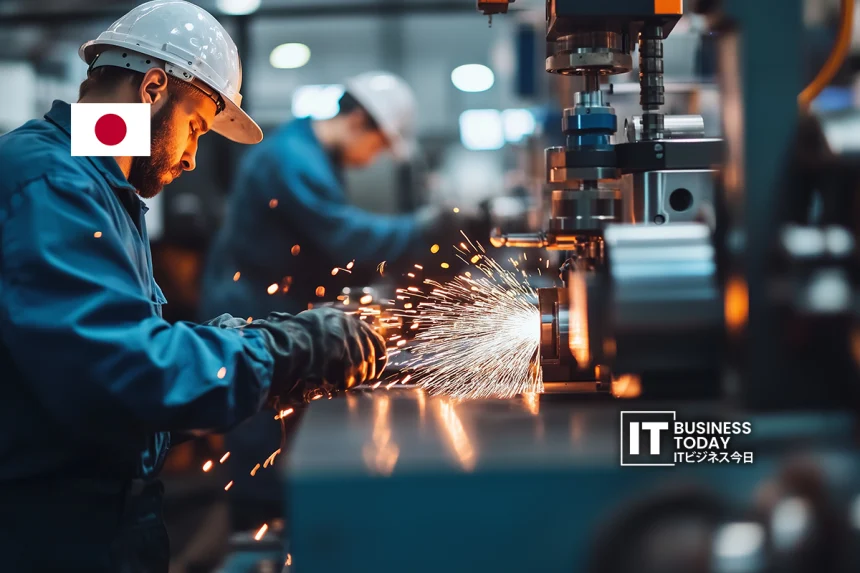
Some of Japan’s top tech firms have decided to join forces in an unprecedented partnership to create one of the most sophisticated AI systems in the world. Unlike most AI-related discussions centered around chatbots, this project focuses on equipping machines in the real world with intelligence. The collaboration SoftBank Group Sony Honda, and NEC Corporation aims to develop a trillion-parameter AI model specialized in robots and factory automation.
Officially supported at a high level by the government, this move shows JAPAN’S desire to be at the forefront of the new generation of AI innovations which go beyond virtual/digital environments to incorporate the physical world.
From Generative AI to Physical Intelligence
While most of the world’s AI competition has targeted generative models that find their uses in chatbots and copilots, Japan is changing its focus to what they call “physical AI. ” These types of artificial intelligence are capable of controlling machines, thus making them able to see, understand, and act in the physical world.

Also Read: Mujin Introduces Subscription Model for Robotics
A model with a trillion parameters being developed is anticipated to become the main intelligence layer for not only robots but also autonomous systems and industrial equipment. Traditional AI systems, which are mostly limited to operating within digital environments, are a different breed as this new model intends to close the divide between software intelligence and physical intervention.
This development represents a major milestone in the progress of AI – from merely digitally helping users to being capable of physically carrying out tasks in factories, warehouses, and transportation systems.
A Strategic Move Backed by Government Support
The partnership is more than a mere business move; it forms part of a more extensive national plan. The Japanese administration is giving generous financial support to speed up the development, indicating its dedication to enhance Japan’s standing in vital technologies.
It is consistent with the broader initiatives of Japan to regain its leading position in cutting-edge industries like semiconductors, AI, and robotics. The government, by promoting the cooperation between big corporate players, intends to establish a consolidated ecosystem that can rival the world tech giants.
Why Japan Is Focusing on Physical AI
Japan’s country-wide focus on tangible AI is the result of a combination of factors, including economic imperatives and a strong technological base. Firstly, the nation experiences an extremely high rate of aging coupled with a decreasing labor force, which means that the introduction of robots will be the only way to keep the productivity of different sectors at the same level.
Secondly, Japan has continuously been at the forefront of the world’s robotics and precision manufacturing sectors. Through the incorporation of breakthrough AI in such faculties, the nation aims to generate a competitive edge that combines superior hardware with smart software.
This strategy offers Japan to set itself apart from other major AI countries that are mainly interested in software-driven innovations.
Implications for Japan’s Tech Industry
This joint venture’s formation is projected to profoundly impact the entire technology scene of Japan. It promotes a partnership among the different industries which have been separated until now, combining the know-how of the telecommunications electronics automotive engineering, and enterprise IT sectors.
Such a merger may catalyse faster innovation processes, allowing rapid creation and implementation of AI-integrated machines. Besides, it makes Japan a forefront player in a novel type of AI applications that go far beyond mere digital services and encompass tangible counterparts.
Business Impact: A New Era of Industrial AI
The advent of physical AI for businesses is a real game changer in the technology application area. Besides the typical use of AI for data analysis purposes and automation of digital workflows, enterprises will probably initiate the implementation of AI systems that will have a direct impact on their physical operations.
Manufacturing, logistics, and transportation industries could be seriously affected in a positive way. AI-based robots would be capable of performing complicated tasks of assembly, managing supply chains with high level of optimization, and increasing operational efficiency at a large scale.
Besides that, it is a way of creating new business models, including robotics-as-a-service and AI-driven industrial platforms, which offer new revenue-generating potentials for technology providers as well as end users.
Global Competition and Strategic Positioning
Japan’s plan appears just as the worldwide rivalry over artificial intelligence (AI) grows fiercer day after day. The USA and China are making huge investments in AI and robotics, but Japan’s strategy, which is centered on combining AI with highly developed hardware, will most probably stand out in a competition held on a global level.
On the assumption that this partnership works, it might be the one to change the face of global AI by moving the attention away from only digital intelligence to systems that can also engage with the real world.
Challenges Ahead
The project is highly ambitious but there are major issues that need to be tackled. Aiming at creating a trillion-parameter AI model that can address real life situations will heavily depend on having access to huge computing power, complicated engineering and a long term commitment.
Besides, the further development and production of these technologies is an issue that needs to be taken seriously. Reliable, safe and at the same time affordable will be the main factors that can help a technology to hit the market.
The Road Ahead
The collaboration among SoftBank Sony Honda, and NEC is a landmark development in artificial intelligence. It also demonstrates the general trend of AI systems that not only handle data but are also capable of performing tasks in outside environments.
This project is a chance for Japan to regain its top position in high-tech innovations through its capabilities in robotics and manufacturing. It is also a sign to the worldwide technology sector that a new area is coming into being – an area in which Artificial Intelligence is not confined to computer screens but plays a part in the real world.



 English