 日本語
日本語 





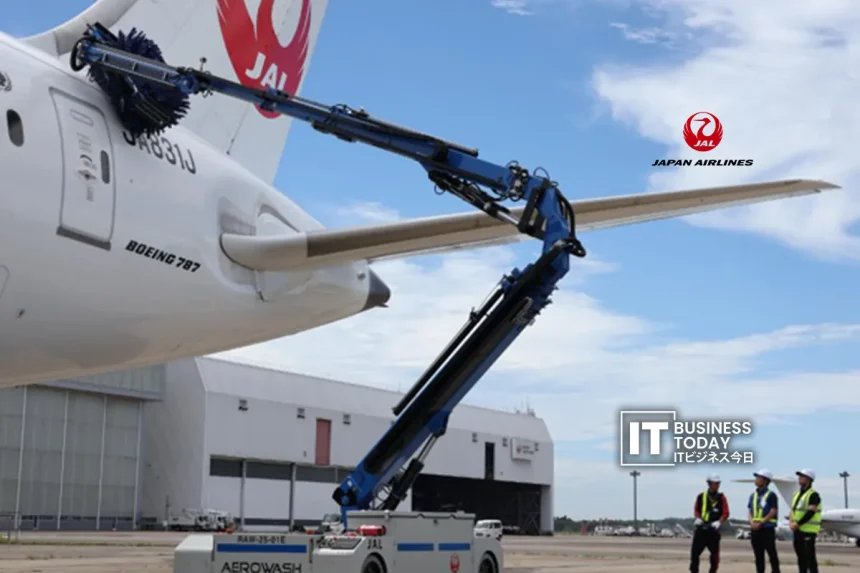
Japan Airlines is bringing robots into a part of airport work: cleaning airplanes. The airline is planning to use an automated aircraft-washing robot at Narita Airport near Tokyo. This will be the time a Japanese airline uses this kind of technology.
This move shows a bigger change happening in Japan. Companies are having trouble finding workers. Are trying to do more with less. Automation is no longer for factories. It is now spreading to airports, logistics centers, construction sites and other places where people work. Japan Airlines new idea could show how robots can take over jobs. This way workers can do important tasks.
Japan Airlines Uses Robots for Plane Care
The robot is called the AW3. It was made by a company in Sweden called Aerowash AB. It has an arm that can be controlled from a distance. This arm helps clean the outside of planes.

Japan Airlines plans to start using the robot in 2026. Employees will get training before that. The airline will first use one robot at Narita Airport. Then it will see if other airports should use the robot. The robot could cut the time workers spend cleaning planes by up to 40 percent for each plane.. Some parts of the cleaning will still need people. Workers will still use mops for some areas. This shows a part of Japans plan, for using robots. Robots are not just replacing workers. They are helping workers do their jobs better.
More Companies Are Using Robots Because They Need Workers
The time when Japan Airlines is using robots is very important. Japan is having trouble finding workers in areas. These include transportation, manufacturing, logistics and construction. Airport work needs a lot of work. That makes it a good place to use robots. Cleaning planes can mean workers are up high and using chemicals. Using robots for part of the job can make work safer and easier.
Japan Airlines says its goal is not to have workers. It wants to make work easier. Workers can then spend time on important jobs. This way of thinking may become more important. Japanese companies need to keep working with fewer people.
Japans Robotics Industry Might Find New Markets
Japan is already known around the world for robots but the next chance for growth might come from using robots in places that are not traditional factories. Airports are one of those places. Robots might be used for cleaning planes moving bags checking things moving cargo keeping things safe and taking care of buildings. The same kinds of technology could also be used in train stations, ports, warehouses and big shopping places. For companies that make robots this is a chance to try new areas outside of car factories and electronics plants. The main problem will be making machines that can work safely in places that’re not as controlled as a normal factory.
Artificial Intelligence Might Make Airport Robots Smarter
The next level of automation, at airports is probably going to mix robots with intelligence. The AW3 is made to handle automated plane washing. Future systems could use cameras, sensors and AI to find dirt check surfaces and change cleaning actions on their own.
AI could also look for scratches, rust or other problems while cleaning is happening. This would turn a job into a chance to keep checking planes all the time. Japanese companies that work with cameras, fast computing, sensors and AI might gain from this change. Of making robots on their own companies could create the smart part that helps machines see their surroundings and make choices.
Airport Automation Could Create a New Technology Ecosystem
JAL’s initiative could have an impact beyond the airline and robot manufacturer. Airport automation is not about robots. It requires technologies to work together. Wireless connectivity, cloud platforms, sensors, cybersecurity, fleet-management software and predictive-maintenance systems all play roles. Together they form part of an infrastructure. This setup opens doors for IT companies and systems integrators. These firms can help build and manage the systems that keep airport robots running
For example imagine a company that operates robots across airports. It needs software to monitor robot status plan maintenance and track how well the robots are performing. That need creates a market for robot-as-a-service industrial IoT and automation-management platforms.
Safety Could Become a Major Selling Point
Productivity is one reason businesses invest in automation.. Safety is just as important. Aircraft cleaning involves working near vehicles, high platforms, water, chemicals and busy airport equipment. These conditions can be dangerous. By using robots to do more of the work companies can reduce the risk for workers. For businesses this safety benefit makes robotics investments easier to accept. It is not about saving money. It is about protecting people.
A robot does not need to replace jobs to be valuable. Even if it takes over tasks it can still provide a strong return. Reducing workplace injuries keeping workers on the job longer and letting them focus on complex work all add up to real value.
SMEs Could Benefit From the Automation Wave
The rise of airport robotics could help Japan’s medium-sized technology businesses. Large companies may buy robotic systems.. Many smaller firms can still play a key role. They can supply parts and services. This includes sensors, cameras, motors, batteries, control systems, software, maintenance and cybersecurity.
As robots become more common in airports and other commercial spaces the demand, for these components will grow. This could help build a more diverse automation ecosystem in Japan. Of all the value going to a few big robotics manufacturers smaller companies can also grow and succeed.
A Wider Signal for Japan’s Automation Economy
JAL’s aircraft-washing robot may appear to be a relatively narrow technology deployment, but its significance is broader. It demonstrates how automation is moving into real-world operational environments where labor shortages, safety concerns and productivity pressures intersect. For Japan’s technology industry, the opportunity extends across robotics, AI, sensors, industrial software, cybersecurity, edge computing and IoT.
If JAL successfully demonstrates that robotic aircraft cleaning can reduce workloads without disrupting airport operations, other airports and transportation companies may consider similar technologies. The development could ultimately encourage a wider shift toward service-sector robotics in Japan. As the country searches for ways to maintain productivity with a smaller workforce, the most important question may no longer be whether a task can be automated.
It may be how intelligently humans and machines can work together. JAL’s aircraft-washing robot provides a small but visible example of that future—one where robots handle repetitive and hazardous work while people move toward tasks requiring judgment, coordination and expertise.



 English