 日本語
日本語 





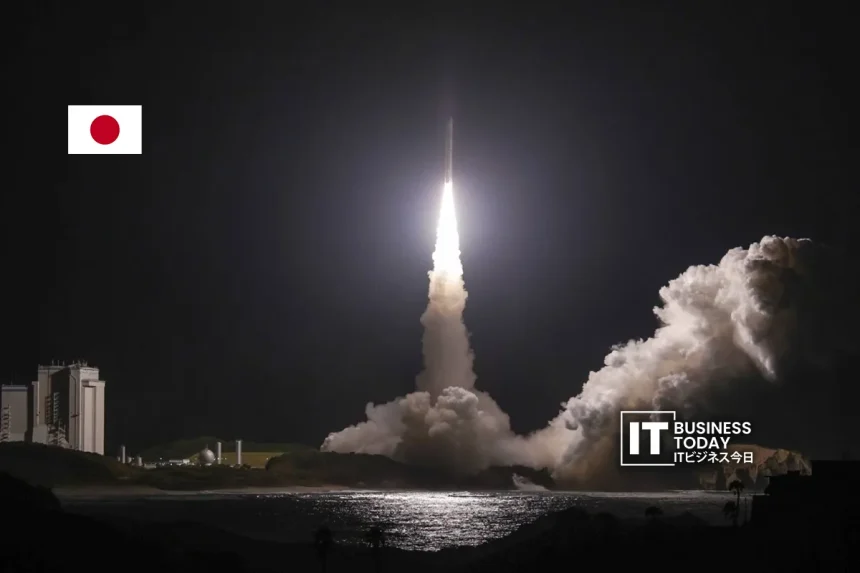
This is a deal for Japan because it wants to be a major player in the space industry.The Japan Aerospace Exploration Agency or JAXA for short sent up a rocket with a satellite called Michibiki No. 7. This satellite is going to help people find their way with really accurate directions. The H3 rocket took off from the Tanegashima Space Center. Did its job perfectly. It put the Michibiki No. 7 Satellite where it was supposed to go. This satellite is part of a system called the Quasi-Zenith Satellite System or QZSS. The QZSS is like a helper for GPS it makes sure the directions are really precise. This launch is special because the H3 rocket had some problems in the past. So each time it launches successfully it makes people feel more confident in Japans space program and the H3 rocket. The H3 rocket is important for Japans space technology industry because it wants to show that it can send things into space safely and on time. Japans space technology industry is getting stronger, with the H3 Rocket Launch.
Why the H3 Rocket Matters to Japan
The H3 was developed to replace Japan’s older H-IIA launch system and become the country’s flagship rocket. Mitsubishi Heavy Industries (MHI) is the prime contractor responsible for the vehicle and launch services, working with JAXA on its development. The program was designed not only to maintain Japan’s independent access to space but also to make Japanese launches more competitive in the international satellite market.
That commercial objective is becoming increasingly important. The global space economy is expanding rapidly, driven by satellite communications, Earth observation, navigation, defense systems and commercial space infrastructure. Japan therefore needs a launch vehicle that can offer customers reliability, reasonable costs and flexible launch services.

Also Read: Mitsubishi Electric Begins Industrial Expansion for Japan’s Next-Generation Fighter Jet Program
The latest H3 success provides another positive signal for that effort.
Impact on Japan’s Technology Industry
The benefits of a successful H3 program extend well beyond rockets. Japan has a large network of companies involved in electronics, advanced materials, precision manufacturing, robotics, sensors and telecommunications. A stronger domestic launch industry can create demand across these sectors.
Satellite makers, parts suppliers and software firms might find chances as Japan grows its space work. More space launches could lead to need for testing, tracking, ground systems, satellite communications and data processing technologies.
The position skills offered by the Michibiki system could make a business effect. Accurate positioning is becoming more important for self-driving cars, delivery, farming, building, handling disasters and robots. As Japan grows QZSS companies, in these areas can create tools that rely on strong position data.
Opportunities for Japanese Businesses
For companies operating in Japan’s aerospace and technology sectors, the H3 program could create a more predictable domestic market.
A dependable rocket makes it simpler for people who build satellites to organize their trips into space and for new companies to think about Japan as a place to start businesses related to space. Schools and groups that do research can also get chances to use local rocket launches, which might help make new ideas, for small satellites and technology used in space come faster.
Established manufacturers could benefit as well. The development of a national launch system creates demand for specialized components, propulsion technologies, avionics, software and advanced manufacturing. Over time, these capabilities can have applications outside the space sector, including aviation, defense, automotive technology and industrial automation. There is also a potential international opportunity. MHI has previously stated that H3 is intended to compete in the global satellite launch market. Consistent launch performance will be essential if Japan wants foreign satellite operators to choose H3 over established international competitors.
Reliability Remains the Biggest Challenge
Despite the positive development, Japan still faces an important challenge: maintaining a consistent launch record.
The H3 program experienced a failure on its first flight in 2023, although subsequent missions demonstrated significant progress. The program also suffered another setback in December 2025 when an H3 rocket failed to place the Michibiki No. 5 satellite into its intended orbit.
For commercial customers, reliability is critical because a launch failure can cause significant financial losses and disrupt satellite operators’ business plans. Japan will therefore need several more successful missions to establish H3 as a consistently dependable alternative in the global launch market.
A Stronger Foundation for Japans Space Economy
The successful launch of Michibiki Number 7 is more than another step for JAXA. It shows that Japan is slowly building the support systems needed to help the space economy grow in the country.
If H3 keeps having launches Japanese companies might have more chances, in satellite making, navigation, communications, robotics and space services. New companies might also find it easier to join the industry as launching becomes more reliable.
For Japan’s broader technology industry, the message is significant: space is becoming an increasingly important commercial and strategic technology market. The H3 rocket’s success could therefore help Japan move from being primarily a space technology developer to becoming a stronger competitor in the global business of space transportation and satellite services.



 English