 日本語
日本語 





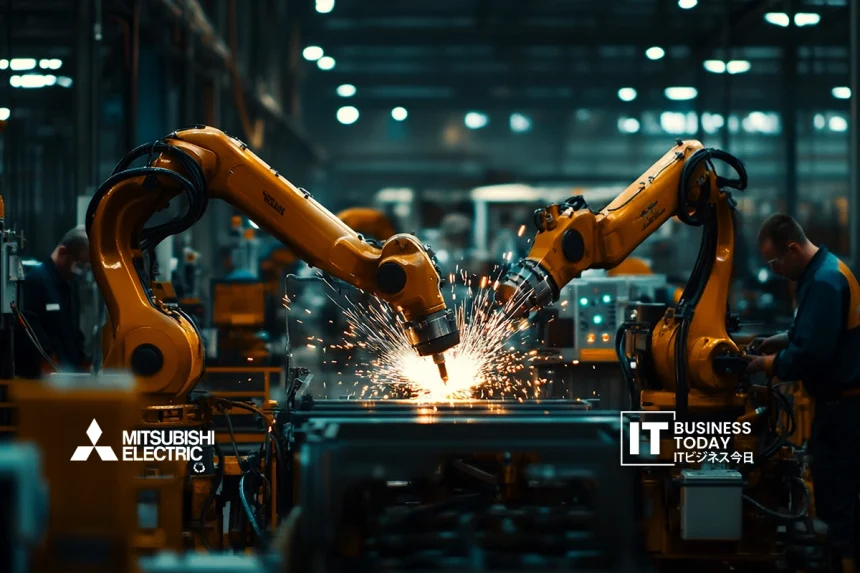
Mitsubishi Electric unveiled its latest version of the GOT3000 Human-Machine Interface (HMI) worldwide, which indicates a strong commitment towards smarter and better connected manufacturing plants. The new system is aimed at assisting industrial companies in promoting their digital transformation projects by enhancing factory connectivity, live monitoring as well as OT and IT system levels integration.
The release of the GOT3000 series is well-timed as the whole manufacturing sector is gradually embracing automation, AI-driven analytics and Industrial Internet of Things (IIoT) solutions for better performance and continuity. Mitsubishi Electric’s new HMI platform has been considered as an interface to a machine only initially; however, it is a centralized gateway that can connect production machines to upper-level enterprise systems.
A Major Step Toward Smarter Manufacturing
The new GOT3000 series brings a set of new features geared towards the support of the ever-changing production systems. The system complies with the OPC UA discipline, thus allowing a smooth dialogue between the factory machines and the cloud-based IT systems. Besides that, it comes with VPN function, encrypted communication, USB-C connectivity, and NFC support, all of which contribute to manufacturing security while also facilitating remote operations and predictive maintenance.

Also Read: Japan’s Food Processing Technology Takes Global Stage, Signaling New Growth for Tech and Industry
Probably the most significant change is the conversion to a high-definition capacitive multi-touch screen which is capable of displaying up to 16 million colors. Mitsubishi Electric states that this layout will lessen the probability of operation errors on the one hand and will increase the satisfaction of operators in touch with fast industrial contexts on the other. Also, the system provides support for live video monitoring via attached cameras, which is a nice feature that allows technical staff to check both real-time and recorded videos to get quicker results in production line troubleshooting.
This introduction also signifies a general transformation in the industrial automation sector in which HMIs gradually become something more than mere control panels – they are going to be intelligent data centers supporting AI analytics, cloud computing, and remote factory management.
Implications for Japan’s Technology and Manufacturing Sector
Japan has been at the forefront of industrial automation and robotics worldwide for a very long time, and the introduction of the GOT3000 further solidifies the nation’s commitment to the development of next-generation smart manufacturing technologies.
With the shortage of workers, increase in operational costs, and intensification of global competition being some challenges faced by Japanese manufacturers, digital transformation has understandably been viewed as a strategic move. Advanced HMIs, AI-powered monitoring systems, and connected factory platforms are among the technologies that are anticipated to play a vital role in enabling companies to keep their productivity levels while simultaneously lowering their dependence on manual activities.
The focus of the GOT3000 on the interoperability between IT and OT systems is very relevant for Japan’s industrial sector. In many cases, factories in Japan have been operating with separate production systems which have hindered data sharing and automation possibilities. Miyamoto is morphing business functions and currently runs ASIs in Yanagishima; Mayuwa, a German-based company largely involved in environmental testing at Wako. To better equip manufacturers with a data-driven, production management system, Mitsubishi Electric is facilitating their transition by equipping them to seamlessly connect their existing production systems.
Industries such as automotive production semiconductors pharmaceuticals, and material handling could all benefit significantly from this. Japan is still very much a major player globally in these areas.
Expanding Opportunities for Industrial AI and IIoT
The introduction of the GOT3000 is therefore a sign of the expanding needs for Industrial Internet of Things infrastructure and AI-enabled manufacturing systems on a global scale.
Nowadays, factories are in greater need of using up-to-the-minute operational data to enhance assembly lines, accurately forecast the time of failure of equipment and shortening the downtime periods. High-performance HMI systems such as the GOT3000 serve as a link between machines sensors cloud platforms, and analytics tools thereby assembling the environment where both automation and AI are efficient and work together harmoniously.
Such a development would undoubtedly offer tech companies in Japan and abroad an array of great opportunities for business ventures in the areas of industrial cybersecurity, edge computing, predictive analytics, and factory automation software.
A good example of this is the feature that allows manufacturers to control equipment remotely via secured cloud-based systems. As a matter of fact, this has become more important than ever since manufacturers are opening factories in different locations. Thanks to this feature the corporate management of various factories can be centralized thus reducing the costs of maintenance and also the inefficiencies of the operation.
Competitive Pressure in the Global Automation Market
Competition in the worldwide market for industrial automation is tough Japanese German, American, and Chinese companies are leading the way in the investment of smart factory technology.
By unveiling the GOT3000, Mitsubishi Electric is taking a step to fiercely compete in the market change that will likely rise the demand for integrated automation platforms combining hardware, software, and connectivity.
The fact that the platform works with Mitsubishi Electric’s MX Controller and the CC-Link IE TSN industrial network infrastructure, adds another layer of attraction for manufacturers looking for automation ecosystems that are scalable and interoperable.
Meanwhile, the sharing in the industrially oriented communities of user needs indicate the rising value of software user-friendliness and engineering efficiency to automation systems. Conversations among PLC and automation engineers reflect how the call for programming environments, that are more streamlined and the interoperability between HMI and PLC systems that is only better, is loud.
The Future of Human-Machine Interfaces
The introduction of the GOT3000 shows that human-machine interfaces are becoming a key factor in the future of industrial automation. HMIs today are not just for showing machine data they are turning into smart operational platforms that can help with AI-driven manufacturing and digital transformation across the entire enterprise.
By embracing this change, Japan’s technology sector further establishes the country as a hub of innovation in advanced manufacturing. Firms that choose to implement connected automation will probably be the ones that stay ahead of the competition as industries globally speed up the switch to smart factories.
Since production firms are always looking for ways to upgrade their processes, tools such as the GOT3000 might eventually become core technologies that drive industrial productivity, efficiency, and digital integration at a whole new level.


 English