 日本語
日本語 





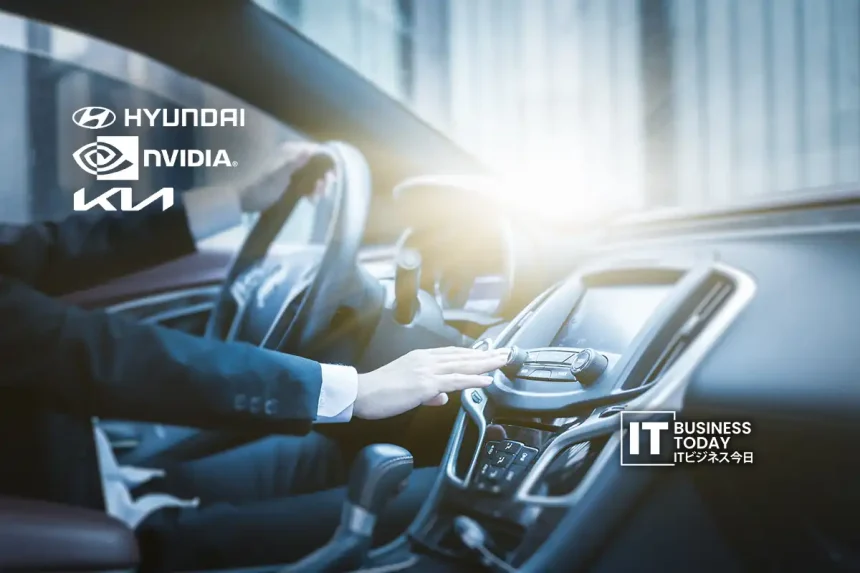
Hyundai Motor Company and Kia Corporation, two of South Korea’s largest automakers, are relying on NVIDIA to join their long-term strategic collaboration. It is a step towards the ertification of the era of highly automated driving and software-driven (SDV) vehicles. AI is becoming a very important factor in the global automotive industry’s transformation, as evidenced by this partnership that is going to be expanded.
Expanding Collaboration for Autonomous Driving
This collaboration intends to rely on NVIDIA’s DRIVE Hyperion platform to boost the development of data-centric autonomous driving machines. By means of the upgrade of the current advanced driver assistance systems (ADAS) and achieving autonomous driving levels beyond the present standard.
Hyundai Motor Group’s plant expertise, when combined with NVIDIA’s AI computing power, these firms are planning to design one autonomous driving model which is capable of processing large amounts of real-time data. This kind of amalgamation is crucial for the enhancement of safety, fast response and overall intelligent driving.

Also Read: FRAIM Focuses on AI Performing Real Document Work
Building Software-Defined Vehicles and AI Ecosystems
The collaboration goes beyond just self-driving technology. It also delves into the idea of software-defined vehicles. In these types of vehicles, software features take a leading role in the vehicle’s operation when compared to traditional hardware. Besides being reliant on artificial intelligence, such vehicles also depend on internet connectivity through the cloud and are regularly updated to modify themselves.
The car manufacturers Hyundai and Kia are leveraging NVIDIAs artificial intelligence and their high-performance computing platforms to build machine learning models, set up virtual test environments, and roll out smart functions in their vehicle systems. Besides robotics and digital twin simulations, the application areas include the use of connected services. This points towards vehicle manufacturers adopting a software-first approach.
Driving Innovation Across Manufacturing and Robotics
The agreement is a source of stimulus for innovation in manufacturing operations as well. Looking at the implementation of the merger of AI-robotics and simulation technologies, Hyundai Motor Group will be able to increase its production efficiency, reduce the operation costs, and improve the quality control.
The strategy is indicative of a more significant shift by which carmakers are turning into technology-based companies. Employing AI not only in product designing but also in manufacture processes will result in quicker innovation cycles and further flexibility in operations.
Implications for the Global Automotive Industry
The major merger shows how collaborating between automakers and tech companies is now becoming more and more vital. Since cars get smarter and more connected, just having deep knowledge about car manufacturing is not enough anymore.
It adds a new layer of competition to the mobility market worldwide where firms are competing with each other to launch car AI features and to give very different user experiences. The increasing power of NVIDIA in this area is an indication of the growing importance of chip and AI companies in helping automotive innovation.
Business Impact and Industry Opportunities
Automotive and tech industry players perceive the collaboration as a confirmation of significant economic potential of AI-driven mobility solutions. With the rising popularity of automated and connected vehicles, the demand for high-performance processors, AI program, and data infrastructure is expected to surge.
The alliance to create new synergies will benefit vehicle makers, software developers, and start-up mobility firms. On the other hand, large companies will face the challenge of rethinking their business models in order to survive the rapid transformation towards a scenario where software, data, and human intelligence play a major role.
Conclusion
The extension of the cooperation among Hyundai, Kia, and NVIDIA is a significant move towards a mobility that is primarily driven by AI. The three companies are combining their higher computing power, software platforms, and smart systems to completely change the way cars are made and used.
While the car industry keeps changing, partnerships like this one will definitely help determine a new period where cars are not just means of transportation but also smart, interconnected systems which integrate technology and digital services.


 English