 日本語
日本語 





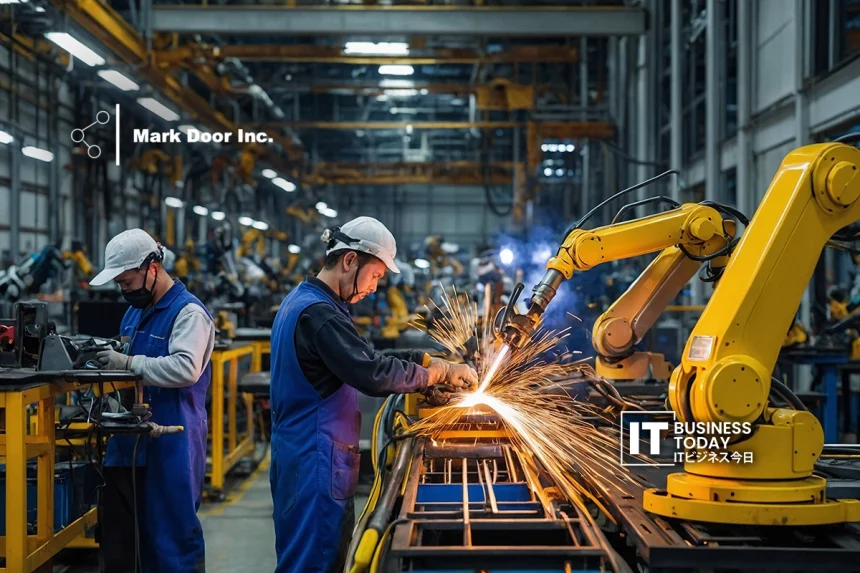
MarkDoor Co., Ltd., a company whose members are mainly composed of engineers with Ph.D.s from the University of Tokyo and overseas universities, as well as engineers from research institutions, and which works to solve corporate challenges with cutting-edge technology, has started offering its “Production Planning Optimization Solution,” which automates planning under the complex constraints of the manufacturing industry.
This solution utilizes AI and mathematical optimization technologies to automate the generation of advanced production and parts plans in manufacturing environments. It reduces replanning time by up to 80%, standardizes previously individualized planning tasks, and builds a production system that can respond to sudden schedule changes.
Background of this solution development
Manufacturing industries, including automotive and semiconductor manufacturing, require production planning that simultaneously considers numerous constraints, such as on-time delivery, equipment capacity, setup, personnel allocation, and material procurement.

Also Read: Green AI helps factories move to emission reduction
These planning tasks often rely on the experience and intuition of skilled individuals, leading to a high degree of reliance on specific individuals. As a result, when unexpected changes occur, such as stock shortages, equipment outages, or urgent projects interrupting the process, it becomes difficult to quickly replan, leading to increased workload on staff and delays in delivery—in short, “plan failures.”
Furthermore, with the labor shortage exacerbated by the declining birthrate and aging population, the difficulties in skill transfer and securing personnel are becoming increasingly apparent, making digitalization an urgent necessity to move away from person-dependent work operations.
Therefore, Markdoor has developed a production planning solution based on mathematical optimization. It supports the construction of a production system that can respond to real-time schedule changes, contributing to the sophistication and strengthening of competitiveness in manufacturing sites.
SOURCE: PRTimes


 English