 日本語
日本語 





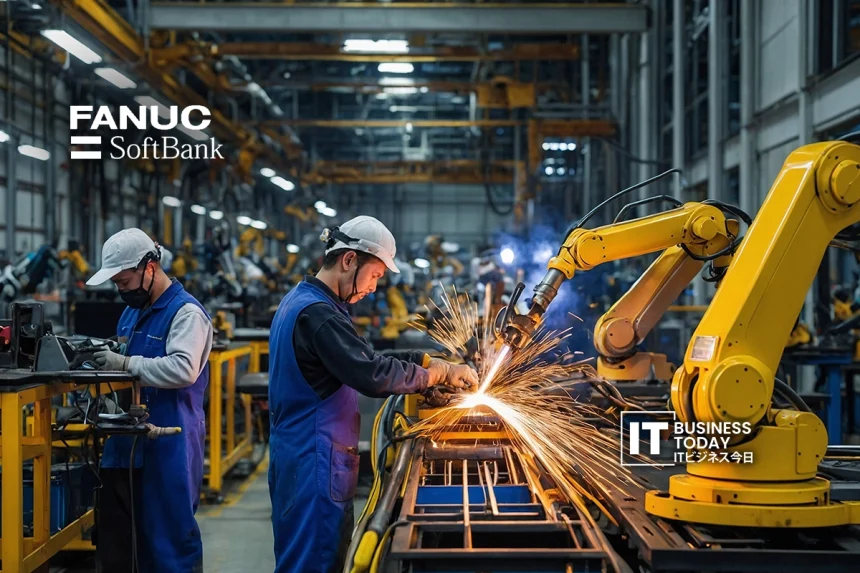
The leaders of robotics and technology industries in Japan are turning around to form strategic alliances as AI is revolutionizing the way robots are being developed, used, and made available commercially. In a scenario where the intelligence of machines and the adaptability of systems are swiftly displacing the old, fashioned automation, SoftBank Group Corp. and FANUC Corp. , the leading industrial robotics company, are both broadening their collaboration networks to keep their competitiveness and facilitate growth.
This move is indicative of the deep, seated change in the robotics sector, where software intelligence and interconnected ecosystems are becoming equally, if not more, significant than mechanical performance.
The Strategic Imperative: AI Meets Robotics
Traditionally, FANUC and other such robotic leaders have held the key to industrial automation through the supply of dependable and very fast robotic arms for uses such as manufacturing, automotive assembly, and tasks requiring great precision.

Also Read: Mitsubishi Electric Backs Startup in Push to Bring AI‑Powered Robotics to Factories
This is why FANUC is still one of the most widely recognized robotic manufacturers not only in Japan but also worldwide. It has an internationally acknowledged product line for automation and CNC solutions.
Meanwhile, SoftBank a company recognized globally as a technology investor and telecom operator has been making significant moves into AI and robotics, especially with Chairman Masayoshi Sons idea of Physical AI. This concept is a fusion of artificial intelligence with machines that engage physically with their environment. From one end to another of its portfolio, SoftBank has been putting money into robotics startups, AI models, and physical robotics assets. A substantial part of that was the purchase of ABBs robotics business at a price of approximately $5. 4 billion.
Such developments highlight the fact that both companies are reacting to a significant change in the competitive landscape where robots are not just programmable machines anymore they now need adaptive AI, sensing, decision logic and software ecosystems to be able to work autonomously, perform complex tasks and collaborate safely with humans.
Partnering to Bridge the AI Gap
It was reported by Nikkei Asia that SoftBank and FANUC are increasingly outsourcing to third parties to accelerate their breakthroughs in AI robotics, by realising that no single company can master all the layers of intelligence, compute, automation and deployment on its own. Part of this approach is for them to cooperate with major chipmakers and AI platform providers that have the capability to bring advanced computing and machine learning to industrial robots.
A great case in point is the collaboration between FANUC and NVIDIA, a leading manufacturer of AI processors and software. Integrating NVIDIAs AI platforms with industrial robotic systems will allow FANUC to offer more automation solutions based on machine learning, perception and adaptation a move away from relying on traditional, preprogrammed tasks to intelligent systems that can learn and optimize in real time.
For SoftBank, partnerships extend across the entire technology stack. Apart from robotics hardware, SoftBank is developing AI infrastructures and ecosystems that can support everything from AI, enabled telecom networks to smart robot controls. Collaborations with global AI leaders such as NVIDIA and OpenAI, including initiatives to build AI supercomputers and next, generation data centers, serve to position the company both as an investor and a direct contributor to the robotics AI revolution.
Why Partnerships Matter in the AI Robotics Race
The AI era introduces several new requirements that traditional robotics firms must meet to stay relevant:
- Advanced AI Integration
It is becoming more common for robotic systems to involve functions such as deep learning, reinforcement learning, and real, time sensory interpretation, which go beyond basic motion control and path planning. By working with specialized AI providers, robotics firms can make use of mature software and compute platforms that already exist instead of having to build them from scratch.
- Competitive Differentiation
As robots get smarter and more autonomous, the main source of value will change from merely speed and precision to flexibility, adaptability, and integration with enterprise systems. The companies that will be able to put together AI ecosystems rather than just mechanical hardware will be the ones who lead the next generation of robotics.
- Resource and Talent Sharing
To research and implement AI requires special skills which are often spread throughout the industry. By working together with partners, from cloud and chip providers to algorithm innovators, one can share the costs and shorten the time to market.
The Broader Robotics Industry Landscape
Japan’s robotics sector has always been strong Japan’s robotics sector has always been strong Japan’s robotics sector has always been strong The major established companies such as FANUC, Yaskawa Electric and Mitsubishi Electric have set worldwide standards in factory automation. However, as industry trends shift to “physical AI” i. e. robots learning from data and adapting to their environment, even these major players need to integrate software and AI skills into their products.
SoftBank’s activities also show how telecom, computing infrastructure, and robotics have become increasingly interdependent. With the use of AI devices in network technologies as well as the pursuit of big strategic acquisitions, the company is making a long, term bet that next, generation robots will rely heavily on AI ecosystems, cloud computing, and real, time connectivity.
Implications for Japan and Global Industry
This shift has significant implications for the Japanese tech industry and global robotics markets:
Industry modernization: The Japanese manufacturers and robotics companies will gain from the use of more intelligent, AI driven factory systems that are able to deal with complicated production, quality control and self directed tasks, thereby raising productivity and global competitiveness.
Economic growth: Besides automotive and electronics, sectors such as healthcare, logistics and elder care, which have been less robotic, can greatly benefit from AI, enabled robots as they become more versatile through narrower AI applications.
AI leadership: By investing in AI partnerships and creating an AI, ready infrastructure, Japan is effectively positioning itself to challenge its global competitors in the swiftly expanding AI robotics market.
Japanese robotics companies, having leveraged their mature robotics knowledge base, made strategic partnerships with AI and computing giants, and are investing boldly in next, generation robotics platforms, it looks like they are not just adapting to the AI era but are actually putting themselves in a position to lead it.



 English