 日本語
日本語 





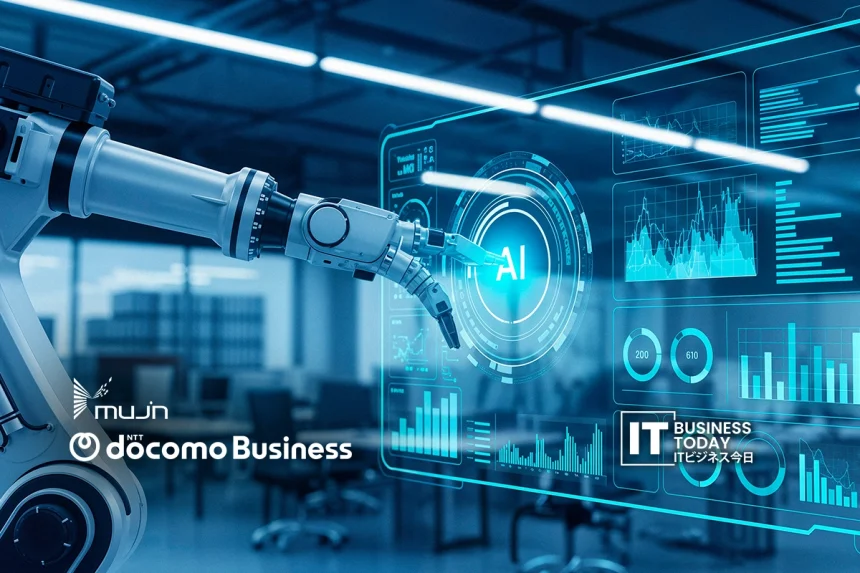
NTT DOCOMO Business and its parent, NTT, have teamed up with Mujin. Mujin is a leader in physical-AI tech and digital-twin automation. NTT will combine its strengths with Mujin. This means NTT will offer advanced network, cloud, AI, and integration infrastructure. Mujin will share its innovative robot-control platform, MujinOS. It will also provide its expertise in robotics automation. They will create flexible, safe, and autonomous robot systems. This will change logistics, manufacturing, and more.
Japan is advancing “smart automation.” It combines top-notch telecom, AI systems, and robotics. This fusion addresses key issues. It focuses on labor shortages, supply-chain pressures, and the need for efficiency.
What the Partnership Entails: Merging Telecom, Cloud, and Robotics
NTT Group and Mujin have formed a powerful alliance. NTT Group offers top-notch ICT infrastructure through this partnership. It offers secure cloud services, network-as-a-service (NaaS), and AI-ready platforms. Mujin shares its expertise in robot intelligence. It focuses on automating warehouses and factories with MujinOS.

Also Read: Mujin Secures 36.4 Billion Yen in Series D Funding
MujinOS simplifies robotics. It connects various robots, sensors, and systems all in one control layer. This eliminates the need for complex, custom integrations. It would therefore help lower barriers for companies to adopt automation.
The companies said the synergy will drive faster, safer, more scalable deployment of “physical AI + robotics + network + cloud” solutions to support anything from warehouse sorting and logistics to, potentially, broader industrial and service-sector automation.
Why This Matters — The Growing Need for Flexible Automation in Japan
Addressing Labor Shortages and Changing Supply‑Chain Needs
Japan has a serious workforce shortage. This is caused by its aging population and a shrinking labor force. The rapid rise of e-commerce shipments and varied products brings big challenges. We also need fast and flexible production to keep up.
Conventional robots are set for specific tasks. They struggle with today’s demands. These include frequent product changes, shifting warehouse layouts, and different pick-and-pack tasks. In contrast, advanced “physical AI” robots can perceive, reason, and adapt. This allows flexible, high‑mix, low‑volume automation that better fits the contemporary nature of logistics and manufacturing.
Lowering Barriers to Automation for SMEs and Mid-sized Firms
Because MujinOS reduces the complexity of integration and NTT provides modular network/cloud infrastructure, even small to mid‑sized companies may adopt advanced robot automation without prohibitive upfront costs. This democratization might create a wave of automation beyond large manufacturers benefiting 3PL firms, regional warehouses, small factories, and distributors throughout Japan.
Building a New Industry Ecosystem — Robotics, AI & Telecom Convergence
A new era is here. Robotics, AI, cloud, and telecommunications are coming together. As companies adopt integrated “robot + cloud + AI + network” solutions, demand for specialists will soar. We’ll need system integrators, security experts, data infrastructure providers, maintenance services, and developers for specific robot applications. For Japan’s tech industry, this could mean a whole new ecosystem around “robotic automation as a service.”
Enhancing Productivity, Safety and Resilience
Automated, AI‑driven robotics reduce reliance on human labor in repetitive or hazardous tasks. This brings important benefits in workplace safety and consistent productivity. With onboard digital‑twin simulation and real‑time control, companies can scale operations, respond much faster to changing production needs, and gain efficiencies critical to success in volatile global supply environments.
Challenges & What to Watch
Integration with legacy systems: Many small and mid-sized firms still use old warehouse and factory systems. Migrating to a robot-AI/cloud solution may need investment in infrastructure. You might also need to retrain staff and manage changes.
Safety, Compliance, and Regulation: As robots become more autonomous, ensuring safety is vital. It’s important to follow labor and safety laws. Secure network communication is key, especially in shared spaces with people and robots.
Initial Cost vs. ROI: While integration complexity is lowered, deploying robotics does involve some upfront investment. Firms, especially small businesses operating on very thin margins, will need to consider the ROI factors very carefully.
Data/Network Infrastructure Demands: In the combination of real-time sensors, cloud connectivity, and robot control, robust, low-latency, secure networks are required; therefore, ICT infrastructure is one of the important success factors.
Strategic Implications for Japan’s Technology Industry
This tie-up could be the beginning of a new era in Japan’s industrial development wherein, instead of the country’s incremental improvement in manufacturing and/or logistics, there would be a wide-ranging shift toward autonomous, flexible, AI-driven automation across industries.
Companies offering cloud services, security solutions, integration platforms, sensor hardware, and AI‑based control software will see more and more opportunities. Robotics companies and startups could reach wider markets, like SMEs and regional players.
In addition, by joining NTT‘s strengths in network/cloud with Mujin’s robotics, Japan is poised to become the global leader in “robot automation + AI + cloud + telecom” integrated solutions — a potentially powerful export model, especially for countries facing similar labor shortage and supply‑chain challenges.
Conclusion: Towards an Autonomous, Automated Society
The alliance between NTT DOCOMO Business and Mujin to deliver physical‑AI-based robot automation is more than a business deal-it is a blueprint for how Japan might address deep structural challenges such as labor shortages, logistics complexity, and manufacturing slowdown.
If widely adopted, the “robot + AI + cloud + network” solutions could transform warehouses, factories, and supply chains by improving productivity, resilience, and adaptability. For the Japanese tech industry, this will bring a new wave of demand-from robot‑control systems to cloud infrastructure, security, integration services, and beyond. This cooperation in a time of rapid change gives a vision of what might be expected from the future of industrial automation: intelligent, connected, and autonomous.


 English