 日本語
日本語 





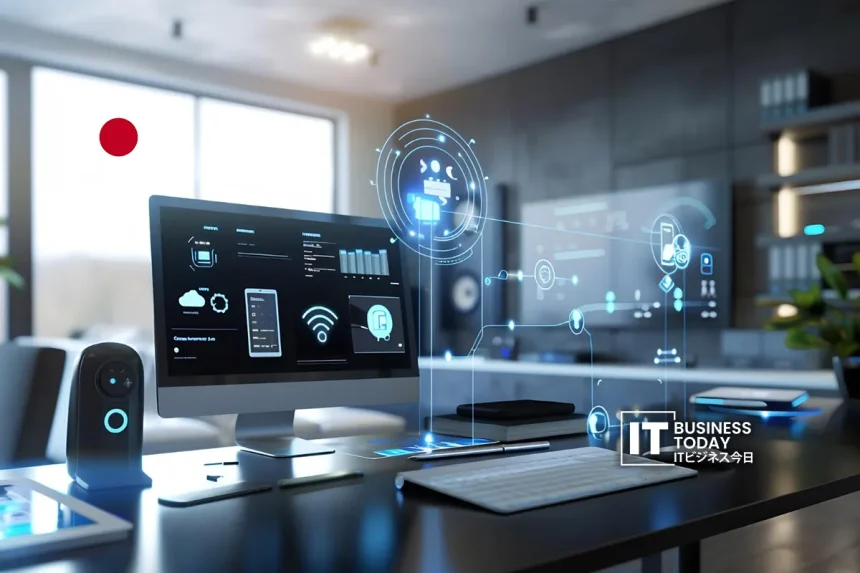
Japan’s smart office market is moving into a stage. Companies, commercial property owners and facility operators are no longer focused on basic workplace connectivity. They are now investing in building infrastructure. Smart lighting, building automation, energy management, security systems and connected workplace technologies are being considered as part of digital transformation efforts.
According to a report from DataM Intelligence published on OpenPR the global smart office market was valued at $45.6 billion in 2025. It is expected to grow to $104.2 billion by 2033. This represents a compound growth rate of 11.3% from 2026 to 2033. Japan is seen as a player in this growth. The country has commercial infrastructure, a mature technology ecosystem and a clear focus on energy-efficient building operations.
This development could open up opportunities for Japanese technology providers, system integrators and building-management companies. As offices become more connected and data-driven these businesses are well positioned to meet demands.

From Smart Devices to Connected Buildings
The office market is shifting beyond single smart devices. Enterprises are now looking for platforms. These platforms can connect lighting, security, energy monitoring, communications, workplace systems and building controls.
This change is important. Businesses no longer want technology for technology’s sake. They want results. Smart office investments can help organizations track energy use, automate facility operations strengthen security and offer flexible work environments.
For companies this is especially useful. Many are modernizing commercial buildings while also building new ones. Of replacing everything they can now add sensors, software and automation tools to existing systems. This makes upgrades more cost-effective and practical.
This trend creates demand for system integrators. These companies can bridge infrastructure with new digital systems. They play a role in making smart buildings a reality.
Energy Efficiency Could Become a Major Driver
Energy management is likely to be one of the reasons for smart office adoption in Japan.
Smart lighting, automated climate controls and energy-monitoring systems give facility managers real-time data. They can see how buildings use electricity. Automated systems can then adjust lighting, heating or cooling based on occupancy, schedules and conditions.
For businesses under pressure to cut costs and improve sustainability this is an advantage. It makes smart office technology easier to justify as a business investment.
This also benefits companies that develop power-management systems, sensors, building controls and industrial IoT solutions. As offices become smarter the need for real-time energy measurement and optimization will grow.
AI and IoT Could Transform Workplace Management
The next step in office development will involve more use of artificial intelligence and the Internet of Things.
Sensors can collect data, about occupancy, temperature, lighting, air quality and equipment performance. AI systems can then analyze this data. They can spot patterns predict when maintenance is needed and optimize how buildings run.
For example a smart building platform could find areas that are not being used much. It could then lower lighting. Adjust climate control to save energy. Predictive maintenance could help facility teams catch equipment issues before they cause problems.
This mix of AI, IoT and building automation could create a kind of enterprise technology in Japan. It is especially strong for companies already working in automation and smart city projects. The future of workplaces may well be built on data and intelligent systems.
Security and connectivity are becoming more important. As more building systems become connected cybersecurity will grow in importance within smart-office deployments.
Access‑control systems, cameras, sensors, meeting‑room equipment and building‑management platforms can all become entry points into corporate networks. Therefore Japanese businesses must consider cybersecurity with automation and convenience.
Network management and secure connectivity will become parts of smart‑office architecture. This could benefit IT service providers and cybersecurity companies that can offer integrated protection for connected workplace infrastructure.
The challenge will be especially large for organizations that combine cloud platforms with older building‑management systems.
Opportunities for Japan’s technology industry: The expansion of offices could create opportunities across many parts of Japan’s technology economy.
Building automation companies can provide control systems. Networking businesses can support connectivity. IoT developers can supply sensors. Software companies can build platforms for workplace analytics. Security providers can protect infrastructure. System integrators can bring these technologies together.
The market also attracts global technology and building‑automation companies, such, as Siemens, Schneider Electric, Honeywell, Johnson Controls, Cisco Signify and ABB. Their expanding portfolios show how building technology converges with software, networking, energy management and cybersecurity.
For businesses this competitive environment could encourage partnerships, acquisitions and new technology integrations.
Interoperability Will Be Critical
One of the biggest challenges for Japan’s smart-office market will be interoperability.
Many commercial buildings already contain systems installed by different vendors over several decades. Replacing everything at once is expensive and disruptive. Businesses therefore need platforms that can connect existing infrastructure with newer technologies.
This could give Japanese system integrators an important role. Companies that can combine legacy building equipment, IoT devices, cloud software, cybersecurity and AI into a single operational environment could become increasingly valuable.
Japan’s Smart Workplace Opportunity
Japan’s smart-office market is evolving from a collection of connected workplace products into a broader digital infrastructure opportunity.
As enterprises seek lower energy costs, stronger security, better workplace experiences and more efficient facility operations, demand for integrated smart-building technologies is likely to grow.
For Japan’s technology industry, the opportunity goes well beyond smart lighting or automated offices. The convergence of AI, IoT, cybersecurity, energy management and building automation could create a new layer of enterprise digital infrastructure.
The companies best positioned to benefit will be those that can make these systems work together—and demonstrate clear improvements in cost, efficiency, security and workplace performance.


 English