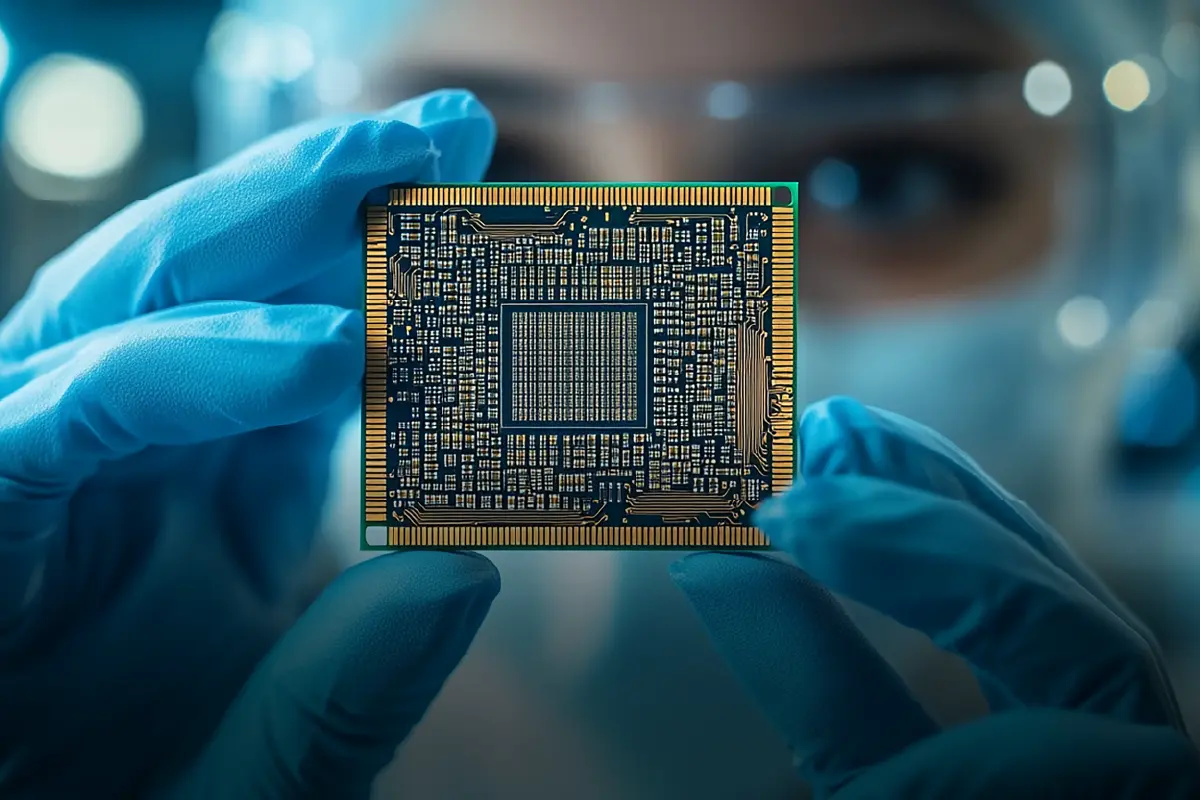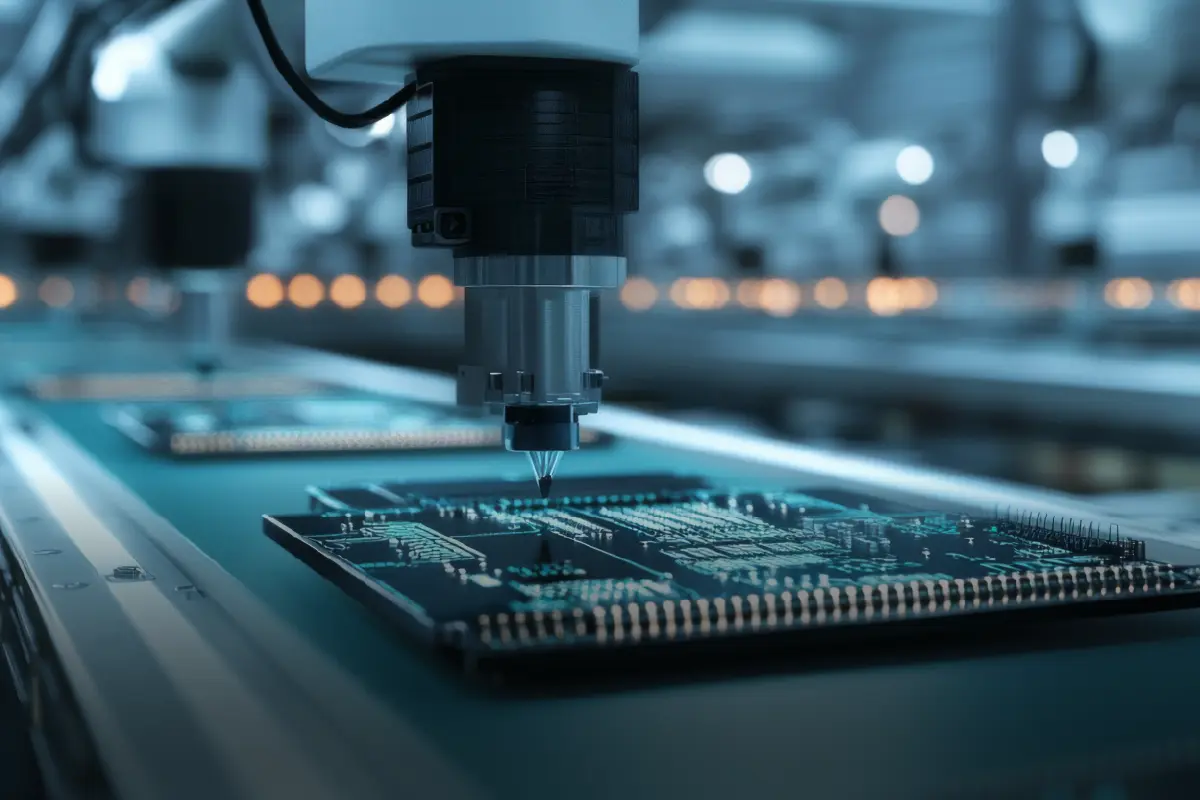
For the last few years, the semiconductor industry has been trapped inside one giant narrative loop. Every conversation somehow circles back to AI chips, Nvidia, 2nm fabs, or the US-China technology fight. You open LinkedIn, same story. You open YouTube, same thumbnails. Even mainstream business media now talks about semiconductors like only logic chips matter.
But that is exactly why most people are missing where the next real shift is happening.
A quieter race is building underneath all this noise, and it has less to do with computing power and more to do with electricity itself. The companies and countries that can move power more efficiently are slowly becoming more important than the ones simply chasing smaller transistors.
This is where Japan enters the story.
Japan advances its semiconductor industry through its long-term expertise in materials science and power electronics to establish Gallium Nitride and Silicon Carbide semiconductors as vital components for the worldwide technology market. The upcoming decade will witness its most significant semiconductor change because EVs together with renewable grids and 6G networks and industrial electrification experience continuous development.
こちらもお読みください: 分散型アイデンティティフレームワーク:グローバル・デジタル・エコシステムにおける信頼の再定義
The article explains the significance of GaN and SiC while demonstrating how Japan uses these technologies to gain national benefits. The semiconductor competition future will depend on energy efficiency instead of computing power according to the article.
Why Gallium Nitride and Silicon Carbide Are Suddenly Everywhere
Silicon built the modern electronics industry. That is still true. But silicon has limitations which become apparent when systems require three specific requirements of high voltage operation and quick switching performance and minimal heat production.
Wide Bandgap semiconductors provide the necessary solution.
Gallium Nitride, usually called GaN, and Silicon Carbide, or SiC, can handle much higher temperatures and voltages than traditional silicon. They also waste less energy when converting electricity. That sounds like a technical detail until you realize how many industries now depend on efficient power conversion.
EVs depend on it.
Fast chargers depend on it.
Renewable energy systems depend on it.
Telecom towers depend on it.
Factories trying to cut electricity costs depend on it.
The conversation around semiconductors is slowly moving away from just processing power and toward power efficiency. That shift is bigger than most headlines currently admit.
GaN is becoming important for RF systems, telecom infrastructure, 5G and future 6G base stations because it performs better at high frequencies while generating less heat. Meanwhile, SiC is becoming the preferred material for EV traction inverters and industrial power systems because it can handle higher voltages with better thermal stability.
The important thing here is not the chemistry itself. It is the economics behind it.
Every time electricity gets converted, some amount gets wasted as heat. When that inefficiency scales across millions of EVs, industrial systems, and telecom networks, the losses become massive.
That is exactly why companies are aggressively investing in SiC right now.
Mitsubishi Electric stated in 2026 that its trench SiC-MOSFET structure reduces power loss by approximately 50% compared with planar SiC-MOSFETs. That is not some tiny lab improvement hidden inside a technical PDF. A reduction like that changes battery efficiency, cooling requirements, infrastructure costs, and long-term energy consumption.
This is why the Wide Bandgap semiconductor market matters so much now. The next semiconductor winner may not simply be the company making the fastest AI chip. It may also be the company helping industries waste less electricity.
Japan’s Advantage Was Built Long Before the AI Boom

One reason Japan looks unusually strong in this transition is because the country never fully abandoned the industrial side of semiconductors.
A lot of countries focused heavily on logic chips and consumer electronics over the last two decades. Japan quietly stayed obsessed with materials, manufacturing precision, specialty chemicals, wafers, and industrial process equipment. At the time, that looked boring compared to flashy consumer technology.
Now it looks strategic.
In Japan, semiconductors are often called the ‘rice of industry’ because almost every modern industrial system eventually depends on them. Cars, telecom infrastructure, data centers, factories, defense systems, renewable grids, all of them rely on semiconductors somewhere underneath.
But most people misunderstand where semiconductor leverage actually comes from.
The real power is not always in the final chip itself. Sometimes it sits deeper inside the supply chain, inside the materials, chemicals, cleaning systems, and ものづくり tools that advanced fabs cannot operate without.
That is where Japan still has serious influence.
Shin-Etsu Chemical, SUMCO, and JSR collectively control more than half of the global market in several essential semiconductor material categories. Japanese companies also dominate coater/developer systems and semiconductor cleaning equipment, with market share nearing 90% in some areas.
That dominance matters because semiconductor ecosystems are built on precision. Countries can build fabs, but rebuilding decades of manufacturing expertise is much harder.
Japan understood this earlier than most.
Instead of trying to out scale Taiwan or outspend the US everywhere, Japan started positioning itself around the parts of the semiconductor ecosystem that are hardest to replace.
Now that strategy is aligning perfectly with the rise of Wide Bandgap semiconductors.
METI has been pushing its ‘Strategy for Semiconductors and the Digital Industry’ to build up domestic semiconductor manufacturing and production capacity. The Japanese government announced through its New Year message that it would allocate 100 billion yen to Rapidus for advanced semiconductor production development.
That investment says something important about how Japan sees the future.
The country is no longer chasing commodity dominance alone. It is trying to control strategic chokepoints tied to energy systems, industrial infrastructure, and advanced manufacturing. And Wide Bandgap semiconductors sit directly in the middle of that future.
Toyota Shows Why SiC Is Becoming Commercially Unavoidable
The easiest way to understand why SiC matters is to stop looking at semiconductor labs and start looking at EVs.
Modern electric vehicles are basically giant power management systems. The vehicle’s electrical system performance determines its battery life, charging speed, heat management, and operational distance. Power semiconductors hold critical significance for their function as fundamental components of electrical power systems.
Toyota disclosed in its February 2026 RAV4 PHEV release that the new model achieves approximately 150 kilometers of all-electric driving range because SiC semiconductors in the power control unit decrease energy waste compared to the previous model which offered approximately 95 kilometers. The industry dedicates significant resources to SiC technology because this single advancement delivers essential performance benefits.
For years, semiconductors mostly shaped computing products. Now they are directly shaping mobility economics. Better power efficiency means better driving range. Better thermal management means smaller cooling systems. Lower energy loss means better battery utilization.
This is exactly why Japanese industrial companies are scaling production capacity right now.
Fuji Electric announced that its Tsukuba Factory capacity will expand by approximately 1.7 times, while the Kobe Factory expansion is expected to increase capacity by around 1.5 times after completion.
That is not expansion for hype. It is expansion because demand for efficient power semiconductors is starting to rise across multiple industries at once.
EVs need them.
Renewable grids need them.
Industrial automation needs them.
Telecom infrastructure needs them.
And once multiple trillion-dollar industries begin depending on the same semiconductor category, supply chains suddenly become geopolitical assets.
The Next Semiconductor Frontier Is Already Taking Shape
Even while the world is still trying to scale SiC manufacturing economically, Japan is already exploring what comes after it.
Researchers currently study diamond semiconductors as one of their most challenging research domains. The concept appears to belong to science fiction yet its underlying reasoning remains straightforward. Theoretical research shows that diamond provides superior thermal conductivity and electrical performance to both SiC and GaN.
Commercial adoption is still far away, but the direction matters.
It shows that Japan is thinking beyond the current semiconductor cycle and positioning itself around future materials science leadership as well.
At the same time, GaN is becoming increasingly important for telecom インフラ. Future 6G networks will require denser antenna systems, faster signal processing, and much better thermal management compared to current telecom systems.
Traditional silicon struggles once heat and power density start rising aggressively.
GaN-On-Si systems are becoming attractive because they handle high-frequency operations more efficiently while generating less thermal stress. That makes them valuable for future telecom infrastructure where energy efficiency will become a major operational issue.
This is why the Wide Bandgap semiconductor story is bigger than just EVs. It sits at the intersection of multiple industrial shifts happening simultaneously.
The Hard Part Nobody Talks About Enough
Wide Bandgap semiconductors still come with serious problems.
SiC substrates remain expensive and can cost several times more than traditional silicon substrates. Manufacturing complexity also rises sharply once companies try scaling toward larger wafer sizes while maintaining high yields.
That is where things become difficult.
The semiconductor industry does not simply need more factories. It needs highly specialized engineers who understand materials science, process optimization, thermal management, and yield engineering.
Japan is now trying to strengthen semiconductor talent ecosystems around hubs like Hokkaido and Kumamoto because scaling advanced semiconductor manufacturing requires far more than financial investment alone.
Yield management has also become critical as companies push toward 8-inch SiC wafer production to improve manufacturing economics.
METI recently stated that Rapidus’s Hokkaido base will open an Analysis Center focused on improving semiconductor performance and yield while Rapidus Chiplet Solutions enters full-scale operation.
That detail matters because it shows where semiconductor competition is increasingly moving. The challenge is no longer just designing advanced chips. The challenge is manufacturing them efficiently, consistently, and profitably at scale.
Japan Is Quietly Positioning Itself as the Backbone of the Power Economy

Japan is not trying to recreate the exact semiconductor dominance it had decades ago. The industry has changed too much for that model to work again.
Instead, the country is focusing on something more durable. Materials. Manufacturing precision. Power semiconductors. Industrial equipment. Process expertise. The deeper infrastructure layers underneath the global semiconductor economy.
The next industrial cycle will depend on electrification according to the strategy which currently appears to be successful. The power management systems of AI infrastructure and EV adoption and renewable energy systems and telecom expansion and industrial automation systems need better efficiency.
That is exactly where Gallium Nitride and Silicon Carbide become strategically important.
While most of the industry remains obsessed with AI compute races and smaller transistors, Japan is concentrating on the energy layer underneath modern technology systems. And over the next decade, that layer may end up becoming just as important as computing power itself.