Japan isn’t really trying to build the workplace of the future because it wants to. It’s doing it because it has to, and that tiny difference changes everything. While lots of economies talk about AI as the next productivity booster Japan is treating it more like critical infrastructure, the kind that keeps work moving even when the headcount keeps slipping.
The population is getting older, the labor pool is shrinking, and firms can’t just hire their way out of it anymore. In fact, people aged 65 and above now are 29.4% of Japan’s population, so workforce sustainability becomes one of the country’s most persistent economic headaches. Under that kind of pressure, many organizations are moving away from the usual Business Process Re-engineering, where processes were reworked around people, toward AI-led structural adaptation, where tech helps carry the load for tasks that human teams can’t manage by themselves anymore.
That’s why the future of work in Japan looks kind of different from almost every other major economy. It’s less about swap ping out employees and more about making every worker matter.
こちらもお読みください: プログラム可能な決済とAIを活用した取引:金融インフラの未来
Generative AI and AI Copilots Power the Augmented Knowledge Worker
The conversation around Generative AI has changed quickly in Japan. Just a year or two ago, most discussions revolved around experiments and pilot projects. That phase is fading. Today, AI copilots are showing up in everyday work across finance consulting legal services customer support, and enterprise operations. This feels like one of the biggest technologies shifting the future of work in Japan, not because AI is taking over jobs, but because it is quietly filling those expanding holes inside knowledge intensive work roles.
Mid-level professionals have somehow turned into one of the hardest groups to swap out. Analysts, project managers, compliance specialists, and legal researchers bring workloads that keep rising, while actually hiring is getting trickier. Because of this, organizations are leaning on AI to cut repetitive labor, help condense huge piles of information, draft reports, go through contracts, and assist with swifter decision-making. At the end of the day, human know-how still shapes the outcome, but AI trims down the hours spent on low-value administrative tasks, so people can focus more on the interesting parts.
This approach kind of reflects what you could call the augmentation thesis. Rather than replacing skilled professionals, AI tends to extend their capacity in practice. For instance, a financial analyst who used to scan hundreds of pages by hand can now stay on interpretation while extraction becomes mostly background work. In the same way, a legal team can spend more time evaluating risk, instead of digging through documents for every last detail. Overall, productivity goes up, because people get to spend more time applying judgment and less time collecting information.
Enterprise adoption reflects this shift. Financial institutions such as MUFG and Nomura are embedding AI into internal workflows to handle growing operational demands, while companies like CyberAgent are investing in internal AI education so employees can work alongside intelligent systems instead of competing with them.
The broader market tells the same story. An April 2026 report from the Japan Fair Trade Commission states that Japan’s generative AI application layer has become highly competitive, domestic use of generative AI has already progressed, and AI agents are increasingly becoming part of everyday work and services. That is a clear signal that AI has moved beyond experimentation. It is now becoming standard workplace infrastructure.
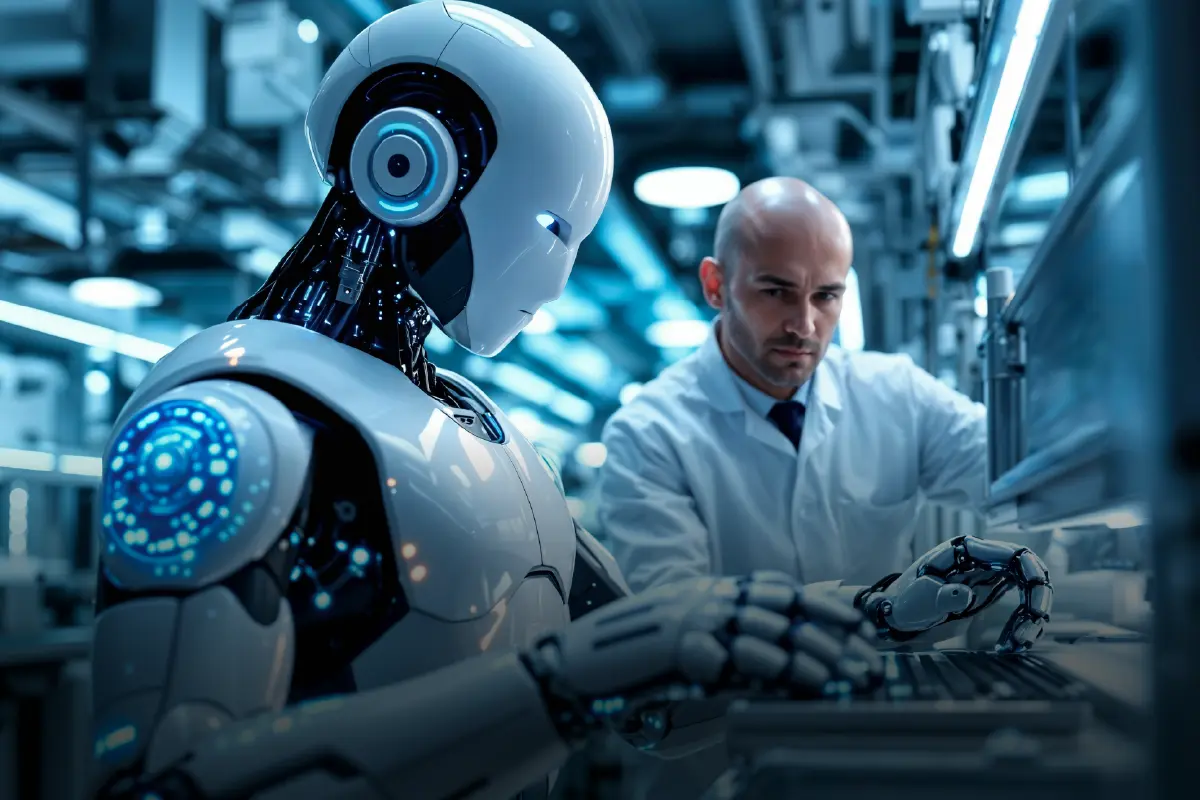
AI Powered Robotics and Humanoid Workers Expand the Essential Workforce

Knowledge work is only one side of Japan’s workforce challenge. The other side is physical labor. Warehouses, construction sites, farms, hospitals, and eldercare facilities all share the same, kind of hard reality. There simply aren’t enough workers to keep pace with demand, and yeah, it shows. That is why robotics takes up such a central role in the future of work in Japan, like really.
Outside Japan, robots are usually talked about like the big topic is job displacement. But inside Japan the conversation feels way more practical, less theoretical. ロボット are stepping into roles that companies can’t staff in the first place. They handle lifting of heavy loads, transporting equipment around, checking inspections in dangerous areas, and doing repetitive work that adds little to human creativity or judgment
This is creating what can be described as the advanced essential worker. Instead of replacing nurses, robots transport supplies. Instead of replacing construction workers, autonomous machines handle hazardous inspections. Instead of swapping out agricultural workers altogether, smart robots lend a hand with repetitive harvesting, and with routine monitoring. So humans get to spend more time on work that needs some kind of human feeling, real problem solving, and those complicated calls that don’t have a single simple answer.
The overall direction is closely aligned with national policy. 経済産業省 notes that Japan’s shrinking labor pool is a big obstacle, and it points to robots and AI as hopeful solutions for boosting output and also keeping industrial strength competitive. That narrative matters a lot, because it moves robotics away from the usual anxiety about automation, and toward workforce resilience instead.
As AI keeps getting better at perception, moving around, and making decisions, robotics will end up less like ‘a machine doing one isolated task’ and more like people and intelligent systems sharing the same work space. This collaboration will basically set the tone for the next phase of workforce transformation across Japan.
Digital Twins and Smart Factory Simulations Reshape Industrial Work
Manufacturing has always leaned on people being physically present. Engineers would inspect equipment on site, supervisors walked the production lines, and maintenance teams responded once problems appeared. But digital twins, kind of quietly, are shifting that model, and now they seem to be among the most important technologies that will change the future of work in Japan.
A digital twin builds a real time virtual counterpart of a factory, facility, or infrastructure system. With it, engineers can keep an eye on operations from a distance, run simulations for production changes, foresee failures, and also test different scenarios before doing anything in the real world. So, industrial work turns more adaptable, it gets safer, and it becomes more software oriented, day by day.
The HR impact is often overlooked. Digital twins are changing job design itself. Engineers who once spent long hours inside industrial plants are moving into data-driven operational roles where remote monitoring, predictive analytics, and simulation become everyday responsibilities. Physical expertise remains valuable, but digital capability becomes equally important.
Tokyo’s broader Digital Twin initiatives reflect this same direction by connecting urban infrastructure with intelligent monitoring and operational planning. Consequently, industrial roles are becoming less about physical presence and more about continuous digital oversight.
Hitachi’s Omika Works demonstrates what this transformation looks like in practice. The facility deployed about 80,000 RFID tags along with roughly 450 RFID readers and video cameras to build a comprehensive digital twin environment. According to the company, this helped reduce lead time for flagship products by 50%. That is more than an operational improvement. It shows how software, data, and connected infrastructure are reshaping manufacturing jobs into safer, faster, and more knowledge-driven roles.
Cybersecurity for Connected Hybrid Workplaces

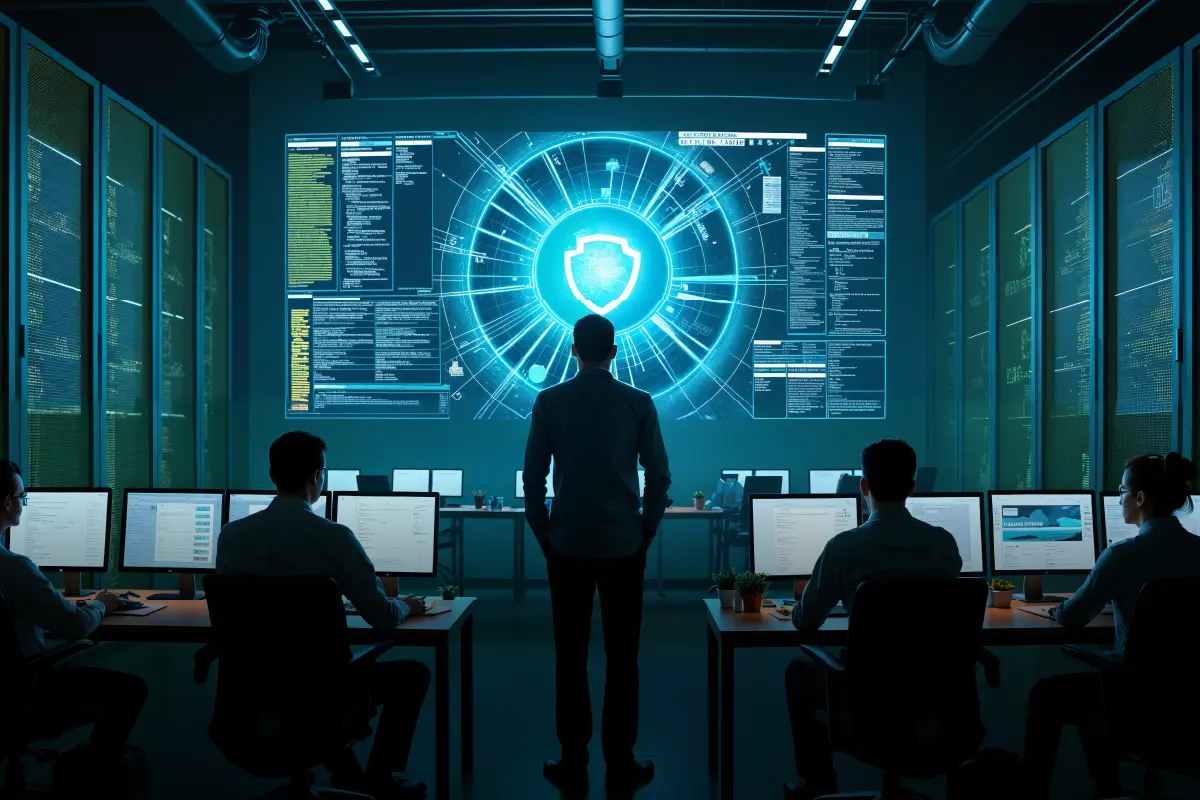
Every technology discussed so far depends on one thing. Trust. Without secure systems, AI copilots, digital twins, connected factories, and hybrid workplaces quickly turn into operational risks instead of productivity toys, that’s basically the point. So that’s why cybersecurity is becoming one of the defining pillars for the future of work in Japan.
Today workspaces are not really limited to a single office or a factory floor, no. People reach enterprise systems from different places, connected devices exchange data all the time, and AI models process information that actually matters for the business across distributed environments. Consequently, security can no longer remain a responsibility handled only by IT departments. It is becoming part of workforce strategy itself.
Japan keeps stressing frameworks like ISMAP, which kind of shows how the whole shift is going toward secure digital operations across government and enterprise spaces. Meanwhile, organizations more and more lean on AI driven monitoring, automatic threat finding, and active defense tools to safeguard the growing digital infrastructure.
And the workforce issue is not just technology. Firms need people who grasp cloud security, AI governance, identity management, and digital risk, basically the whole ecosystem. Those skills are becoming just as valuable as traditional software development.
Fujitsu’s latest workforce vision captures this transition well. Nearly 90% of respondents in its 2026 research expect to automate both digital and physical work with AI and robotics over the next three years. At the same time, the company emphasizes that enterprise AI must prioritize accuracy, ethics, data sovereignty, and security. That combination highlights an important reality. The more autonomous workplaces become, the more valuable trusted human oversight becomes.
Digital Government Platforms and Business Identity Systems Remove the Analog Bottleneck
デジタルトランスフォーメーション is often associated with private companies. However, one of Japan’s biggest workplace shifts is happening inside government itself. Administrative work that once depended on paper documents, physical approvals, and traditional hanko processes is steadily moving toward digital-first operations. This may not receive the same attention as AI or robotics, yet it could have an even wider impact on the future of work in Japan.
For decades, businesses spent enormous time navigating manual government procedures. Hiring, procurement, compliance, and registration often involved unnecessary administrative delays. Today, Digital Agency initiatives are rebuilding those workflows around digital identity, shared platforms, and API-first public services.
The Government AI Gennai environment represents one of the clearest examples of this transformation. Rather than treating AI as an isolated productivity tool, the government is integrating it into everyday administrative work to improve document creation, information analysis, and operational efficiency across ministries.
The scale is significant. Government AI Gennai is being deployed across ministries with a target of approximately 180,000 government officials during fiscal year 2026. That is not a pilot project. It is a nationwide operational rollout.
As platforms such as gBiz evolve alongside digital identity systems, HR teams and businesses will spend less time navigating paperwork and more time focusing on hiring, workforce planning, and business growth. In many ways, Japan is not simply digitizing government services. It is removing decades of administrative friction that slowed both public and private sector productivity.
The Quiet Transformation Shaping the Next Era of HR
The future of work in Japan is not being built around flashy technology announcements or dramatic 労働力 cuts. It is unfolding through thousands of practical decisions that help fewer people accomplish more meaningful work. AI is expanding knowledge workers instead of replacing them. Robotics is supporting physical workers where labor shortages are most severe. Digital twins are changing how industrial jobs are performed. Cybersecurity is becoming a core workforce capability rather than a technical afterthought. Meanwhile, digital government is quietly removing barriers that businesses accepted for decades.
That combination offers a lesson many countries may eventually have to learn. When demographics become the biggest business constraint, technology stops being a competitive advantage and becomes economic infrastructure. Japan is not chasing the future. It is redesigning work so the future remains sustainable.