
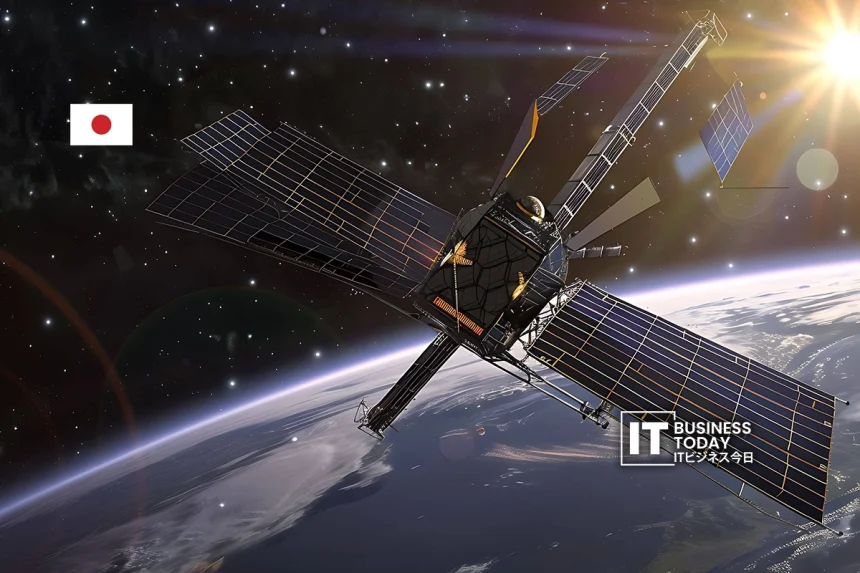
In a strong exhibition of leadership and creativity, Japan’s nascent space industry is experiencing a transformation driven by female trailblazers who are changing the face of developing and selling orbital technology. The article in Euronews last week captures this trend which basically means that it is through smart strategy and innovative technological breakthroughs that Japanese businesses, the ones with a great idea and a bit of stubbornness, come up with a solution to the problem of the progressively overcrowded Earth orbit.
Pioneering Leadership in Space Innovation
Two standout figures are at the forefront of this transformation:
Doing nothing is not an option. We must find a way to neutralize space debris or continue living in a dangerous world where debris can shower us at any time.
Miki Ito, Executive Vice President of Astroscale Japan Inc. is one of the inspiring women transforming the space industry with radical humanistic and economic concepts. Through her brutal commitment and vision, the ADRAS, J mission (Astroscale’s demonstrator for Active Debris Removal with removal of Auxiliary payload of JAXA) is a successful project that embarks on a journey to remove debris from space. These shards of broken satellites and waste from rockets that have been flung around pose a very real threat to working satellites that help us on earth signal, weather forecast, GPS, etc. This mission under Itos guidance made a close approach to a big debris around 15 meters’s size, which is a first step towards the next level of large, scale debris removals.
こちらもお読みください: 日本の新しい宇宙経済:科学探査から重要インフラへ
Naomi Kurahara is the co, founder of Infostellar Inc. (also stylized as Infostella). Infostellar is challenging the norm of satellite ground station operations by developing a peer, to, peer network platform that significantly cuts down the costs for operators. Through enabling software, driven access to a distributed network of ground stations, Naomis offer lowers the entry barrier for startups and small players to be part of the space economy.
Both women are the pioneers of a new generation of space professionals in Japan who are highly skilled technically but also have a business mind, a crucial mix when space is rapidly moving away from government programs to commercial, private, sector innovations.
The Urgency Driving Orbital Innovation
Earths orbit is getting more and more crowded. Every year, hundreds of satellites are launched, and millions of pieces of debris are tracked by space agencies all over the world. The risk of collisions threatens the vital services that modern societies rely on such as global navigation, weather forecasting, telecommunications, and financial networks.
Astroscales ADRAS, J mission, a joint venture with the Japan Aerospace Exploration Agency (JAXA), is turning out to be one among the first commercial applications to prove the technologies for the debris inspection and, later on, removal. This initiative is a part of a bigger worldwide concern towards making space sustainable and safe for future missions.
Infostellars shared ground, station concept is a solution to a different problem: connectivity. As satellite constellations increase in number, the number of terrestrial antennas available to communicate with each spacecraft is not enough. Infostellar, by giving equal access to these facilities, helps smaller operators come in the market who otherwise might have been closed out.
Japan’s Strategic Position in Global Space Innovation
Japan has mainly propelled its national agency missions to the forefront of space technology in a past. Now, the country continues to lead the arena through a lively private enterprise ecosystems. Space was the main field for JAXA and a few other organizations. However, the commercial sector is now maturing as entrepreneurs are developing market, based, scalable solutions that address real, life problems in space.
Having the first women leaders, such as Ito and Kurahara, in a male construction industry seems to continue the cultural and structural diversification of the Japanese high, tech sector. Corporate leaders view the diversity of leadership nowadays as a necessary condition for further competitive development.
Moreover, this movement coexists with worldwide space commerce mainstream trends. Startups and tech companies worldwide continue to redefine the limits of satellite systems and space infrastructure sustainable operations. Japan’s share, driven by both creativity and embracing leadership, is a boost to its competitiveness within this evolving ecosystem.
Broader Impacts on Space Economy and Technology
The work these women are involved in extends far beyond the borders of Japan:
Sustainable Orbital Management: Debris inspection and removal technologies are the key to saving orbital lanes for future missions. Besides that, they help to protect several billions of dollars worth of infrastructure and keep space, based services running without interruptions.
Lower cost of entry: When they create shared platforms and infrastructure, a company like Infostellar is making space economy a lot more accessible. Without going through huge expenses, smaller players can then come up with fresh ideas.
Commercializing of Space Services: A shift from government, led exploration to commercial viability (e. g. debris services, ground station platforms) denotes a maturing industry where space is no longer considered a mere domain for science, but an extension of global infrastructure.
Talent and Diversity in Tech: When female leaders become more visible in high, tech sectors, it is a great encouragement to a wider participation in STEM fields. Subsequently, this can lead to a stronger innovation capacity and a larger talent pool.
今後の展望
Japans space industry is on a clear path gearing up for a future that is mainly driven by the commercialization of technology, sustainability, and diversity in leadership. The breakthrough of Ito Miki and Kurahara Naomi shows that a combination of engineering skills and business acumen not only provides solutions to local problems but also helps us tackle larger global challenges such as space safety and giving everyone equal access to space services. With the market for commercial space activities expanding rapidly, Japan through its continuous technological innovations can be an inspiration to countries trying to find that fine line between making money and being responsible custodians of space.