





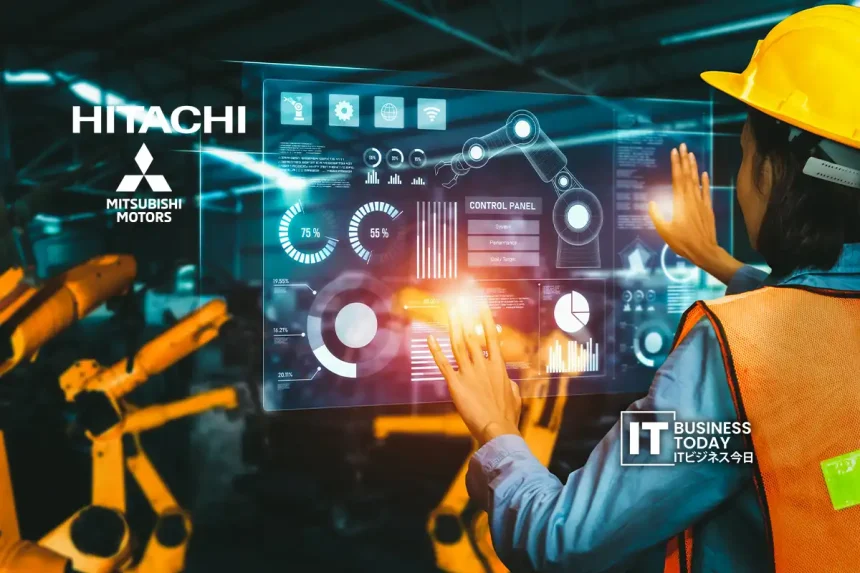
Industrial technology leader Hitachi and chemical manufacturing giant Mitsubishi Chemical have launched a joint verification project to digitally transform equipment management operations at Mitsubishi Chemical’s large-scale production site in Tokai, Japan. The initiative applies Hitachi’s AI-powered troubleshooting agent, part of the HMAX Industry digital service suite, to assist in diagnosing equipment faults faster and more accurately.
This collaboration marks the first time Hitachi’s AI agent technology, previously trialed in discrete manufacturing industries, is being applied to process industries, which include high-temperature, high-pressure chemical plants that handle hazardous materials. By integrating AI into routine equipment inspections and failure diagnosis, the partners aim to improve operational efficiency, enhance safety, and support Japan’s broader shift toward Industrial DX (digital transformation).
New Frontier for AI in Heavy Industry: Intelligent Troubleshooting
The core of the project involves Hitachi’s HMAX Industry AI agent, a generative-AI-enabled assistant designed to support technicians during equipment inspections and troubleshooting in real time. Using an AI dashboard powered by Lumada 3.0, the platform analyzes multiple types of industrial data, including piping and instrumentation diagrams (P&IDs), engineering flow documents, historical maintenance records, and operational telemetry, to infer potential failure causes and suggest corrective actions.
To make this possible, the system first transforms complex technical documents and plant schematics into knowledge graphs, a structured data representation that AI can interpret. The agent then learns patterns from Mitsubishi Chemical’s operational technology (OT) data and Hitachi’s proprietary failure analysis processes. Ultimately, it seeks to match or exceed the diagnostic speed and accuracy of experienced equipment management technicians.
This project is not limited to a single task; it also aims to convert tacit knowledge, the deep, often undocumented expertise of seasoned technicians, into explicit knowledge accessible across the organization. By doing so, the partners hope to improve skill sharing, training efficiency, and workforce resilience in the face of ongoing labor shortages across Japan’s manufacturing sector.
Driving Industrial DX and Operational Excellence
Digital transformation has been a strategic focus for Japanese manufacturers as they strive to remain competitive amid global competition and demographic challenges. However, process industries such as chemicals and energy have been slower to adopt advanced AI applications compared to sectors like automotive and electronics.
こちらもお読みください: OpenAI、より安全なAIへの新たな道として「思考連鎖」モニタリングに注目 日本の技術産業への重要な示唆を提起
The Hitachi–三菱化学 verification project represents a breakthrough in applying AI to process equipment management, a field traditionally based on manual expertise and experience. Converting inspection procedures and troubleshooting into data-driven workflows can reduce downtime, minimize risk, and enhance productivity—all while preserving safety in hazardous environments.
For example:
- Faster Equipment Diagnosis: AI can sift through decades of maintenance records and complex process diagrams in seconds, reducing diagnostic time from hours to minutes.
- Enhanced Safety: By suggesting likely failure points before breakdowns occur, the system helps prevent accidents in environments with severe operational hazards.
- Knowledge Retention: Industrial AI systems make expert knowledge accessible to junior engineers, aiding succession planning as veteran technicians retire.
Tech Industry Impact in Japan
- Boost for Manufacturing AI Adoption
This collaboration signals a broader trend in which Japanese industrial firms increasingly trust AI for mission-critical operations. While AI adoption has been strong in consumer and enterprise software, its application in heavy industry equipment management marks a significant widening of industrial use cases.
Japan’s tech providers, AI developers, system integrators, and industrial automation firms, will likely find growing demand for solutions like:
- AI-driven maintenance platforms
- Knowledge graph and data modeling tools
- Generative AI for industrial analytics
This expands the domestic market opportunity for advanced digital services while reinforcing Japan’s position as a leader in industrial automation.
- Strengthening DX Ecosystems Through Partnerships
について 日立–Mitsubishi Chemical project illustrates the value of cross-industry collaboration between technology vendors and manufacturing leaders. Hitachi brings AI, IoT, and data analytics expertise, while Mitsubishi Chemical provides deep domain knowledge of plant operations and process workflows. Such collaborations forge ecosystems that accelerate practical DX implementations, benefiting both technology and manufacturing industries.
As more companies pursue digital transformation, partnerships like this can serve as models for other sectors, including:
- 医薬品
- Energy and utilities
- Food and beverage manufacturing
- Automotive component production
- Addressing Japan’s Industrial Labor Challenges
Japan’s aging population and shrinking workforce pose long-term challenges to labor-intensive industries. By embedding AI into routine and specialized tasks such as equipment diagnosis, companies can amplify workforce capabilities, reduce dependence on limited technical experts, and improve overall operational resilience.
AI tools that capture and apply expert knowledge help ensure that institutional know-how is not lost as experienced workers retire, a critical concern for many Japanese manufacturers.
Business Implications Across Operational Functions
The benefits extend beyond maintenance and troubleshooting:
- Quality Assurance: AI can help monitor subtle variations in equipment behavior that correlate with quality fluctuations.
- Asset Lifecycle Management: Predictive maintenance enabled by AI can extend equipment life and reduce capital expenditures.
- 規制の遵守 Data-driven systems create auditable records that support safety and environmental compliance.
For companies in Japan and globally, incorporating industrial AI into core operations is becoming a competitive differentiator that enhances reliability, cost-efficiency, and operational agility.
Conclusion: A Strategic Step for Industrial AI and DX in Japan
The joint AI verification project by Hitachi and Mitsubishi Chemical marks a significant advance in the application of artificial intelligence to industrial equipment management. By embedding AI into complex plant operations, the initiative promises to transform how Japanese manufacturers approach troubleshooting, maintenance, and operational knowledge transfer.
For Japan’s technology ecosystem, this collaboration strengthens the case for AI-based industrial solutions and encourages adoption across sectors with similar operational complexity. For businesses, it highlights how digital innovation can help address labor shortages, improve safety, and unlock productivity gains, a critical priority in a rapidly evolving global manufacturing environment.