 日本語
日本語 





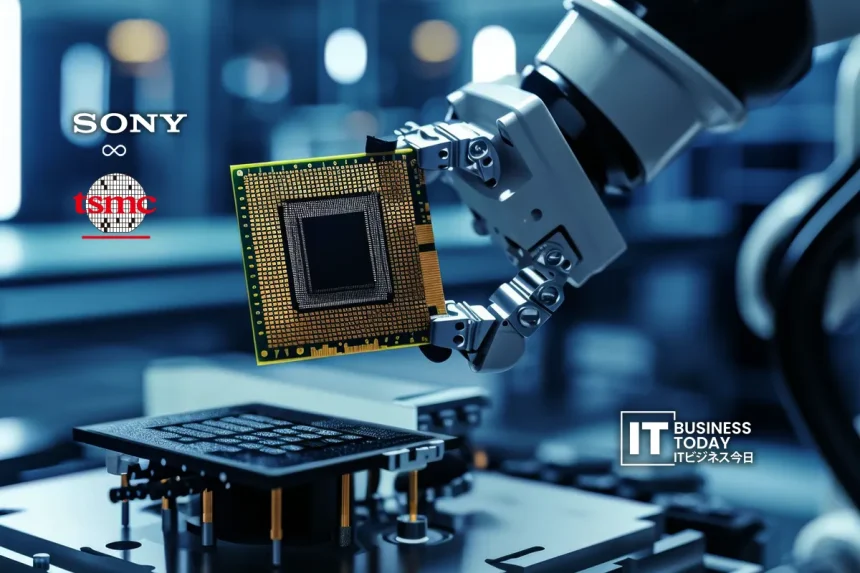
The joint venture between Sony Group and Taiwan Semiconductor Manufacturing Co. (TSMC) will be established and is estimated to require an investment of roughly ¥1 trillion ($6.3 billion) for manufacturing the next generation of chips for the image sensors, according to an article in Nikkei. The investment will contribute to Japan’s strategy of rebuilding its manufacturing capacity of semiconductors.
The joint venture will be jointly owned by Sony holding 60% ownership and TSMC holding 40%, and may commence production from as early as 2029 at Kumamoto Prefecture. Previously, both companies had announced plans of collaborating to manufacture the next-generation image sensors, using their respective expertise in sensor technology and semiconductor manufacturing.
This plant will also focus on possibilities that can be generated using physical artificial intelligence in various fields such as automobiles and robotics. Such a link could mean that the initiative could be important not only for Japan’s semiconductor sector but also for the country’s push towards AI-enabled machines and intelligent devices.

Also Read: Strider and Ionic MT Strengthen Mineral Supply Chains
Strengthening Japan’s Semiconductor Manufacturing Base
In recent years, Japan has sought to reestablish itself in the global semiconductor industry following several decades of falling domestic chip manufacturing. Much of this effort has involved government subsidies for investments in semiconductors amid growing geopolitical concerns and disruptions in the supply chain.
TSMC has already made a considerable investment in Kumamoto via its Japanese affiliate company, Japan Advanced Semiconductor Manufacturing. It is now one of the centers of semiconductor manufacturing with the involvement of suppliers, construction firms, engineers, universities, and other local organizations.
The partnership between Sony and TSMC could strengthen this ecosystem through Sony’s image sensor technology combined with TSMC’s large-scale production capability.
Sony already holds the number one position in image sensors manufacturing for use in smartphones, cars, industrial machinery, and other electronics. TSMC is the number one contract chip manufacturer.
Why Image Sensors Matter for AI and Robotics
However, the importance of such an investment is not limited to standard smartphone cameras only.
As machines develop the capability of understanding their environment, image sensors become highly significant for this purpose. Autonomous cars, industrial robots, drones, smart security devices, and other AI-enabled machines need sensors to capture information that will later be processed through a sophisticated computer system.
Thus, the emphasis of the collaboration between Sony and TSMC on physical AI is indicative of a change in future semiconductor demand, in which the chips will be created not for computing needs but for working with intelligent machines in the physical environment.
In terms of Japan, this will further emphasize the connection between the country’s traditional strengths in sensors, robotics, automotive technologies, and manufacturing automation.
Impact on Japan’s Technology Industry
This proposed investment is likely to have a huge ripple effect on Japan’s tech industry.
An enormous semiconductor fabrication plant will need a huge network of suppliers specializing in materials, machines, chemical products, electronics, IT solutions, utilities, logistics, and facility management.
Japan-based businesses that have operations in this field may gain additional orders as production capacity grows. The construction may also drive additional investment from foreign suppliers looking to set up their business near the Kumamoto semiconductor hub.
In addition, this project might drive up demand for semiconductor engineers and other very specialized professionals. Talent shortage is one of the biggest challenges Japan faces in terms of restarting its semiconductor industry.
Opportunities for Businesses
The Sony-TSMC investment may have an effect on companies outside of the semiconductor production industry.
Companies from the automotive industry would be able to get better image sensors for their driver assistance and autonomous vehicles systems. Companies that deal with robotics would be able to apply better sensors to make sure that machines can interpret more complicated environments. Companies from consumer electronics will get better image components, and companies from the industrial industry will be able to include advanced vision system in their automated factories.
The creation of physical AI would be especially important for Japanese companies because Japan has an excellent industrial robotics sector. Combining advanced sensors and AI processing would allow companies to create the next generation of machines that would be able to navigate, inspect, assemble and adapt to different conditions without any human input.
For startups, such ecosystem in the semiconductor industry may open up a lot of doors to creating various applications and services in areas like edge AI, computer vision, robotics, autonomous systems, and industrial automation.
Strengthening Supply Chain Resilience
The proposed project also possesses a strategic element.
Current global semiconductor supply chains are still vulnerable to political instability, restrictive measures on trade, logistical problems, and a concentrated production process. Thus, the initiative of Japan in attracting leading chip producers and increasing its own production is linked with economic security.
An even closer cooperation between Sony and TSMC will allow Japanese firms to get better access to the latest technologies of production and decrease their dependency on foreign production of strategically significant components.
This is also indicative of the increasing role of international cooperation in the field of semiconductor manufacturing. Instead of trying to create all elements of the chip manufacturing cycle domestically, Japan is increasingly cooperating with reliable foreign firms and enhancing its competitive advantages in certain areas.
Challenges Ahead
Although there are benefits, the creation of a large semiconductor industry will require considerable capital, expertise, energy resources, and amounts of industrial water.
The semiconductor industry is also very much dependent on the market. The demand for image sensors may depend on smartphone production, car manufacturing, consumer electronic goods, and general economic situation.
Thus, the companies will have to take into consideration both the opportunities offered by AI, robotics, and autonomy, and the conditions of the semiconductor market.
Looking Ahead
The proposed ¥1 trillion investment by Sony and TSMC may be yet another milestone in the renaissance of the Japanese semiconductor industry, as the two companies’ collaboration may help to develop a robust local base for future advancements in sensing technologies.
Moreover, this project might have positive implications for the entire Japanese tech industry. It may help to develop local supply chains, attract specialists in advanced engineering, promote the advancement of physical artificial intelligence, and facilitate innovations in auto industry, robotics, electronics, and industrial automation.
Given that AI is becoming increasingly physical as it continues to expand beyond the boundaries of the software sphere, the capability of machines to observe and react to the environment will become more important than ever. With this kind of investment in the Sony-TSMC ecosystem, Japan is taking steps to participate actively in this transformation process and become a key player in the global semiconductor market.


 English