 日本語
日本語 





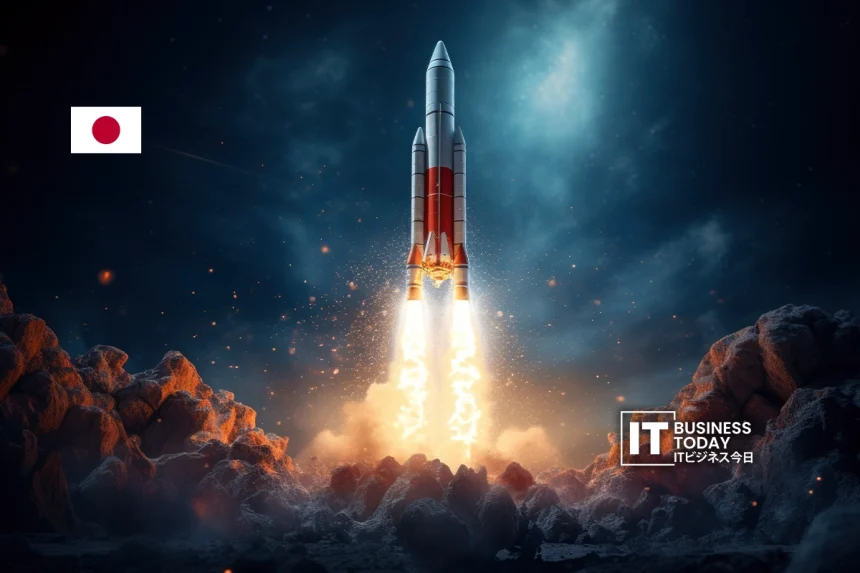
Japan-based commercial space exploration firm ispace entered into an agreement with Mitsubishi Heavy Industries Ltd. (MHI) for its next-gen ULTRA lunar lander to be launched via Japan’s H3 rocket in 2028. This launch will be the first time that ispace uses a Japanese-made launcher for any of its commercial lunar missions.
This agreement is seen as a landmark for the budding private space industry in Japan as it involves leveraging the capabilities of ispace’s lunar transportation technologies and the H3 launch system offered by MHI in an attempt to build a strong end-to-end space infrastructure for Japan that reduces reliance on foreign companies for any of their launch activities.
A Major Milestone for Japan’s Commercial Space Industry
The ULTRA lunar lander is part of ispace’s new generation of lunar transport system meant to ferry payloads from commercial, scientific and governmental bodies to the moon. Use of the H3 rocket means that Japan has taken the initiative to use their indigenous launch systems for their commercial deep space launches.

Also Read: Japanese University Startups Develop AI Robot Arms for Precision Tasks, Advancing the Future of Intelligent Automation
This H3 rocket which is a joint product of Mitsubishi Heavy Industries and Japan Aerospace Exploration Agency (JAXA) has been marketed as the primary launcher for Japan giving increased payload capacity and cheaper cost of launch than its predecessors.
Strengthening Japan’s Lunar Ecosystem
This collaboration takes place at a time when global efforts to explore the Moon have been picking up pace. Governments and private players are spending significantly on lunar landers, resources, communications facilities, and even plans for manned flights in the future.
By using a domestic launch vehicle and lander, Japan is developing its space supply chain capabilities while opening new avenues for domestic aerospace firms, component makers, software firms, and research organizations.
At the same time, this mission fits well with Japan’s larger policy of increasing private sector involvement in space exploration efforts.
Impact on Japan’s Technology Industry
It will create positive momentum throughout Japan’s entire technology sector.
There will be an increase in demand for the most advanced aerospace engineering, satellite communications, AI navigation systems, robots, software for autonomous flights, manufacturing, and the next generation of semiconductors in space technology.
Moreover, the project will promote further investments into new space technologies, such as digital twins, Earth observation, space robotics, and autonomous mission control. Companies working in the fields of AI, cloud computing, cybersecurity, and high performance computing might be able to find opportunities here too because space missions in the modern era become software defined and data driven.
In general, the cooperation will help solidify Japan’s reputation as one of the major centers of commercial space innovations.
Business Opportunities Across Multiple Industries
Aerospace industry is not the only one that will benefit from the successful development of commercial operations on the Moon.
Manufacturing businesses can collaborate in the manufacturing of special components for spacecrafts and launch vehicles, whereas IT companies can create planning, simulation, and self-control programs. Telecommunication services might be used in future lunar communications infrastructure, and materials industries can provide advanced lightweight composites and heat-shielded materials.
Research organizations and universities will be able to cooperate with commercial space companies as well, helping advance innovations in robotics, artificial intelligence, and advanced manufacturing.
With more regular commercial lunar transportation, totally new business models related to payload transportation, science research, resource exploration, and lunar infrastructure services might appear.
Strengthening Japan’s Position in the Global Space Economy
Commercial space abilities in Japan have been consistently improving due to efforts that have been taken towards the development of launchers, satellites, robotics, and lunar exploration. Another milestone in the development of the national space ecosystem which can support complicated missions is the collaboration between ispace and Mitsubishi Heavy Industries.
For the Japanese technology industry, it is clear that the collaboration between industrial giants and space startups allows not only improving the level of technological progress but also increasing the competitiveness of the country in the international arena. With the growth of the space economy on the global scale, such missions as the 2028 ULTRA mission will contribute to the reputation of Japan as a nation of space technology.



 English