 日本語
日本語 





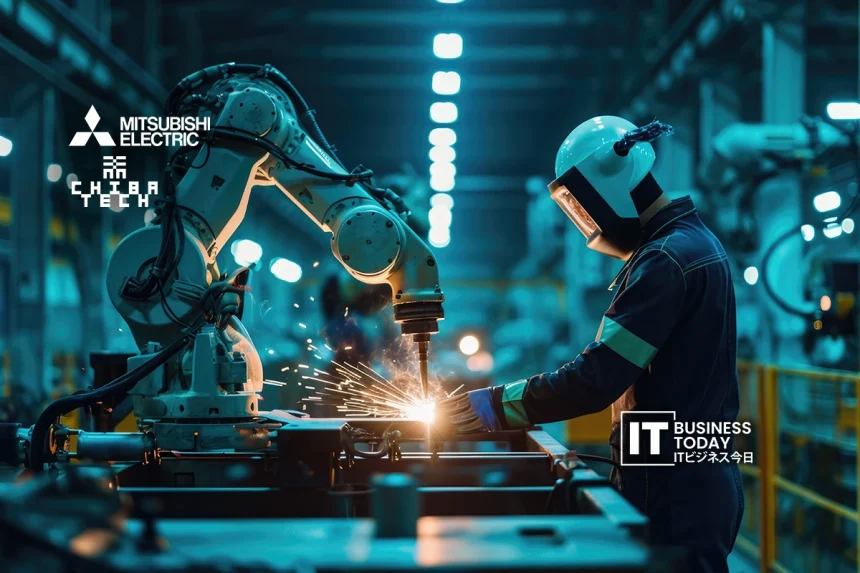
Japan is gearing up to further its efforts in next-generation robotics as Mitsubishi Electric and the Chiba Institute of Technology have revealed a major collaboration to work on “physical AI” technologies that will radically change manufacturing, infrastructure maintenance, disaster response, and logistics activities.
The two parties have entered into a three-year contract until April 2029 for co-research and commercialization of autonomous AI-powered robotic systems. This program also include the plans to construct a dedicated co-creation center that will develop robots capable of operating in the complex world environment through advanced labor, adaptive movement, and autonomous decision-making capabilities.
These autonomous robotic systems include operating forms like humanoid robots, multi-legged walking robots, and drone systems. Combining the industrial automation prowess of Mitsubishi Electric with Chiba Institute of Technology’s cutting-edge robotics, they aspire to produce a “physical AI” ecosystem domestically developed for public and private sector purposes.

Also Read: Hyundai Accelerates Humanoid Robot Push as AI-Powered Factories Reshape Global Manufacturing
What Is Physical AI?
Physical AI is a term for artificial intelligence systems thatare not only software operating but physically interact with and respond to real-world environments. Physical AI, not like computer-focused AIs that deal with purely digital tasks ( writing, analyzing), integrates machine learning robotics sensors, motion-control, and real-time awareness of the environment to make autonomous machines not only capable of moving, reacting and performing physical tasks but doing it in a very dynamic manner.
Researchers in this field aim to build robots that can alter their behavior based on changes in the environment in the way humans do through their flexibility and awareness of situations. In the partnership of Mitsubishi Electric and Chiba Tech, robot development based on AI that can perform challenging industrial and infrastructure tasks without human intervention will be the main focus. So far, such tasks that even highly automated systems hardly manage include activity of equipment inspection, machinery adjustment, infrastructure maintenance, operations at disaster sites, and manufacturing processes requiring high precision.
Why Japan Is Investing Heavily in Physical AI
Japan’s growing interest in physical AI is partly connected to a set of the country’s biggest structural problems.
Japan is still struggling with serious labor shortages and an aging workforce. At the same time, it is becoming more and more difficult to find ways of maintaining old infrastructure systems like railways roads water networks, and power facilities. Besides, a lot of these tasks are not only hard but also risky or physically demanding leading to significant demand for advanced autonomous robotics.
Mitsubishi Electric, for instance, has a great deal of knowledge in factory automation, motion-control systems, and industrial robotics, among others, through its MELFA ASSISTA collaborative robot platform. Then again, Chiba Institute of Technology’s Future Robotics Technology Center, has not only been working extensively on robotics for nuclear facilities but also disaster response and even complex field operations.
If the partnership goes well, it will allow the creation of highly flexible robots that can be used safely even in the most unpredictable physical environments and not only in the factory-controlled ones.
Major stakeholders in the industry, such as business analysts, are of the opinion that physical AI might become one of the sectors that will be most strategically important within the broader global AI market at the end of the next decade.
Impact on Japan’s Technology and Manufacturing Industry
The initiative highlights how Japan is shifting its overall AI strategy in a major way. Emphasizing industrial and robotics-oriented applications where Japan already has global strengths is a big part of this shift.
Instead of trying to match the US and China only in big language models, Japan is relying on its leadership in robotics, precision engineering, industrial automation, and manufacturing infrastructure, among other things.
Besides, the physical AI expansion may bring new business opportunities to many Japanese industries such as:
– Robot manufacturing
– Advanced sensors and semiconductors
– AI chips and edge computing
– Industrial software platforms
– Smart factory infrastructure
– Autonomous logistics systems
– Infrastructure maintenance technologies
– Drone and mobility systems
Japan’s deep knowledge of robotics hardware might prove to be a significant advantage as AI applications move beyond software-only and become physical autonomous systems that interact with the real world.
Besides, the partnership could also work in favor of Japan by helping the country keep pace with the “physical AI” market. So far, that market has been dominated by the likes of NVIDIA Tesla Boston Dynamics, as well as several Chinese robotics startups.
Businesses Could See Major Operational Changes
The entrance of physical AI in business tends to drastically change production and industrial processes in a few years’ time.
Robots running production lines may be given the ability to self-learn and self-improve over time and thereby may not require human programming all the time. Besides, the robots equipped with AI can be deployed for inspecting, repairing, and maintenance of the infrastructure. Delivery and warehousing by logistics companies based on instant AI decision-making may also be automated.
Thanks to the technology, the likelihood of accidents and damage in situations such as responding to natural disasters and working in hazardous industrial environments where human safety is a big concern may be minimized.
Physical AI is regarded by experts as a tool that can increase the efficiency and productivity of a business, reduce the need for labor, cut down on the costs of operations, and at the same time make the infrastructure more resilient.
However, firms will have incessant AI governance cybersecurity robots safety, and training program expenses as the automation takes over more complex operational tasks.
Japan’s Broader Sovereign AI Strategy
The Mitsubishi Electric-Chiba Tech project is also connected to Japan’s larger strategy to build sovereign AI infrastructure and advanced domestic technologies.
Japanese politicians and business have increasingly been looking toward ways to decouple with foreign dominance in AI ecosystems and cloud infrastructure. Official and corporate initiatives lately have been spotlighting AI chips produced locally, sovereign cloud systems, robotics platforms, and industrial AI applications.
Mitsubishi Electric has been enhancing investment in “Neuro-Physical AI, ” a special AI plan that integrates the company’s industrial knowledge with physical systems and real-world operational intelligence.
Besides that, the firm has broadened its global AI and autonomous systems research collaborations that include recent engagements in autonomous navigation and industrial AI innovations.
The Future of Physical AI in Japan
The collaboration between Mitsubishi Electric and Chiba Tech demonstrates that the future of AI development is moving away from just chatbots and digital assistants. Instead, it’s leaning towards smart machines able to carry out physical tasks autonomously.
Since industries are struggling with labor shortages, old infrastructures, and increase in productivity demands, the use of physical AI could be key in helping maintain the economic resilience and industrial competitiveness.
For Japan, this creation is not just a robotics project. It is an indication of a larger national initiative to integrate the country’s well-known strengths in manufacturing and precision engineering with the next generation of AI-enabled autonomous systems.
Physical AI, if attained, might stand as one of the key elements of Japan’s technological economy in the future, transforming multiple sectors including manufacturing logistics public infrastructure, and disaster management.



 English