 日本語
日本語 





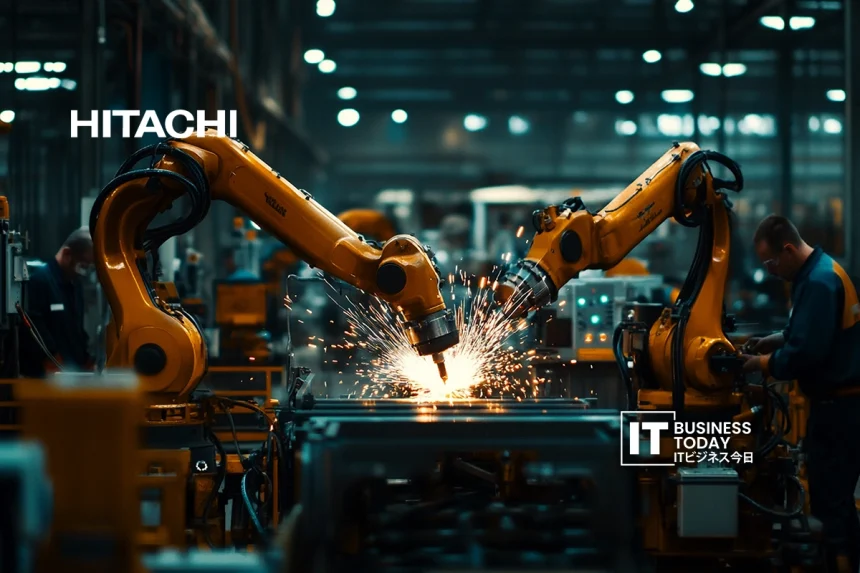
HMAX for Industry Plants is scheduled to be released in late 2023 by Hitachi. This development represents another milestone towards realizing industrial transformation through artificial intelligence technology in Japan. The addition of HMAX to the company’s existing product line means that artificial intelligence will be deployed at industrial facilities and used by operators in diagnostic operations, maintenance, optimization of processes, and troubleshooting. HMAX for Industry Plants is based on Hitachi’s Lumada digital platform and generative AI technology and is designed to assist manufacturers to increase productivity, minimize downtimes, and accelerate decision making in complicated industrial settings. The deployment was preceded by successful testing in cooperation with Daikin Industries and Mitsubishi Chemical, during which AI agents managed to detect equipment issues and provide recommendations about what to do with them with great precision within just a few seconds.
This initiative represents a more profound trend related to the use of artificial intelligence in Japanese manufacturing industry. In light of the increasing labour shortages, higher costs of manufacturing and need for updating industrial plants, AI-based industrial assistants emerge as a perfect solution for increasing the efficiency of manufacturing processes while retaining important knowledge about them.
AI Is Transforming Factory Operations
Industrial plants produce large volumes of data from production machines, sensors, inspection devices, and maintenance logs. Nevertheless, translating this data into meaningful information requires highly qualified engineers who have to accumulate their knowledge over many years.

Also Read: Japan’s Smart Industrial Campuses: The Future of Connected Manufacturing
HMAX for Industry Plants solves this problem by creating AI assistants who will be able to evaluate the state of equipment, diagnose problems, and provide recommendations via a natural-language conversation. There is no need to search through maintenance documents and other data – a user just needs to address an AI assistant to get relevant advice depending on current operational data.
Using such a system significantly decreases the time required for identifying equipment problems, as well as helps firms to standardize their maintenance policies. Besides, the company can preserve experienced knowledge in digital format, making it accessible to less experienced workers. According to Hitachi, previous tests have shown that AI assistants could determine the cause of equipment failures and provide countermeasures in 10 seconds with more than 90 percent accuracy.
Supporting Japan’s Smart Manufacturing Strategy
This initiative fits well within Japan’s wider plans of industrial modernization.
The manufacturing industry continues to be among the most vital industries in the country, providing a great boost to export, innovations, and employment opportunities. In addition, the increasing demands for overcoming labor shortages, boosting energy efficiency, and ensuring competitiveness require the application of digital transformation on the part of Japanese manufacturers.
AI plays a major role in facilitating digital transformation. The integration of AI in factory processes enables automation of various processes, scheduling of maintenance activities, and quality assurance. This will be instrumental in realizing the goals of the smart factories concept, which includes high connectivity of factories through data and automation.
Also, HMAX for Industry Plants fits within the wider plan of Hitachi in making available more AI solutions in different industries including transport, buildings, utilities, and industries.
Creating New Opportunities for Japan’s Technology Industry
The deployment of HMAX for Industry Plants would lead to increased demand throughout the ecosystem of industrial technology in Japan.
With the adoption of AI systems, there will be a surge in opportunities for businesses dealing with industrial software, cloud computing, edge AI, industrial IoT, robotics, sensors, cybersecurity, and digital twins. It is also likely that system integrators and engineering firms will gain prominence as enterprises work towards integrating AI into their production environments without compromising their operations.
Given that Japan has a lot of expertise in precision manufacturing and industrial engineering, it is well-placed to benefit from the growth in the global market for intelligent factories. Additionally, the creation of AI systems would encourage continued development in semiconductors, high-performance computing, and industrial networking solutions.
Helping Businesses Improve Productivity and Resilience
There are a number of problems that Japanese companies have to solve when running their business, and some of them can be solved with the help of intelligent industrial assistants based on artificial intelligence.
Businesses will benefit from higher reliability of equipment because faults will be detected timely, so that no disruptions during manufacturing processes take place. Faster diagnostics and consistent repair procedures are possible thanks to AI-enabled solutions, which help to prevent failures and keep the production process smooth. It is also possible to maintain the accumulated knowledge even when some employees retire.
In addition to improved efficiency, AI-enabled maintenance and monitoring can help to achieve greater sustainability by optimizing equipment use and saving energy.
Strengthening Japan’s Position in Industrial AI
The launch of HMAX for Industry Plants by Hitachi is one example of how artificial intelligence technologies are moving out of the office and becoming an integral part of industrial processes. This technology is not intended to substitute qualified specialists, but rather augment their knowledge through faster analysis and decision-making process.
For Japan, this project can be viewed as one more step in its leadership in the combination of artificial intelligence technologies with industrial engineering, automation and digitalization. Moreover, this initiative fits perfectly in the overall trend towards acceleration of digital transformation of the country and dealing with demographic issues.
With the development of the concept of intelligent factory, technologies like HMAX for Industry Plants can serve as the cornerstone of the future development of industrial enterprises. Through the use of generative AI and many years of manufacturing experience, Hitachi creates a new generation of smart factories, which will be able to increase productivity, reliability and achieve sustainable growth.



 English