 日本語
日本語 


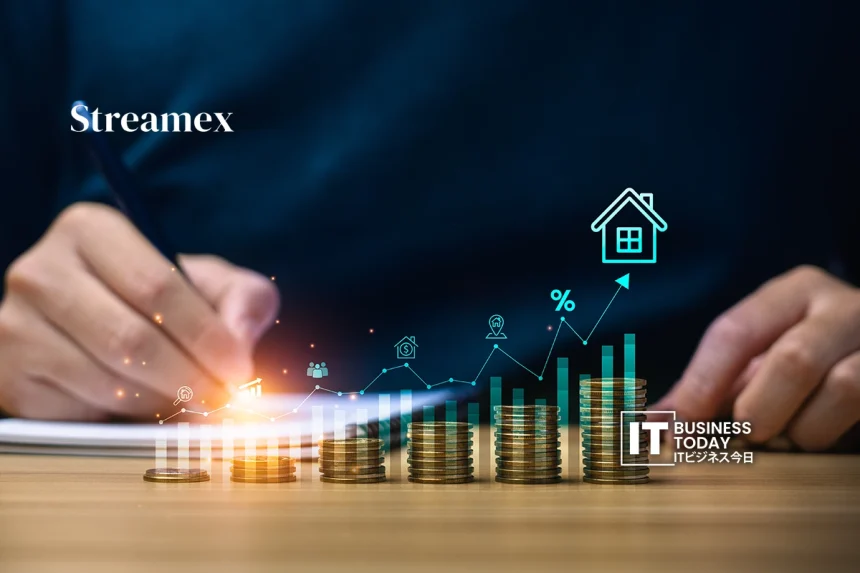
Streamex Corp. will participate in the Lytham Partners Fall 2026 Investor Conference on September 29, giving the company an opportunity to present its technology and infrastructure strategy for tokenized commodity markets to investors.
The virtual event will include a company webcast at 3:30 p.m. ET, followed by one-on-one meetings between Streamex management and investors. The company said its presentation will focus on its business strategy and technology platform for bringing real-world commodity assets onto blockchain-based financial infrastructure.
Building Infrastructure for Tokenized Commodities
Streamex describes itself as a technology and infrastructure company focused on the tokenization and digitalization of real-world commodity assets. Its platform is designed to connect traditional financial markets with blockchain-enabled infrastructure through functions including issuance, custody integration, compliance, liquidity and on-chain settlement.

The company’s strategy begins with gold. Its GLDY product is positioned as the first proof point for the broader platform, giving investors exposure to gold through a tokenized structure designed to provide liquidity and yield.
This approach reflects a broader development in financial technology: the use of blockchain infrastructure to represent ownership or economic exposure to assets that have traditionally been handled through conventional financial and commodity-market systems.
GLDY as the First Platform Application
GLDY is a gold-backed, yield-bearing tokenized security built on Streamex’s infrastructure. The company says the product is supported by its institutional gold leasing program, with monthly distributions made to holders in additional GLDY tokens. In August 2026, Streamex announced its sixth monthly yield distribution, covering the August 1–31 period.
The company has also been developing infrastructure intended to make GLDY accessible through financial-market channels. In July, Streamex announced custody availability through Inspira Financial, giving institutional investors, registered investment advisers and wealth managers using that infrastructure a way to hold the product.
Streamex also announced a collaboration with Wintermute to provide continuous liquidity for GLDY, describing the arrangement as enabling 24/7 trading and T+0 transactions. These developments point to an effort to build the supporting infrastructure around a tokenized asset rather than treating tokenization simply as a digital representation of an existing asset.
Why Real-World Asset Tokenization Matters
Real-world asset tokenization has become an important area of FinTech development as financial institutions explore how blockchain networks can support the issuance, settlement and transfer of assets.
Potential applications extend beyond gold. Tokenization can potentially be applied to commodities, securities, funds, real estate and other assets, although each category involves different regulatory, custody and market-structure requirements.
For financial technology companies, the infrastructure challenge is therefore broader than creating blockchain tokens. Systems need to address identity, compliance, asset verification, custody, transaction monitoring, liquidity and reporting.
Streamex’s platform strategy reflects this infrastructure-oriented approach. The company says it intends to expand from gold toward a broader universe of commodities over time.
Implications for Japan’s FinTech Industry
The development is relevant to Japan as financial institutions, technology companies and regulators continue examining the potential applications of blockchain and digital assets.
Japan already has an established digital-asset ecosystem, while financial institutions have been exploring tokenized securities, digital bonds and other blockchain-based financial products. The broader trend toward tokenization could create demand for technology covering digital custody, compliance automation, blockchain settlement, asset servicing and transaction monitoring.
For Japanese banks and securities companies, tokenized commodities could also raise questions around how traditional custody and settlement infrastructure can interact with blockchain networks.
The technology requirements are particularly relevant to institutions handling assets across multiple jurisdictions. Automated compliance checks, identity verification, secure wallet infrastructure and transparent transaction records can become important components when digital representations of real-world assets move between platforms.
From Blockchain Products to Financial Infrastructure
Streamex’s upcoming investor presentation comes as the company positions its business around infrastructure rather than a single digital asset. Its investor materials describe GLDY as the initial proof point for a broader platform designed to support tokenized commodity markets.
Also Read: Schroders Launches Climate Adaptation Framework
The company’s participation in the Lytham Partners conference therefore provides an opportunity to explain how it intends to develop that infrastructure and expand its platform strategy.
For Japan’s FinTech sector, the broader development illustrates how blockchain is increasingly being considered as part of financial-market infrastructure rather than only as a technology for cryptocurrencies. The practical opportunities will depend on regulation, institutional adoption, liquidity and the ability of technology providers to connect blockchain systems with existing financial infrastructure.
As banks, asset managers and other financial institutions continue evaluating tokenized assets, these integration and governance requirements are likely to remain central to the next phase of digital-asset development.


 English