 日本語




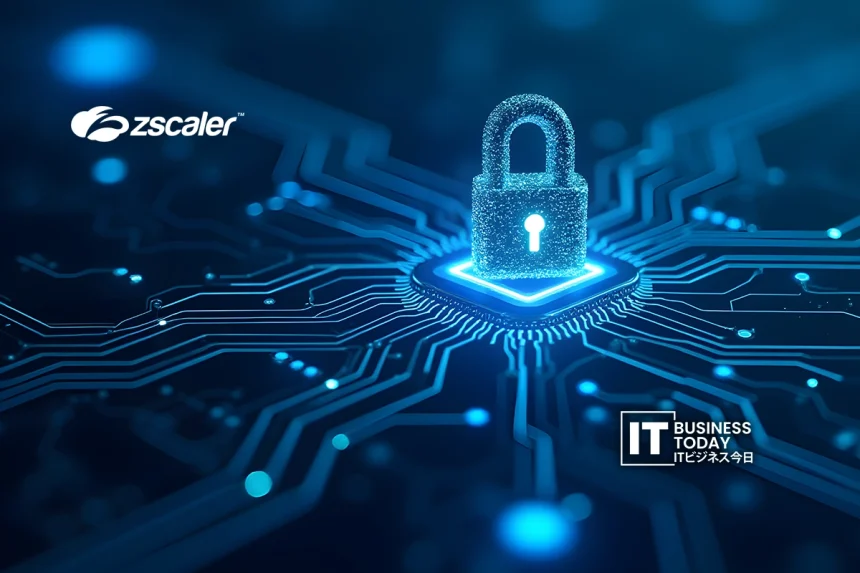
Zscaler, Inc. is collaborating with leading frontier AI model providers Anthropic and Mistral to help enterprises adopt AI securely and defend against AI-driven attacks. Zscaler Security for AI is cybersecurity software that combines frontier AI models with the Zero Trust Platform to identify emerging threats and attack paths. The integrated platform helps customers stay ahead of emerging threats. The system protects sensitive data as organizations scale their AI adoption.
Why AI Trust, Risk, and Security Management Matters
Gartner defines AI Trust, Risk and Security Management (AI TRiSM) as a framework of technical controls. This framework keeps AI systems trustworthy, secure, and compliant. AI TRiSM was built to close the gap between generic IT risk frameworks and AI-specific risks, according to Cyberhaven. Organizations apply its principles across the AI model lifecycle, from development through deployment and ongoing operation.
The framework is structured around four pillars: explainability and model monitoring, ModelOps, AI application security, and privacy and data protection, according to Kognitos. No single tool implements all four pillars on its own. An organization can have an AI governance policy without having AI TRiSM in place. However, the policy will have little practical effect if there is no mechanism to monitor models against it or protect the data feeding them, Cyberhaven writes.

Implementing AI TRiSM requires visibility into what data trains and feeds AI models, Cyberhaven adds. Visibility into the models themselves is not enough. The most urgent gap is almost always the data, because a single prompt can send regulated data to a model that retains it, according to Strac. AI TRiSM starts with knowing and controlling the data flowing into AI across every surface.
The EU AI Act requires data governance, transparency, and risk management for AI systems. AI TRiSM is a practical framework for meeting these obligations. Despite these regulatory pressures, a Forrester report found that only 42% of AI decision-makers say governance strategy is included in their organization’s official AI and agentic AI strategy.
Anthropic and Mistral Integrations
Zscaler works with Anthropic’s Cyber Verification Program. This advances its vulnerability discovery and security research. Simultaneously, the company delivers its Security for AI software through its sovereign Zero Trust Exchange in Europe.
Claude Mythos 5.1 and Exploit Paths
Zscaler integrated Anthropic’s Claude Mythos 5.1 into Zscaler’s Endpoint AI Security to power Exploit Paths. Exploit Paths correlates security evidence across complex attack sequences. The tool helps identify potential threats and shows defenders where to break the attack chain. A limited preview is planned for this integration.
Mistral for European Sovereignty
The European Security for AI software integrates with Mistral. This integration helps European enterprises adopt AI while meeting security, data protection, and sovereignty requirements.
Discovering and Controlling AI Assets
Zscaler’s AI Asset Management automatically discovers models, agents, and shadow AI. The platform traces data-to-AI lineage across the supported applications in one unified view. The system tracks every model, pipeline, identity, and the connected permissions.
Real-Time Traffic Routing
The AI Gateway handles every AI transaction. It applies inline DLP and Zero Trust to every model, agent, and API call in real time. Secure Access to AI allows administrators to block access by role in real time. The system filters sensitive data from LLMs and governs agent-to-agent traffic.
Adversarial Testing and Endpoint Protection
Zscaler’s AI Red Teaming tests 5,000 attack scenarios across text, image, voice, and documents. It maps vulnerabilities to frameworks like MITRE ATLAS, NIST, and the EU AI Act. The AI-SPM module assesses the AI systems organizations build and run.
Securing the Device Layer
Endpoint AI Security finds and stops AI threats in browsers, extensions, and plugins. Zscaler’s AI Access Graph provides real-time visibility into how AI agents use data and identities. It reduces unnecessary access and tracks data lineage across every channel.
Controlling Agentic AI Access
The system gives enterprises greater visibility and control over AI agents. Zscaler’s Zero Trust architecture eliminates internet-facing attack surfaces.
Preventing Lateral Movement
The architecture connects users, workloads, devices, and AI agents directly to authorized applications and tools. It prevents lateral movement across the network.
The Zero Trust Requirement
Zscaler claims traditional firewalls cannot adequately protect the enterprise from AI-driven threats. AI accelerates vulnerability discovery and exploitation. “AI is fundamentally changing the threat landscape, making Zero Trust more critical than ever. We must eliminate attack surfaces, prevent lateral movement, and ensure AI agents access only the tools needed for their tasks, never the entire corporate network,” says Jay Chaudhry, CEO, chairman, and founder of Zscaler.
Questions about Zscaler Security for AI
What is the scale of the Zero Trust Exchange?
Also Read: GRCS and Valtech Partner to Strengthen Security Governance
The Zscaler Zero Trust Exchange platform is distributed across 200 public service locations globally. The SASE-based platform processes over 750 billion transactions every day. It includes 160 data centers supporting 185 countries. Zscaler secures 45% of the Fortune 500 across 50 million users.
Where does Zscaler operate its private infrastructure?
Zscaler operates thousands of private sites at the edge. Zscaler trades on the Nasdaq under the ticker ZS.
How many DLP violations are linked to generative AI?
ThreatLabz researchers recorded 410 million DLP policy violations tied to ChatGPT alone in 2025, Zscaler writes. Zscaler supports AI Asset Management across 2,900 AI apps.
Upcoming Innovations
Zscaler will unveil new security innovations. The virtual event occurs on December 9, 2026, at 1:00 PM ET. The company plans to reveal new features to protect AI agents and sensitive data wherever they operate. Zscaler accelerates digital modernization to make customers more agile, efficient, resilient, and secure. The Zero Trust Exchange securely connects users, devices, and applications in any location. It protects thousands of customers from cyberattacks and data loss.

 English