 日本語
日本語 





For years, data centers treated cooling as a facilities problem. AI has turned it into an infrastructure problem.
The arrival of H100, H200, and Blackwell-class systems has changed the rules of the game. These machines do not sip power politely in the corner of a server room. They pull enormous amounts of energy, convert much of it into heat, and then demand that someone deal with the consequences. In most countries, operators can respond with larger buildings and more land. Japan does not have that luxury.
Around 90% of Japan’s data center floor space was concentrated in Tokyo and Osaka in 2023. That means the country’s AI future is being built in some of its most expensive and space-constrained regions. At the same time, zero-emission targets and energy pressures are forcing operators to rethink every watt they consume.

This is exactly why liquid cooling is becoming mandatory for next-generation AI infrastructure in Japan. Air cooling is approaching its physical limits. The next phase of Japanese cloud infrastructure will not be defined by faster chips alone. It will be defined by who can remove heat the fastest.
Also Read: Foundation Models in Healthcare: The Next Evolution of Clinical Intelligence
Why Air Cooling Is Losing the Fight
The problem starts with physics.
Air is cheap, familiar, and easy to move. Unfortunately, it is also terrible at carrying heat away from high-density hardware. Traditional CRAC and CRAH systems were designed for an era when server racks generated modest thermal loads and airflow management could solve most problems.
Modern AI clusters operate in a completely different universe.
Generative AI GPUs consume more power and generate more heat than conventional semiconductors. As compute density rises, the amount of air required to remove that heat rises with it. Eventually operators hit a wall where adding more fans only creates more energy consumption, more turbulence, and more operational inefficiency.
Liquid changes the equation because liquids absorb and transport heat far more efficiently than air.
Two architectures are rapidly emerging as the dominant approaches.
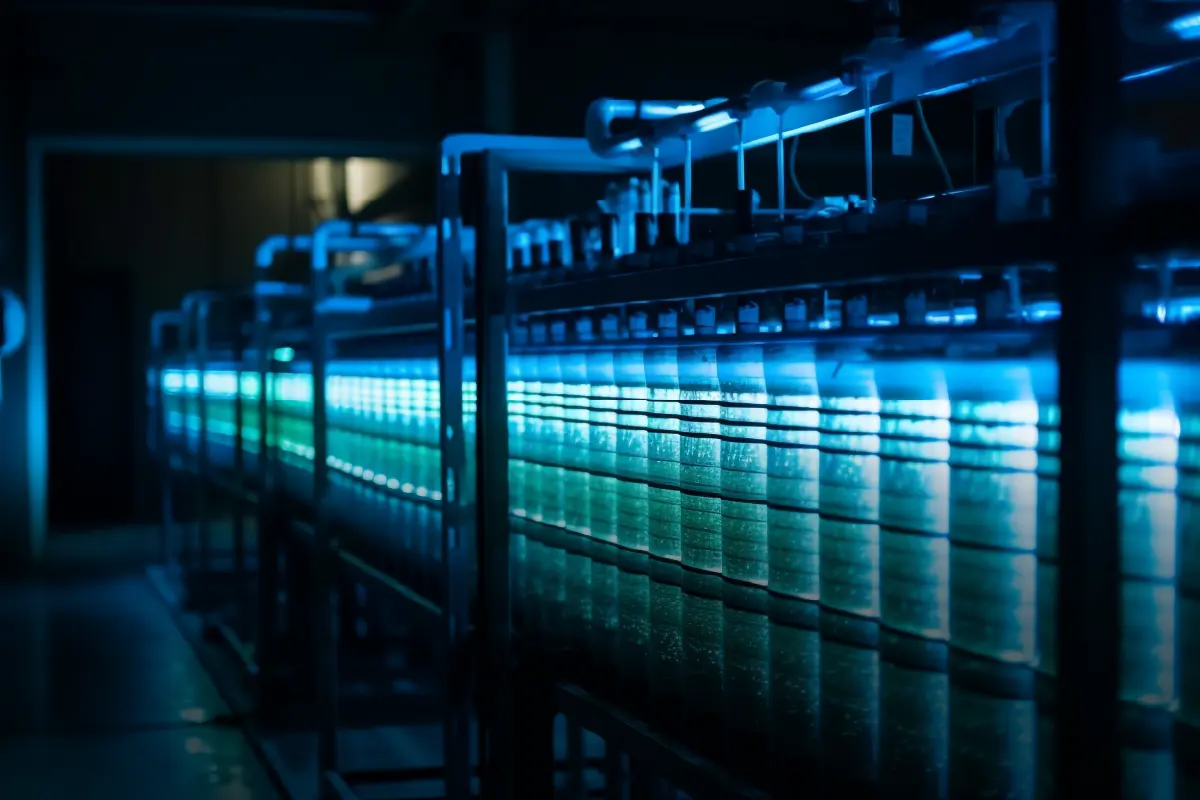
Direct-to-chip cooling, often called cold plate cooling, places liquid channels directly on top of the hottest components inside a server. CPUs, GPUs, voltage regulation modules, and PCIe switches transfer heat into the liquid loop before that heat ever enters the room environment.
Immersion cooling takes an even more aggressive approach. Entire servers are submerged inside non-conductive liquid where heat is absorbed directly from every component surface.
The difference is significant.
| Attribute | Air Cooling | Liquid Cooling |
| Heat Transfer Efficiency | Lower | Much Higher |
| Rack Density Support | Limited | Extremely High |
| PUE Optimization Potential | Moderate | Strong |
| Cooling Distance | Room Level | Component Level |
| Suitability for AI Clusters | Increasingly Limited | Purpose Built |
Air cooling cools rooms.
Liquid cooling cools silicon.
That distinction is becoming the dividing line between legacy infrastructure and AI infrastructure.
Why Japan Cannot Copy Western Data Center Blueprints
Many of the assumptions behind American and European data center designs simply break when they land in Japan.
The first issue is geography.
Land is scarce and expensive around major economic centers. Every square meter of floor space has to justify itself. A sprawling campus design that works in Arizona or Texas quickly becomes an economic headache in Tokyo or Osaka. Japanese operators are therefore pushed toward higher compute density much earlier than their Western counterparts.
The second issue is climate diversity.
Japan stretches from snowy northern prefectures to humid southern regions. A cooling strategy that performs perfectly in Osaka may struggle in Hokkaido during winter. Water loops that work comfortably above freezing temperatures suddenly face risks involving pipe expansion and freezing damage.
That is why many northern deployments require glycol mixtures rather than pure water inside cooling loops. It is not an engineering preference. It is basic survival.
Interestingly, climate also creates opportunities.
The Tomakomai AI Data Center plans to use Hokkaido’s cool outside air as part of its cooling strategy. Instead of fighting the environment, operators are beginning to use geography as an infrastructure advantage.
At the other end of the spectrum sits the Osaka Sakai AI Data Center, representing a massive 140 MW AI infrastructure deployment. One site demonstrates climate optimization. The other demonstrates the scale of compute demand arriving in Japan.
Together they expose a reality many executives still underestimate.
Japan is not building ordinary data centers anymore.
It is building AI factories.
The third issue involves water.
Large evaporative cooling systems made sense when municipal water supplies appeared effectively unlimited. That assumption is fading quickly. Closed-loop liquid cooling systems are becoming attractive not only because they improve thermal performance but also because they reduce dependency on continuous freshwater consumption.
The future Japanese data center will likely recycle energy, recycle water, and reuse waste heat rather than treating them as disposable resources.
The Multi-Vendor Problem Nobody Wants to Discuss
Technology transitions rarely fail because the technology itself does not work.
They fail because ecosystems break.
Most Japanese enterprises operate highly mixed environments. Servers come from one vendor, networking equipment comes from another, and facility infrastructure comes from a third. Introducing liquid cooling into this environment creates layers of complexity that traditional facilities teams have never had to manage.
Which Coolant Distribution Unit supports which rack?
Which manifold design supports future hardware upgrades?
Who becomes responsible when a leak occurs inside a colocation environment?
How should maintenance contracts evolve when pumps, valves, and coolant loops become mission-critical infrastructure?
These questions do not appear in marketing brochures. They appear during deployment reviews.
The problem is becoming more urgent because the hardware market itself is under pressure.
JEITA warned in June 2026 that AI demand has already created semiconductor shortages, increasing lead times and prices for servers, storage, and networking equipment.
That changes procurement behavior entirely.
Organizations are no longer buying cooling systems after purchasing hardware. Increasingly, cooling strategy determines which hardware can be deployed in the first place.
The shortage is no longer chips.
The shortage is deployable infrastructure.
Building a Practical Transition Strategy
The smartest migration strategy is not a complete replacement.
It is selective evolution.
The first step is assessment and zoning.
Legacy enterprise applications, databases, and business systems can continue operating efficiently in traditional air-cooled environments. Meanwhile AI training clusters, inference farms, and high-density GPU deployments should move into dedicated liquid-cooled zones.
Hybrid facilities will dominate the market for years because they reduce risk while preserving flexibility.
The second step involves deployment speed.
Traditional construction projects move slowly. Data center construction typically requires one to two years. Carbon-free energy projects, however, can require anywhere between one and fifteen years.
That mismatch changes infrastructure planning completely.
Compute demand is moving at software speed while energy infrastructure moves at utility speed.
Organizations waiting for perfect conditions may discover that demand arrives years before power capacity does.
This is where modular infrastructure starts making sense.
Pre-engineered racks and containerized deployments allow operators to compress deployment timelines dramatically. Instead of redesigning facilities from scratch, organizations can deploy standardized AI zones that arrive ready for installation and commissioning.
Months disappear from project schedules.
The third step involves measurement.
Two metrics increasingly determine infrastructure competitiveness.
The first is Power Usage Effectiveness.
The second is Water Usage Effectiveness.
For years, operators treated these metrics as sustainability reporting exercises. AI changes their role completely. They are becoming operational indicators that determine profitability, scalability, and infrastructure lifespan.
Real-time monitoring platforms are therefore becoming critical infrastructure themselves.
Software capable of tracking thermal performance, coolant flow rates, energy consumption, and water efficiency allows operators to identify problems before they become outages.
The future data center manager may spend less time walking server aisles and more time studying thermal analytics dashboards.
That is not science fiction.
That is operations.
Liquid Cooling and the Question of Cloud Sovereignty
There is a dangerous assumption floating around the AI industry.
Many believe the winners will simply be those with the best models.
Infrastructure tells a different story.
Countries that cannot power AI systems, cool AI systems, or deploy AI systems at scale will eventually become dependent on those that can.
Liquid cooling is no longer a sustainability project hidden inside facilities management budgets. It is becoming a national competitiveness issue.
Japan’s AI ambitions, sovereign cloud initiatives, and digital transformation goals all point toward the same destination. More compute will arrive. More heat will arrive with it.
The real question is whether infrastructure strategies evolve quickly enough to meet that reality.
The next generation of Japanese cloud infrastructure may not be remembered for the chips it installed.
It may be remembered for finally admitting that the age of cooling rooms was over and the age of cooling silicon had begun.


 English