 日本語
日本語 





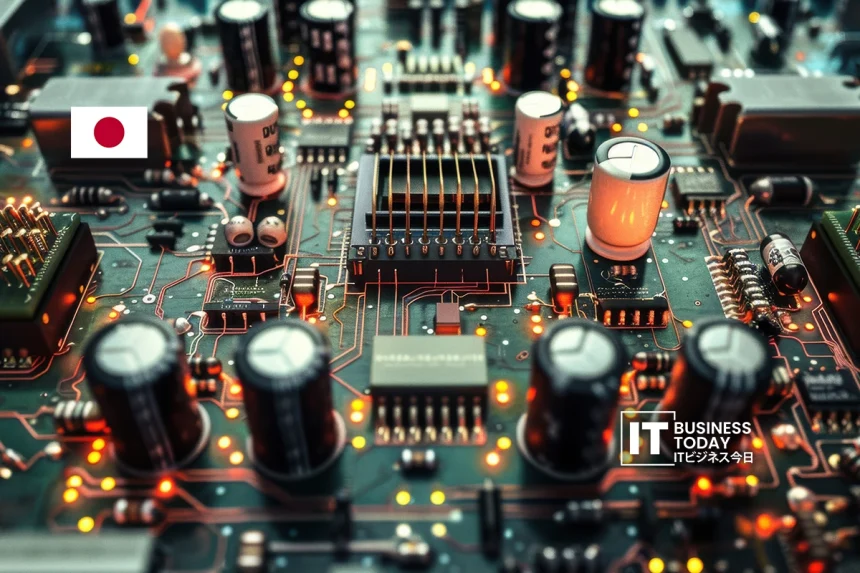
Japan is fast-tracking its semiconductor revival plan, by increasing state subsidies focused on ramping up local chip manufacturing and lowering reliance on foreign companies. The initiative demonstrates the Japanese capital’s increased emphasis on economic security amid rising competition around chips, AI infrastructure, and better manufacturing techniques.
The newest policy effort extends Japan’s computer chip support policy from state-of-the-art AI processors to older chips that will continue to be critical to the automotive, industrial robotics, consumer electronics, communications, and defense sectors.
The core of its wider strategy is Japan-based Rapidus, a government-sponsored chip manufacturer that is leading the nation’s push to regain competitiveness in advanced chip manufacturing. The company has announced plans to develop 2nm chips in Hokkaido with plans for mass production in FY27.

Also Read: Global Electronics Forms Agency Deal With SemeaTech
Japan Expands Focus Beyond Advanced AI Chips
Although much debate has centered on the performance of AI processors, the newest moves in Japan reflect that when it comes to industrial supply chains, older-generation semiconductors are still indispensable. Existing chips are in extensive use in automotive equipment, industry machinery, power supplies, medical instruments, factory automatic equipment, and facilities.
The scarcity of chips during COVID19 revealed weak points existing throughout the world’s supply chain of the semi-conductors, Mainly for mature-node chips employed in manufacturing appliances.
Japan is expanding subsidies to build more resilient domestic production capacity in both the more advanced and mature segments.
This approach corresponds with the broader international initiative by the governments of the US Europe South Korea and China to bolster domestic chip production strength in the face of escalating global geopolitics and increasing supply-chain concentration.
Rapidus Becomes Central to Japan’s Chip Ambitions
Rapidus remains the centerpiece of Japan’s semiconductor recovery strategy.
Enterprise was founded in 2022, by support of following big companies from Japan: SoftBank Group, Sony Group, Toyota Motor Corporation, NEC Corporation, and NTT. The Japanese government has pledged huge funding to speed Rapidus’ development. Japan allocated a further 631. 5 billion yen (3.
96 billion dollars) in subsidies to Rapidus in April which means they have given more than 2. 354 trillion yen in government support.
Rapidus has partnered with IBM and Belgian research institute Imec on advanced 2nm process technologies that are aimed at future AI computing infrastructure.
And, the company is working on next generation packaging technologies More exactly designed for AI processors and high-performance computing systems.
Economic Security Drives Semiconductor Investments
Japan’s semiconductor expansion is closely tied to national economic security concerns.
Semiconductors have become a strategic infrastructure, as their consumption depends on diverse of sectors, like systems in AI, military space applications, telecommunication, production and processes, or cloud applications.
Japanese policymakers are Mostly concerned about too much dependencies on tightly-knit foreign sourcing hubs considering mounting geo-political risk among the US, China and Taiwan.
The subsidy roll-out Because of this expects the development of a stronger domestic supply chain to buffer the Japanese industry systems against future shocks.
And, they are also expanding supporting in the design of semiconductor project and ecosystem of AI chip based on Rapidus.
Impact on Japan’s Technology Industry
The expanded subsidy program could create significant ripple effects across Japan’s broader technology sector.
To gauge the candidates to benefit from an up-turn in domestic chip investment, would also be the semiconductor equipment vendors, component makers, robotics companies, AI infrastructure providers, industrial automation equipment manufacturers etc. Japan is already a major player in many sectors of the increasingly fierce global technology market.
It has a substantial world market share of semiconductors materials, production equipment, and industrial robots.
This rapid expansion of AI infrastructure will generate demand for these cutting edge technologies even in the fields outside of semiconductor industry. Faster ecosystem may also accelerate the development of appropriate complementary markets like cloud computing, data center, advanced packaging, optical communications, energy efficient AI hardware systems and others.
Finally, industry observers are starting to consider that, if Japan does Actually gain a competitive edge in a particular segment, it may be not so much in competing against the volume producers like TSMC or Samsung Electronics, but in customized high value semiconductor manufacturing and high technology industrial equipment.
AI Infrastructure Accelerates Semiconductor Demand
The global AI boom is becoming a major driver behind semiconductor investment worldwide.
AI systems demand immense computing power, boosting enormous requirements for advanced microprocessors, high-bandwidth memories and energy-efficient chip architectures. Japan’s new semiconductor approach Because of this tightly aligns itself with the upcoming artificial intelligence economy.
The company is having dialogues with over 60 potential users in the fields of artificial intelligence, robotics and edge-computing.
The company also forecasts future development of 1. 4nm chips as a step towards Japan’s longer-term plans to rejoin the forefront of chip manufacturing.
Challenges Still Remain
The increase in the subsidy for semiconductors by Japan represent far bigger strategic intention of future investment in home-based chip manufacturing.
Though championing both legacy chips and state-of-the-art AI chips, the country is trying to build a more resilient and competitive semiconductor industry that would support future manufacturing expansion.
With Japan’s tech sector, it could boost growth in sectors like semiconductors, AI infrastructure robotics cloud, and high tech manufacturing.
As the battle for control of AI and semiconductor technologies heats up worldwide, Japan’s bold investment approach seems set to re-establish some of the country’s former dominance in the global chip market and So give it a stake in the next wave of AI-led innovation.
The Road Ahead
Even with a more aggressive investment strategy, Japan still faces significant hurdles in recovering semiconductor leadership.
The highest end of chip manufacturing will continue to be dominated by the existing three or four players (at present TSMC, Samsung and Intel), all of which have leverage of 30 years or more of manufacturing scale and technology.
Rapidus will also face the challenge of commercialization of very advanced process technologies in the face of high developmental costs, global competition and shortages of manpower.
Analysts observed that bringing mass production to 2nm would necessitate continued investments, technological breakthroughs and the ability to win customers.
The increasing level of government intervention nevetheless reflects that the computing and electronics sector will keep economic viability of semiconductor independence is in Japan considered to be an important strategic means for the nation’s economic future.



 English