 日本語
日本語 





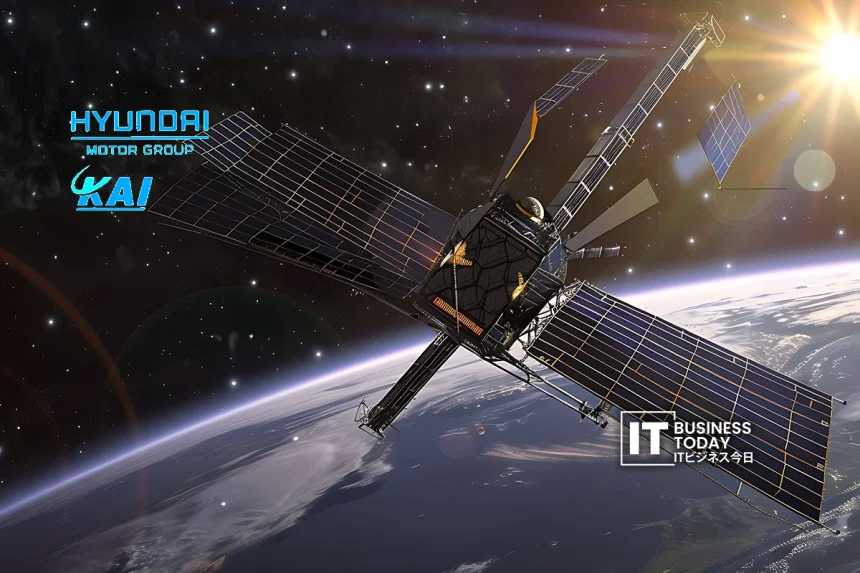
Hyundai Motor Group and Korea Aerospace Industries have recently signed a memorandum of understanding (MOU) to jointly develop advanced air mobility (AAM) aircraft. Meaning South Korea is progressively positioning itself to be a global leader in next-generation transportation technologies. This partnership combines Hyundai’s proficiency in electrified mobility and KAI’s aerospace engineering capabilities to facilitate a rapid introduction of urban air mobility systems in the future.
Factually, this agreement means that Hyundai, plus Kia, will not only develop and mass-produce AAM aircraft powered by electric aviation powertrains but at the same time will work together in other areas like supply-chain development, certification systems, and technology commercialization. On top of that, the two car manufacturers plan to collaborate in different parts of the value chain (from design, manufacturing, and marketing to after-sales service).
South Korea Expands Its Future Mobility Ambitions
The pairing represents a wider strategic change happening in South Korea, where the leading industrial conglomerates are putting a great deal of their resources into AI robotics electrification, hydrogen, and autonomous transportation.

Also Read: PACE Aerospace Partners Gojujakudo for Japan Expansion
Advanced air mobility is becoming a possible top contender among the various sectors in the global mobility industry. Local and international governments and businesses are joining the race to produce electric vertical takeoff and landing (eVTOL) aircraft that can be used for transport within cities logistics emergency response, and aerial autonomous services.
Hyundai through its U. S. -based air mobility subsidiary Supernal has already made significant investments in future mobility technologies whereas KAI contributes decades of experience in aircraft manufacture and aerospace certification features to the partnership.
This union should fast track South Korea’s attempt to build a local AAM ecosystem which can compete with the major players of the United States, Europe, and China.
Why Advanced Air Mobility Matters
Advanced air mobility (AAM) is increasingly seen as a revolutionary sector that might Quite a bit change urban transportation and logistics within the coming decade.
Traditionally aviation was purely reliant on fossil fuel but AAM systems are harnessing electric propulsion, AI-based flight management, autonomous systems, and advanced battery technology. Their combination means the industry is not only aerospace anymore but it intersects with automotive manufacturing robotics semiconductors, AI, and energy systems.
The Hyundai-KAI partnership Because of this goes beyond just an aviation deal. It is a sign of the two industries, automotive and aerospace, coming together to form a larger mobility ecosystem of the future.
Market analysts see the worldwide AAM market to grow very fast as cities will be in need of solutions for traffic congestion, carbon reduction targets, and last-mile transportation. Electric air taxis and autonomous aerial logistics are already operating in trials in Asia, Europe, and North America.
Implications for Korea’s Technology Industry
If one thinks thoroughly about it, South Korean technology sector will tremendously gain from this collaboration as it will create ripple effects across many other sectors of the economy.
People think semiconductor manufacturers will be able to ride the wave by supplying more AI chips and advanced sensors used in autonomous flight systems. Besides aircraft, battery manufacturers could open a door to the newly enhanced aviation batteries for high-density powers, and robotics and AI companies might be part of the solutions for navigation, safety, and automation.
Actually, the deal complements so that Hyundai Motor Group is focusing on the development of AI, robotics, and hydrogen energy. Apart from the smallest steps that the firm has taken in this direction, they have made huge announcements of AI industrial parks, robotic ecosystems, and hydrogen-energy infrastructures throughout Korea with major investments.
Hyundai is going beyond the idea of simply making cars and turning itself into a company that gives mobility and technology solutions on a larger scale.
Then again, KAI has been quite active in expanding its network of partners around AI aerospace systems and autonomous aviation technologies. Such works as a recent air combat system enabled by AI and unmanned vehicles, among others, show that the aerospace sector is striving to incorporate AI and autonomous technologies into their aviation strategy of the future.
AI and Electrification Become Central to Aviation
A major aspect of the partnership is its focus on electric aviation powertrains.
One of the biggest opportunities for electrification in aviation already is the creation of electric propulsion systems, as the entire industry is under a lot of pressure to get rid of carbon emissions in the future. Hyundai’s leading role in electrification and hydrogen technology maybe something very desirable in the making of environmentally friendly aviation systems for urban mobility.
At the same time, AI’s deployment is expected to be an essential driving force behind such technologies as independent navigation, monitoring and scheduling of traffic, predictive maintenance, and flight safety. Frequent industry brainstorming sessions highlight the shift towards AI-empowered “physical mobility” ecosystems where self-driving cars, robots, and flying platforms are able to communicate efficiently, thanks to software-led, integrated networks.
This would help to create new businesses in cloud computing, edge AI, aviation software, and smart-city infrastructure.
Global Competition Intensifies
The partnership also reflects intensifying global competition in future air mobility.
Companies such as Joby Aviation, Archer Aviation Boeing Airbus, and a number of Chinese manufacturers are developing eVTOL aircraft and urban air mobility systems quite aggressively. At the same time, authorities are elaborating air traffic rules, certification schemes, and smart-city integration policies to facilitate a commercial launch.
Taking advantage of Hyundai’s industrial capacity and experience in electrification and KAI’s aerospace expertise, seems like South Korea is looking to make a big breakthrough in the eVTOL market.
This is a move that would also position Korea as a more competitive exporter of future mobility technology, Mainly when many countries are investing in smart transport infrastructure and autonomous urban mobility networks.
The Road Ahead
Commercial AAM deployment in the market is still encountering issues related to regulations, infrastructures, and technology. But, the partnership of Hyundai-KAI is one of those that point out that this industry is gradually ready for the market.
If we look at industries like aerospace and its combination with AI robotics semiconductors, and energy infrastructure, the development of advanced air mobility can be the reason for the birth of entirely new industrial ecosystems within a decade.
Eventually, the Hyundai-KAI partnership simply draws attention to In reality future modes of transport won’t be limited to conventional cars and planes but will be interconnected, software-based mobility platforms.
South Korea is rapidly increasing its investments in AI, electrification, and aerospace technologies. Through these actions, the country is establishing itself as a significant contender in the worldwide future mobility competition.



 English